

Spoiler
Show
At the time of Tito’s death in 1980, the Yugoslav economy faced two distinct but interrelated problems: domestic structural weaknesses, and the knock-on effects of global economic crisis. Domestically the economy was hampered by insufficient production of raw materials and industrial inputs, which meant that Yugoslavia was highly reliant on imports to facilitate industrial growth. This contributed to the massive balance-of-payments deficit, and necessitated import substitution – but this in itself required further loans to develop the industry to extract the raw materials and produce the inputs.
The impact of the increase in oil prices in the 1970s was enormous for Yugoslavia, as she was faced with increased bills for her oil imports, partially offset as she began to develop her domestic coal and hydro-electric resources. Nevertheless, the oil-price crisis severely exacerbated Yugoslavia’s massive balance-of-payments deficit problem. As Singleton and Carter observed in the early 1980s: ‘As the western economies stagnate, they become more resistant to the pleas of the Yugoslavs that they allow them to export more of their goods in order to pay for the imports necessary to sustain the momentum of industrial growth.’ The Poles were also badly hit by the economic recession, for their economic recovery strategy had been founded on export-oriented industrialization, heavily funded by western loans. As their goods came on-stream, the projected western markets for them collapsed. As a result, the debt crisis mounted.
The rise in international interest rates in the early 1980s worsened this problem. As Aldcroft and Morewood point out, Yugoslavia, which by 1979 had a deficit on its current account of $3.7 billion and by 1980 a foreign debt of $18 billion, ‘had become dangerously vulnerable to variable-interest “roll-over” loans from the private sector and by 1981 was paying an average rate of interest of no less than 18.7 per cent on its debts, a far cry from the 7.3 per cent of 1972’.
A further blow was the drying-up of demand for Yugoslav labour within the west European economies. Hundreds of thousands of workers returned to Yugoslavia, simultaneously exacerbating the problem of unemployment and reducing by half the remittances which had ‘financed half the Yugoslav trade deficit since the early 1960s’. Austerity measures were first introduced by the Yugoslav federal government in 1979 in an attempt to cut down domestic consumption of imports and increase exports, but the balance of payments was not noticeably improved. The government was forced to turn to the IMF for a loan, which was granted. The IMF made a further loan in 1982, on condition of domestic reform, ‘an anti-inflationary macro-economic stabilization policy of radical austerity, trade and price liberalization, and institutional reforms to impose on firms and governments monetary discipline and real price incentives’.
In July 1981 the federal government formed an economic commission to address the crisis. Known as the Kraigher Commission for the Reform of the Economic System, it was headed by the federal president, the Slovene, Sergej Kraigher, and comprised representatives from the republics and autonomous provinces. Functioning for two years, the Commission eventually published its conclusions in 1983 under the title, Long-term Programme of Economic Stabilization. It recommended the retention of the basic structure of the economy and social ownership, but with the introduction of increased market elements and the liberalization of trade. This was the result of a compromise between those who supported the fundamentals of self-managing socialism, and those who wanted more market-oriented reforms. These discussions in the early 1980s about the nature and extent of economic reform, which focused around the Kraigher Commission, also – given the integrated relationship of political and economic self-management – raised the issue of political reform.
In 1985, the Vrhovec Commission was convened, to assess the need for change in the political system, possible modifications to the constitution of 1974, and the linking of political and economic reform. In 1986, it published Critical Analysis of the Functioning of the Political System. The two commissions differed considerably in their overall approach to reform. As Ivo Bicanic observes: ‘Each of the reports represents a different and mutually exclusive vision’ over a range of key issues, including markets, factor The 1980s and the US Drive for a Free Market costs, the role of money and finance, and the enterprise, ‘the former stressing the enterprise and the latter its constituent parts, that is, the basic organisation of associated labour … Thus to a great extent the Critical Analysis implied a return from markets to the Associated Labour Paradigm.’
The basic conflict in the federal leadership at this time was over whether reform should aim to regenerate self-managing socialism or to create a market economy. The pro-market reformers echoed the advice of the IMF to encourage market-oriented reform, open up the economy and to break down the government’s tightening control of investment. Yugoslavia’s main creditor nations – including the US – ‘reprogrammed the government component of [Yugoslavia’s debt] and provided a political justification for the commercial banks to refinance the commercial component of the debt’. As Crnobrnja points out: ‘The understanding was that Yugoslavia should use this political and financial credit to consolidate the situation at home, but primarily through market-oriented reforms.’
The impact of market-oriented reforms on the population was severe. Food subsidies were ended in 1982 and the cost of essentials such as petrol, fuel, food and transport rose by a third in the following year. Rationing was introduced for petrol, electricity, sugar and flour. A ban was put on all imports not required for the productive process. New investment in social services and public infrastructure was suspended.
Between 1979 and 1985 the value of the Yugoslav currency fell by 90 per cent, largely due to two devaluations. Unemployment rapidly accelerated, particularly amongst the young and in urban areas, as loss-making firms were required to make workers redundant. Inflation rose rapidly, incomes dropped sharply, and savings were depleted for 80 per cent of households. As Woodward observes: As early as 1983 the government acknowledged a deep depression. Gross domestic product fell 1.3 percent in 1983, and average capacity utilization in industry was below 70 percent … By the end of 1984 the average income was approximately 70 percent of the official minimum for a family of four, and the population living below the poverty line increased from 17 to 25 percent.
The dissatisfaction of the workforce was demonstrated by an 80 per cent increase in industrial action from 1982 to 1983. The IMF reform programme of the early 1980s also involved a shift of emphasis within the economy, towards production for western markets, which favoured those sectors and areas with closer links to the west. There was also a move away from primary production for export towards manufactured export production. Both of these factors favoured certain republics over others: Slovenia and large areas of Croatia had a significant advantage, and Serbia somewhat less; demand declined for producers in agriculture, mining and metallurgy, and defense, which tended to concentrate in Bosnia and Hercegovina, Macedonia, and Serbia proper and its two provinces, Kosovo and Vojvodina.
In 1989, the federal government introduced legislation to enforce and support a transition to a market economy via the 1990 IMF/World Bank reform programme, ‘largely masterminded’, according to Ivo Bicanic, ‘by the American economist J. Sachs’. The Enterprise Law, required by the country’s creditors to speed the breakdown of social ownership and self-management, abolished self-managed, socially-owned enterprises, replacing them with private enterprises managed by owners and creditors.The Banking Law dismantled over 50 per cent of the country’s socially owned banks. With credit to the industrial sector frozen, the Financial Operations Act allowed enterprises that were insolvent for 30 days to be taken over by their creditors. This procedure catapulted many enterprises into bankruptcy, leading to the redundancy of over 600,000 workers, largely concentrated in Serbia, Macedonia, Kosovo and Bosnia-Hercegovina. Trade was deregulated, leading to a flood of imports, negatively affecting domestic producers.
In September 1990 the World Bank estimated that over 2,500 further enterprises were bankrupt. As Chossudovsky points out: Bearing in mind that 600,000 workers had already been laid off by bankrupt firms prior to September 1990, these figures suggest that some 1.9 million workers (out of a total of 2.7 million) had been classified as ‘redundant’. The ‘insolvent’ firms concentrated in the energy, heavy industry, metal processing, forestry and textiles sectors were among the largest industrial enterprises in the country representing (in September 1990) 49.7% of the total (remaining and employed) industrial work-force. The 1980s and the US Drive for a Free Market The reform package and its supporting legislation were designed to bring about the fastest possible dismantling and privatization of the socialized Yugoslav economy. The chaos, fragmentation and despair that it brought to Yugoslavia was comparable to what happened in Russia as a result of the 1992 IMF-sponsored reform programme.
The impact of the increase in oil prices in the 1970s was enormous for Yugoslavia, as she was faced with increased bills for her oil imports, partially offset as she began to develop her domestic coal and hydro-electric resources. Nevertheless, the oil-price crisis severely exacerbated Yugoslavia’s massive balance-of-payments deficit problem. As Singleton and Carter observed in the early 1980s: ‘As the western economies stagnate, they become more resistant to the pleas of the Yugoslavs that they allow them to export more of their goods in order to pay for the imports necessary to sustain the momentum of industrial growth.’ The Poles were also badly hit by the economic recession, for their economic recovery strategy had been founded on export-oriented industrialization, heavily funded by western loans. As their goods came on-stream, the projected western markets for them collapsed. As a result, the debt crisis mounted.
The rise in international interest rates in the early 1980s worsened this problem. As Aldcroft and Morewood point out, Yugoslavia, which by 1979 had a deficit on its current account of $3.7 billion and by 1980 a foreign debt of $18 billion, ‘had become dangerously vulnerable to variable-interest “roll-over” loans from the private sector and by 1981 was paying an average rate of interest of no less than 18.7 per cent on its debts, a far cry from the 7.3 per cent of 1972’.
A further blow was the drying-up of demand for Yugoslav labour within the west European economies. Hundreds of thousands of workers returned to Yugoslavia, simultaneously exacerbating the problem of unemployment and reducing by half the remittances which had ‘financed half the Yugoslav trade deficit since the early 1960s’. Austerity measures were first introduced by the Yugoslav federal government in 1979 in an attempt to cut down domestic consumption of imports and increase exports, but the balance of payments was not noticeably improved. The government was forced to turn to the IMF for a loan, which was granted. The IMF made a further loan in 1982, on condition of domestic reform, ‘an anti-inflationary macro-economic stabilization policy of radical austerity, trade and price liberalization, and institutional reforms to impose on firms and governments monetary discipline and real price incentives’.
In July 1981 the federal government formed an economic commission to address the crisis. Known as the Kraigher Commission for the Reform of the Economic System, it was headed by the federal president, the Slovene, Sergej Kraigher, and comprised representatives from the republics and autonomous provinces. Functioning for two years, the Commission eventually published its conclusions in 1983 under the title, Long-term Programme of Economic Stabilization. It recommended the retention of the basic structure of the economy and social ownership, but with the introduction of increased market elements and the liberalization of trade. This was the result of a compromise between those who supported the fundamentals of self-managing socialism, and those who wanted more market-oriented reforms. These discussions in the early 1980s about the nature and extent of economic reform, which focused around the Kraigher Commission, also – given the integrated relationship of political and economic self-management – raised the issue of political reform.
In 1985, the Vrhovec Commission was convened, to assess the need for change in the political system, possible modifications to the constitution of 1974, and the linking of political and economic reform. In 1986, it published Critical Analysis of the Functioning of the Political System. The two commissions differed considerably in their overall approach to reform. As Ivo Bicanic observes: ‘Each of the reports represents a different and mutually exclusive vision’ over a range of key issues, including markets, factor The 1980s and the US Drive for a Free Market costs, the role of money and finance, and the enterprise, ‘the former stressing the enterprise and the latter its constituent parts, that is, the basic organisation of associated labour … Thus to a great extent the Critical Analysis implied a return from markets to the Associated Labour Paradigm.’
The basic conflict in the federal leadership at this time was over whether reform should aim to regenerate self-managing socialism or to create a market economy. The pro-market reformers echoed the advice of the IMF to encourage market-oriented reform, open up the economy and to break down the government’s tightening control of investment. Yugoslavia’s main creditor nations – including the US – ‘reprogrammed the government component of [Yugoslavia’s debt] and provided a political justification for the commercial banks to refinance the commercial component of the debt’. As Crnobrnja points out: ‘The understanding was that Yugoslavia should use this political and financial credit to consolidate the situation at home, but primarily through market-oriented reforms.’
The impact of market-oriented reforms on the population was severe. Food subsidies were ended in 1982 and the cost of essentials such as petrol, fuel, food and transport rose by a third in the following year. Rationing was introduced for petrol, electricity, sugar and flour. A ban was put on all imports not required for the productive process. New investment in social services and public infrastructure was suspended.
Between 1979 and 1985 the value of the Yugoslav currency fell by 90 per cent, largely due to two devaluations. Unemployment rapidly accelerated, particularly amongst the young and in urban areas, as loss-making firms were required to make workers redundant. Inflation rose rapidly, incomes dropped sharply, and savings were depleted for 80 per cent of households. As Woodward observes: As early as 1983 the government acknowledged a deep depression. Gross domestic product fell 1.3 percent in 1983, and average capacity utilization in industry was below 70 percent … By the end of 1984 the average income was approximately 70 percent of the official minimum for a family of four, and the population living below the poverty line increased from 17 to 25 percent.
The dissatisfaction of the workforce was demonstrated by an 80 per cent increase in industrial action from 1982 to 1983. The IMF reform programme of the early 1980s also involved a shift of emphasis within the economy, towards production for western markets, which favoured those sectors and areas with closer links to the west. There was also a move away from primary production for export towards manufactured export production. Both of these factors favoured certain republics over others: Slovenia and large areas of Croatia had a significant advantage, and Serbia somewhat less; demand declined for producers in agriculture, mining and metallurgy, and defense, which tended to concentrate in Bosnia and Hercegovina, Macedonia, and Serbia proper and its two provinces, Kosovo and Vojvodina.
In 1989, the federal government introduced legislation to enforce and support a transition to a market economy via the 1990 IMF/World Bank reform programme, ‘largely masterminded’, according to Ivo Bicanic, ‘by the American economist J. Sachs’. The Enterprise Law, required by the country’s creditors to speed the breakdown of social ownership and self-management, abolished self-managed, socially-owned enterprises, replacing them with private enterprises managed by owners and creditors.The Banking Law dismantled over 50 per cent of the country’s socially owned banks. With credit to the industrial sector frozen, the Financial Operations Act allowed enterprises that were insolvent for 30 days to be taken over by their creditors. This procedure catapulted many enterprises into bankruptcy, leading to the redundancy of over 600,000 workers, largely concentrated in Serbia, Macedonia, Kosovo and Bosnia-Hercegovina. Trade was deregulated, leading to a flood of imports, negatively affecting domestic producers.
In September 1990 the World Bank estimated that over 2,500 further enterprises were bankrupt. As Chossudovsky points out: Bearing in mind that 600,000 workers had already been laid off by bankrupt firms prior to September 1990, these figures suggest that some 1.9 million workers (out of a total of 2.7 million) had been classified as ‘redundant’. The ‘insolvent’ firms concentrated in the energy, heavy industry, metal processing, forestry and textiles sectors were among the largest industrial enterprises in the country representing (in September 1990) 49.7% of the total (remaining and employed) industrial work-force. The 1980s and the US Drive for a Free Market The reform package and its supporting legislation were designed to bring about the fastest possible dismantling and privatization of the socialized Yugoslav economy. The chaos, fragmentation and despair that it brought to Yugoslavia was comparable to what happened in Russia as a result of the 1992 IMF-sponsored reform programme.
- Još od ranih 60-tih Jugoslavija se oslanjala na doznake dijaspore koji su finansirale polovinu njenog trgovinskog deficita. Poređenja radi, prema podacima koje sam preuzeo sa statističkog portala Centralne banke BiH, doznake danas čine otprilike trećinu trgovinskog deficita BiH.
- Do krize iz ranih 80-tih, 17% građana Jugoslavije bilo je zvanično ispod granice siromaštva. Od 1984. taj broj iznosio je 25%, ili četvrtinu svih građana. Poređenja radi, prema OECD i našoj Agenciji za statistiku, BiH ima 16.9% građana ispod granice siromaštva.


 , pa ću se još jednom vratiti na pitanje Bosne.

 imamo metastazu socijalizma, budući da je sistem faktički nastavio životariti i ide u leru ali nikako da crkne, niti da se osvijestimo da ga moramo promijeniti
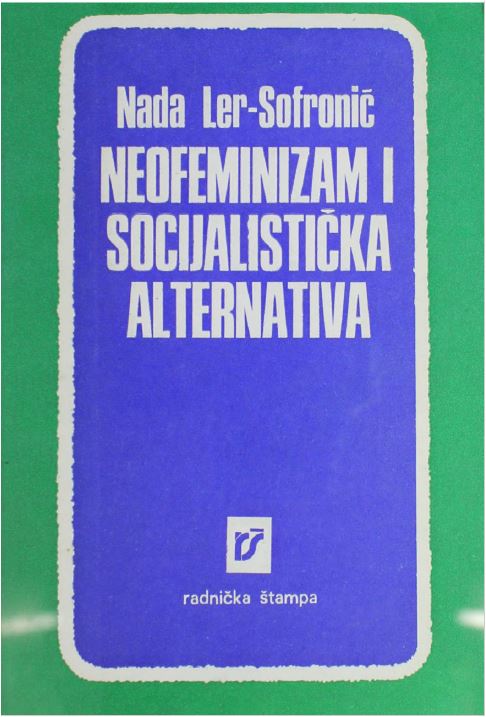
 Iskreno rečeno, uopšte me ne interesiraju pokušaji da se omalovaži jedan veliki i vrlo stvarni doprinos Jugoslavije - a to je emancipacija žena u svim mogućim smislovima. O tome šta je Jugoslavija učinila za žene, šta god vi o tome mislili, samo i isključivo žene mogu suditi.