
D9bro, razumjela sam, ti kao otac tvrdiš da nemaš jednaku odgovornost za odgoj svog djeteta kao tvoja žena.

Pa sad....KraljicaIzJajca wrote: ↑06/04/2022 07:31Tvoj odgovor za pdf Filozofijadale cooper wrote: ↑05/04/2022 21:32
Zato što Rusija nije kao bilo koja druga država kao jedna od par preostalih svjetskih supersila sa najvećim nuklearnim arsenalom.
I valjda zato što su po tvome ruske majke i očevi protiv osvajačkih ratova u kojem ginu njihovi sinovi. Ili možda griješim?
Po čemu je vanjska politika saučesnica? Da li su NATO ili Ukrajina napali Rusiju?
Svaki roditelj je protiv rata i učestvovanja njegovog djeteta u ratu.

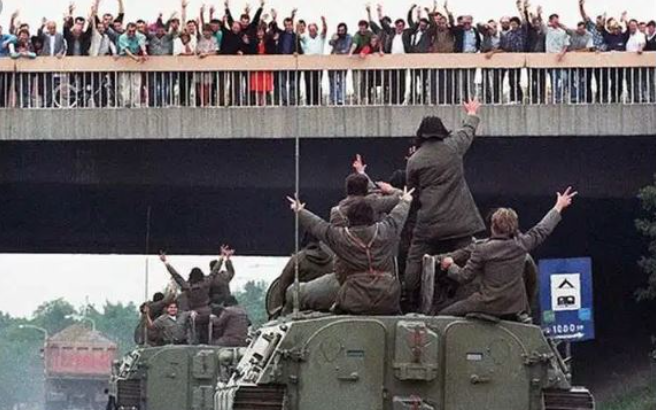
Fotka iz 2020.godine.halo_ba wrote: ↑06/04/2022 07:52Pa sad....KraljicaIzJajca wrote: ↑06/04/2022 07:31
Tvoj odgovor za pdf Filozofija
Svaki roditelj je protiv rata i učestvovanja njegovog djeteta u ratu.
??
piupiu wrote: ↑05/04/2022 19:04To bi morao biti tako masovan pokret da on već nikako ne bi mogao biti samoorganizovan, nekoordiniran i u nekom smislu opasan po državu. Slažem se Karlinkom, politiku to ni najmanje ne interesuje.KraljicaIzJajca wrote: ↑05/04/2022 18:14
Da li majke mogu zaustaviti tenkove? Ne! Zaustaviti odlazak djece u rat? Ne!
Politiku to ne interesira.

Na linku tvoje fotke je 2020.godina, daj izvor članka fotke.
Ti se salis, zar ne?KraljicaIzJajca wrote: ↑06/04/2022 07:59Na linku tvoje fotke je 2020.godina, daj izvor članka fotke.
Daj izvor fotke.halo_ba wrote: ↑06/04/2022 08:01Ti se salis, zar ne?KraljicaIzJajca wrote: ↑06/04/2022 07:59
Na linku tvoje fotke je 2020.godina, daj izvor članka fotke.
Molim te, reci mi da se salis.
Nek ti se Allah smiluje, sestro.
Daj link članka i fotke sa https://otvoreno.hr/.
Nema potreba, fotka je fejk, to na slici se nikad nije desilo.
Dat cu ti primjer:
Ne treba, hvala. Uvidjam moju gresku.KraljicaIzJajca wrote: ↑06/04/2022 08:16Dat cu ti primjer:
https://otvoreno.hr/vijesti/iz-ukrajine ... udi/415292
Link fotke sa istog članka
https://otvoreno.hr/wp-content/uploads/ ... 24x683.jpg
U linku fotke je današnji datum.


tako je, doviđenja.KraljicaIzJajca wrote: ↑06/04/2022 07:32D9bro, razumjela sam, ti kao otac tvrdiš da nemaš jednaku odgovornost za odgoj svog djeteta kao tvoja žena.
halo_ba wrote: ↑06/04/2022 08:26Ne treba, hvala. Uvidjam moju gresku.KraljicaIzJajca wrote: ↑06/04/2022 08:16
Dat cu ti primjer:
https://otvoreno.hr/vijesti/iz-ukrajine ... udi/415292
Link fotke sa istog članka
https://otvoreno.hr/wp-content/uploads/ ... 24x683.jpg
U linku fotke je današnji datum.
Mozes li mi oprostiti?
I moze li me neko ustrijeliti, da ne moram ovo gledati?

Koji dio mog obrazloženja je netočan?Chmoljo wrote: ↑06/04/2022 08:53
ne trudi se. dotući će te ovakvim zaključcima. ili ćeš potrošiti tri-četiri strane da joj objasniš odakle je fotografija. i opet će te nekad poslije vratiti na nju nekom mentalnom akrobacijom.
samo digni ruke, vjeruj mi. ima sasvim dovoljno drugih sagovornika da se može fino prodiskutovati.
Naravno da tako razmišljaš. Trebalo je dugo da to otvoreno priznaš.Chmoljo wrote: ↑06/04/2022 08:49tako je, doviđenja.KraljicaIzJajca wrote: ↑06/04/2022 07:32
D9bro, razumjela sam, ti kao otac tvrdiš da nemaš jednaku odgovornost za odgoj svog djeteta kao tvoja žena.

sa tobom bi Čović glaso za Komšića.KraljicaIzJajca wrote: ↑06/04/2022 08:57Naravno da tako razmišljaš. Trebalo je dugo da to otvoreno priznaš.

Onda bi roditelji trebali voditi računa o tome koga podržavaju i za koga glasaju. Putinovo anti civilizacijsko ponašanje nije od jučer,KraljicaIzJajca wrote: ↑06/04/2022 07:31Tvoj odgovor za pdf Filozofijadale cooper wrote: ↑05/04/2022 21:32
Zato što Rusija nije kao bilo koja druga država kao jedna od par preostalih svjetskih supersila sa najvećim nuklearnim arsenalom.
I valjda zato što su po tvome ruske majke i očevi protiv osvajačkih ratova u kojem ginu njihovi sinovi. Ili možda griješim?
Po čemu je vanjska politika saučesnica? Da li su NATO ili Ukrajina napali Rusiju?
Svaki roditelj je protiv rata i učestvovanja njegovog djeteta u ratu.
Naravno da vanjska politika utječe na ponašanje i odluke svake države, taj proces se ne dešava prekonoći.
Tenzije između Ukrajine i Rusije traju dvije decenije.
https://foreignpolicy.com/2018/04/09/pu ... -on-women/When Russia decriminalized domestic violence in February 2017, civil servants tasked with protecting women in the country’s far east were dismayed by the new vulnerability of their wards. Yet few officials opposed the measure. President Vladimir Putin signed off on the bill after the lower house of the Russian parliament, the Duma, overwhelmingly approved it by a vote of 380 to 3. The new law recategorized the crime of violence against family members: Abuse that does not result in broken bones, and does not occur more than once a year, is no longer punishable by long prison sentences. The worst sanctions that abusers now face are fines of up to $530, 10- to 15-day stints in jail, or community service work. That’s if the courts side with the victim. They rarely do.
The change made it “that much harder for women” who had suffered abuse, says Natalia Pankova, the director of a state-run domestic violence organization called Sail of Hope. Pankova, based in the city of Vladivostok, oversees 10 crisis centers for women and children across the surrounding region, Primorye, a heavily forested area hugging the Sea of Japan.
Pankova and her colleagues have painstakingly searched for a silver lining in the legislation. “At least the issue of domestic violence is being discussed at the government level,” she says during an interview at her office, decorated with model ships and oil paintings of the open sea.
But family lawyers and women’s rights workers believe the legislation represents a turning point in the freedoms of Russian women, a dark signal from the very top of government that their lives are losing value. At least 12,000 women in Russia die at the hands of their abusers each year, according to Human Rights Watch. The real number is likely higher.
Over the past half-year, the #MeToo movement has swept across Europe, the Americas, and parts of Asia and Africa. But many Russian women’s rights activists fear the global reckoning has simply passed them by.
Feminism here has a complicated history laden with paradoxes. Until recently, the average Russian woman — even those who believed in gender equality — treated the word itself with scorn. Many saw it as an aggressive Western attack on femininity and a Russian belief system in which women are encouraged, and expected, to see motherhood as their first priority. It also seemed redundant, as women in Russia had long since gained many of the rights their Western counterparts were still clamoring to win.
The right to vote, for example, was granted to all Russian men and women in 1917 in the run-up to the October Revolution. After taking power, the Bolsheviks granted women numerous additional freedoms, some of them unheard of anywhere else, such as the right to abortion. The Soviet Constitution of 1936 declared men and women to be equal and also introduced paid maternity leave and free child care in the workplace.
But these historic victories should not obscure an ugly modern truth about present-day Russia. Here, “women have a single role: that of a subservient and silent subordinate who knows her place,” wrote Yevgenia Albats, the editor of the liberal New Times magazine, in January.
Of course, Putin, backed by the resurgent Russian Orthodox Church, has made his country more conservative in numerous ways. Under this new patriarchal order, gender stereotypes are thriving, according to Oksana Pushkina, a lawmaker with the ruling United Russia party. Describing current attitudes, Pushkina, who heads the Russian parliament’s committee on family, women, and children, says, “Men must be masculine and strong, and women should be feminine mothers.” Such social mores, she says, represent a “massive impediment in the development of women’s rights … and completely [hold] back the strength and position of Russian women in society.”
Natalia Pankova, the director of the state-run domestic violence organization Sail of Hope, in Vladivostok, Russia, on Jan. 30. (Joel van Houdt)
When the time came to vote on the changes to domestic violence legislation, the thought of looking into her fellow deputies’ eyes made Pushkina physically ill. She stayed at home. “I crumpled!” she says. She is now working with like-minded politicians and activists to try to overturn the law by passing a brand-new measure aimed specifically at preventing domestic violence.
Theirs could be an uphill battle, for Putin’s bare-chested machismo, while a source of humor abroad, has been accompanied by a sharp rise in misogyny at home. The Russian leader joked about rape as recently as February, has boasted that his country’s prostitutes are the best in the world, and has put down women for menstruating.
Perhaps it is little wonder, then, that when the Harvey Weinstein scandal broke in October 2017, the general Russian attitude, on the part of both men and women, was overwhelmingly one of bemusement and victim shaming. A group of women even stripped naked near the U.S. Embassy in Moscow. One hoisted a placard that read, “Harvey Weinstein Welcome to Russia.”
Those who have attempted to tell their own #MeToo stories have been met with ridicule or threats of violence. In January 2017, Diana S., a 17-year-old, appeared on a popular Russian talk show and described her rape by a 21-year-old man. Online commentators, bloggers, and the state-run media promptly blamed her for the attack. Russia’s Burger King franchise even created a parody, turning an image of Diana explaining how much alcohol she consumed on the night of her rape into an advertisement showing how long a meal discount would last. (Burger King later withdrew the ad but did not apologize.) Then, in October, a 12-year-old named Anastasia appeared on a nationally televised klix show in support of her single father. She told the audience that the two often discuss issues such as feminism. She later received death threats from viewers.
Despite the intimidation, some Russian women — particularly millennials in Moscow and St. Petersburg — are continuing to fight back. After the grisly murder of 19-year-old Tatiana Strakhova at the hands of her ex-boyfriend in January, hundreds of Russian women posed on social media wearing only their underwear alongside the hashtag #ThisIsNoReasonToKill.
Still, attempts to create a Russian form of #MeToo are embryonic, at best. In February, after female reporters complained that lawmaker Leonid Slutsky had harassed them in parliament, not only were there no demands that he step down, but a deputy speaker of the Duma, Igor Lebedev, called for these journalists to be barred from covering the legislature. Slutsky and other male lawmakers then took to Facebook, where they openly boasted about how many female reporters they could “take.”

Pogrešno rezoniraš, pretpostavljala sam da si malo "jači" sa znanjem povijesti Rusije sa Putinom.dale cooper wrote: ↑06/04/2022 09:47Onda bi roditelji trebali voditi računa o tome koga podržavaju i za koga glasaju. Putinovo anti civilizacijsko ponašanje nije od jučer,KraljicaIzJajca wrote: ↑06/04/2022 07:31
Tvoj odgovor za pdf Filozofija
Svaki roditelj je protiv rata i učestvovanja njegovog djeteta u ratu.
Naravno da vanjska politika utječe na ponašanje i odluke svake države, taj proces se ne dešava prekonoći.
Tenzije između Ukrajine i Rusije traju dvije decenije.
već traje dugi niz godina. Gaze se ljudska prava, neistomišljenici zatvaraju, ograničavaju slobode.
Zgodan članak i temi prikladan o odnosu Putinovog režima prema ženama u Rusiji.
https://foreignpolicy.com/2018/04/09/pu ... -on-women/When Russia decriminalized domestic violence in February 2017, civil servants tasked with protecting women in the country’s far east were dismayed by the new vulnerability of their wards. Yet few officials opposed the measure. President Vladimir Putin signed off on the bill after the lower house of the Russian parliament, the Duma, overwhelmingly approved it by a vote of 380 to 3. The new law recategorized the crime of violence against family members: Abuse that does not result in broken bones, and does not occur more than once a year, is no longer punishable by long prison sentences. The worst sanctions that abusers now face are fines of up to $530, 10- to 15-day stints in jail, or community service work. That’s if the courts side with the victim. They rarely do.
The change made it “that much harder for women” who had suffered abuse, says Natalia Pankova, the director of a state-run domestic violence organization called Sail of Hope. Pankova, based in the city of Vladivostok, oversees 10 crisis centers for women and children across the surrounding region, Primorye, a heavily forested area hugging the Sea of Japan.
Pankova and her colleagues have painstakingly searched for a silver lining in the legislation. “At least the issue of domestic violence is being discussed at the government level,” she says during an interview at her office, decorated with model ships and oil paintings of the open sea.
But family lawyers and women’s rights workers believe the legislation represents a turning point in the freedoms of Russian women, a dark signal from the very top of government that their lives are losing value. At least 12,000 women in Russia die at the hands of their abusers each year, according to Human Rights Watch. The real number is likely higher.
Over the past half-year, the #MeToo movement has swept across Europe, the Americas, and parts of Asia and Africa. But many Russian women’s rights activists fear the global reckoning has simply passed them by.
Feminism here has a complicated history laden with paradoxes. Until recently, the average Russian woman — even those who believed in gender equality — treated the word itself with scorn. Many saw it as an aggressive Western attack on femininity and a Russian belief system in which women are encouraged, and expected, to see motherhood as their first priority. It also seemed redundant, as women in Russia had long since gained many of the rights their Western counterparts were still clamoring to win.
The right to vote, for example, was granted to all Russian men and women in 1917 in the run-up to the October Revolution. After taking power, the Bolsheviks granted women numerous additional freedoms, some of them unheard of anywhere else, such as the right to abortion. The Soviet Constitution of 1936 declared men and women to be equal and also introduced paid maternity leave and free child care in the workplace.
But these historic victories should not obscure an ugly modern truth about present-day Russia. Here, “women have a single role: that of a subservient and silent subordinate who knows her place,” wrote Yevgenia Albats, the editor of the liberal New Times magazine, in January.
Of course, Putin, backed by the resurgent Russian Orthodox Church, has made his country more conservative in numerous ways. Under this new patriarchal order, gender stereotypes are thriving, according to Oksana Pushkina, a lawmaker with the ruling United Russia party. Describing current attitudes, Pushkina, who heads the Russian parliament’s committee on family, women, and children, says, “Men must be masculine and strong, and women should be feminine mothers.” Such social mores, she says, represent a “massive impediment in the development of women’s rights … and completely [hold] back the strength and position of Russian women in society.”
Natalia Pankova, the director of the state-run domestic violence organization Sail of Hope, in Vladivostok, Russia, on Jan. 30. (Joel van Houdt)
When the time came to vote on the changes to domestic violence legislation, the thought of looking into her fellow deputies’ eyes made Pushkina physically ill. She stayed at home. “I crumpled!” she says. She is now working with like-minded politicians and activists to try to overturn the law by passing a brand-new measure aimed specifically at preventing domestic violence.
Theirs could be an uphill battle, for Putin’s bare-chested machismo, while a source of humor abroad, has been accompanied by a sharp rise in misogyny at home. The Russian leader joked about rape as recently as February, has boasted that his country’s prostitutes are the best in the world, and has put down women for menstruating.
Perhaps it is little wonder, then, that when the Harvey Weinstein scandal broke in October 2017, the general Russian attitude, on the part of both men and women, was overwhelmingly one of bemusement and victim shaming. A group of women even stripped naked near the U.S. Embassy in Moscow. One hoisted a placard that read, “Harvey Weinstein Welcome to Russia.”
Those who have attempted to tell their own #MeToo stories have been met with ridicule or threats of violence. In January 2017, Diana S., a 17-year-old, appeared on a popular Russian talk show and described her rape by a 21-year-old man. Online commentators, bloggers, and the state-run media promptly blamed her for the attack. Russia’s Burger King franchise even created a parody, turning an image of Diana explaining how much alcohol she consumed on the night of her rape into an advertisement showing how long a meal discount would last. (Burger King later withdrew the ad but did not apologize.) Then, in October, a 12-year-old named Anastasia appeared on a nationally televised klix show in support of her single father. She told the audience that the two often discuss issues such as feminism. She later received death threats from viewers.
Despite the intimidation, some Russian women — particularly millennials in Moscow and St. Petersburg — are continuing to fight back. After the grisly murder of 19-year-old Tatiana Strakhova at the hands of her ex-boyfriend in January, hundreds of Russian women posed on social media wearing only their underwear alongside the hashtag #ThisIsNoReasonToKill.
Still, attempts to create a Russian form of #MeToo are embryonic, at best. In February, after female reporters complained that lawmaker Leonid Slutsky had harassed them in parliament, not only were there no demands that he step down, but a deputy speaker of the Duma, Igor Lebedev, called for these journalists to be barred from covering the legislature. Slutsky and other male lawmakers then took to Facebook, where they openly boasted about how many female reporters they could “take.”
Razloga da se digne glas žena i majki kao i muškaraca i očeva u Rusiji je odavno već mnogo. Ako neisprovocirana agresija na drugu zemlju i slanje
sopstvenih ljudi da ginu u besmislenom ratu kao i prijetnja nuklearnim oružjem cijelom svijtu nije kap koja preliva čašu onda ne mogu
zaključiti ništa drugo nego da Rusi i Ruskinje podržavaju Putina i da su saučesnici u svemu što radi i što će uraditi.


