Ad blocker detected: Our website is made possible by displaying online advertisements to our visitors. Please consider supporting us by disabling your ad blocker on our website.
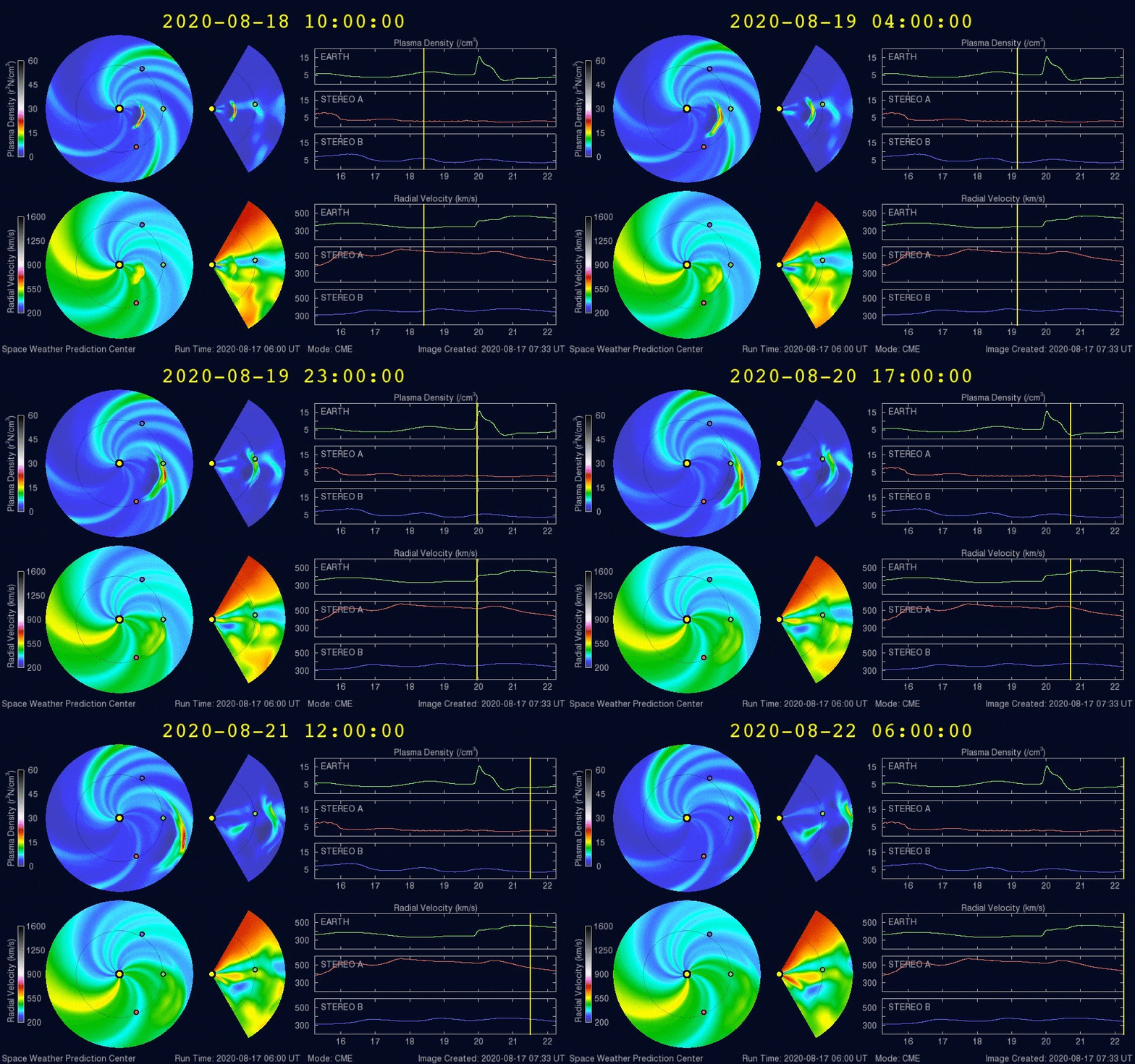
Tokom dana moguć je susret izbačaja koronalne mase sa Zemljinom atmosferom. Tokom 16.og Augusta u južnom dijelu sunčeve hemisfere putem usporeng sunčevog bljeska došlo je do izbačaja oblaka solarne oluje, i očekuje se kako će tokom 20.Augusta koronalna masa proći pokraj Zemlje. Kao što animacija prognoze pokazuje, izbačaj koronalne mase nije direktno usmjeren prema Zemlji- Očekuje se kako će najveći do oblaka plazme proći duž južnog dijela Zemljine ravni. Međutim, spojašnji dio ovog oblaka bi mogao doći u kontakt sa Zemljinim magnetnim poljem, što bi eventualno moglo proizvesti geomagnetsku oluju G1- glase. Postoji velika mogućnost kako će koronalni izbačaj proći i pokraj Zemlje. U svakom slučaju, vjerovatno je kako će oni koji užuvaju u promatranju visokih slojeva Zemljine atmosfere i pojava u njoj, svjedočiti prizoru još jedne Aurore, koje se javljaju tokom geomagnetnih oluja.
Odlučio sam da više neću biti dio ovog foruma, niti ću se vraćati pod nekim drugim pseudonimom, niti imam iskrene namjere. Ako vas dalje bude interesovao projekat na kojem radimo i njegov napredak, kontaktirjte me na ....
Trafalgar Law wrote: ↑30/08/2020 22:47
Odlučio sam da više neću biti dio ovog foruma, niti ću se vraćati pod nekim drugim pseudonimom, niti imam iskrene namjere. Ako vas dalje bude interesovao projekat na kojem radimo i njegov napredak, kontaktirjte me na ....
Trafalgar Law wrote: ↑30/08/2020 22:47
Odlučio sam da više neću biti dio ovog foruma, niti ću se vraćati pod nekim drugim pseudonimom, niti imam iskrene namjere. Ako vas dalje bude interesovao projekat na kojem radimo i njegov napredak, kontaktirjte me na ....
Ko nije upratio, u ponedjeljak nakon zalaska Sunca na nebu se mogu vidjeti Jupiter i Saturn u ravni, dogadjaj koji se desi otprilike svakih 800 godina. Iako su jako daleko, nama, posmatracima sa Zemlje ce se to ukazati kao jedna velika sjajna zvijezda na nebu.
Radio teleskop Parker u Australiji otkrio signal na 982Mhz sa Proxime Centauri. Promjena u frekvenciji je u skladu sa Doplerovim efektom prouzrokovanim kretanjem planeta.
Laik sam za astronomiju al ove me osobe oduševljavaju snagom, odlučnošću, hrabrošću ... želim im uspješnu misiju i da se živi i zdravi vrate svojim porodicama
Ovaj Thomas je već boravio na brodu odakle je slao fantastične slike
Princ Sultan, pripadnik saudijske kraljevske dinastije, postao je na današnji dan 1985. godine prvim muslimanom i Arapinom u svemiru. Dapače, bio je i prva osoba kraljevske krvi ikada poslana u svemir.
Princ Sultan, pripadnik saudijske kraljevske dinastije, postao je na današnji dan 1985. godine prvim muslimanom i Arapinom u svemiru. Dapače, bio je i prva osoba kraljevske krvi ikada poslana u svemir.
vazi wrote: ↑23/04/2021 15:27
Laik sam za astronomiju al ove me osobe oduševljavaju snagom, odlučnošću, hrabrošću ... želim im uspješnu misiju i da se živi i zdravi vrate svojim porodicama
Ovaj Thomas je već boravio na brodu odakle je slao fantastične slike
On Christmas Day, NASA is scheduled to launch the James Webb Space Telescope. If successful, it could alter humanity’s understanding of its place in the universe and reinvigorate American science and technology. But at a cost of some $11 billion, the new instrument is also a significant risk. NASA has no Plan B if it fails. And fail it could: Hundreds of parts and processes must operate perfectly or jeopardize the entire mission — and potentially set astronomy back by a generation.
NASA never intended to take such a gamble when it began work on a successor to the famed Hubble telescope in the late 1990s. Here’s hoping that lessons learned during this tortured process ensure it never has to do so again.
For hundreds of years, telescopes have advanced human knowledge. Galileo’s 17th-century refinement revolutionized the study of the stars. Three hundred years after his death, American scientists contemplated a new technological leap: a giant telescope based in space that could peer through the heavens without interference from Earth’s atmosphere. The technical barriers were immense, but in 1990 — nearly half a century after it was conceived — the Hubble Space Telescope was launched.
Thirty years and many discoveries later, it’s easy to forget the blown budgets, missed deadlines and technical problems that plagued the project. Many factors led to these setbacks, but perhaps the most serious was “Hubble psychology.” Coined in a 2018 report by NASA’s auditors, the phrase refers to an expectation “that additional funding will be made available if a project runs `short.’” That kind of thinking prevailed throughout Hubble’s development, as investigators came to think that scientific achievements would overshadow management and budget problems.
Hubble psychology has also troubled the Webb program. The goal was to build a groundbreaking infrared telescope that could peer through dust and other obstructions to the remnants of the earliest universe. Notably, most of the advanced technologies required didn’t exist in 2002, when NASA selected teams to build the telescope’s instruments (with a proposed launch date between 2007 and 2011). But excessive optimism led the agency to prioritize the science while hoping that Congress would keep the money flowing to overcome any technical hurdles.
That was an expensive choice, leading to repeatedly blown deadlines and a budget that has ballooned 1,000% since the mid-1990s. Over the past two decades, one in every three dollars spent on astrophysics at NASA has gone to the Webb project. One journal referred to it as “the telescope that ate astronomy.” The binge couldn’t have come at a worse time. Astronomy has been in a kind of “golden age” in recent years — with an astounding range of discoveries announced over just a few decades — but extending it will require new instruments. So long as NASA keeps pursuing budget-busting programs, America’s ability to continue leading the way will be constrained.
Last month, a much-anticipated once-per-decade survey of astronomy and astrophysics was released by the National Academies. It recommended developing a new large space telescope that could help study black holes, galaxy formation, exoplanets and more, at a cost of about $11 billion over 20 years. More intriguingly, it suggested a “Great Observatories Mission and Technology Maturation Program,” which would oversee early-stage investments in the technologies that will form the basis of later missions, tweaking concepts and designs along the way. Although the up-front expense would be substantial, over time such an approach would likely push down costs, increase flexibility, diminish risks and allow for more frequent missions. In other words: It could capture the benefits of the next Webb program while minimizing its downsides.
As the world awaits the launch of the Webb telescope with gritted teeth, it’s an idea worth pursuing. For decades, America has been at the forefront of astronomy and astrophysics, training thousands of scientists and technicians and producing spinoff technologies that have been a boon to the economy. It’d be a mistake to cede that leadership thanks to needless cost overruns and delays. As NASA prepares to take its biggest bet in years, it’s time to wager on new ways to build future technologies.