Seawolf wrote: ↑04/01/2020 11:33
Tromblon wrote: ↑04/01/2020 11:18
pici wrote: ↑03/01/2020 17:40
jeli to na ove momke poginule oko tenka?... ako je to na njih otvoreno, nisu imali nikakve sanse...

Da. Bio mi je gore dobar drug i srećom preživio istrčavanje iz te tranšeje oko tenka. Pričao mi kako je sa jedne strane tenka pleo sijač, a sa druge dočekivao pasp. Usput padaju 82-ke i top lupao. Probavali ispod tenka curilo ulje vrelo. Ako istrčiš dočekaju te. On mi rekao da ne zna kako je istrčao iz tranšeje i živ ostao.
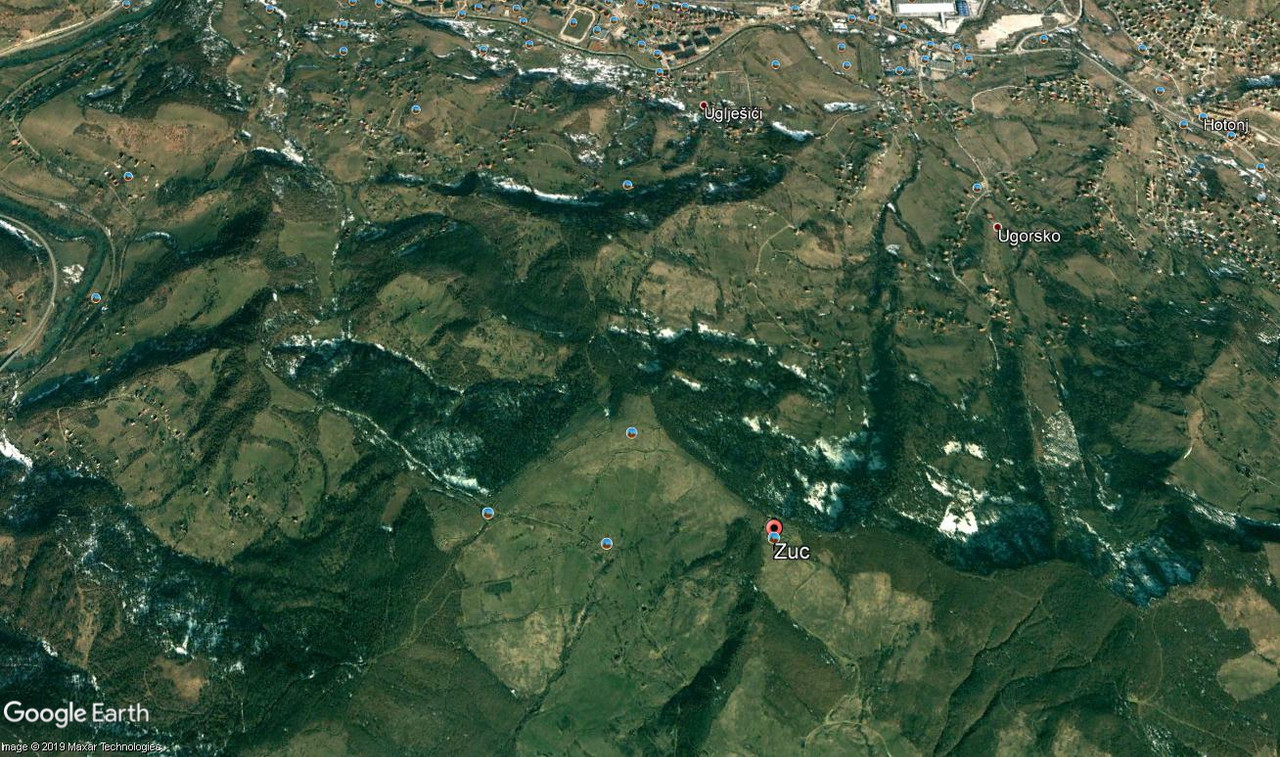
Gdje je, otprilike, bio ZiS-3 koji ih je gađao?
Stravično oruđe, na način kako su ga oni koristili. Snajper kalibra 76,2 mm.
Ovo je iz Kerimove knjige o Ramizu Salcinu sta je radio sa ZIS-om
1
At the end of the convoy there were luxury cars, with Serbi
an officers and men in them. My men opened the cars and to
ok their arms. They found chain saws in the boots. In almost
every car there were five holders.
I sent all the saws to the villagers in Buca-Potok They 'mo
wed' Zuc with them.
I gave one zis recoilless cannon from the Jusuf Dfonlic
barracks to Ramiz Salcin. He dug it in and made a shelter for
the crew. Ramiz aimed this weapon at Milinkladska street. A
few days later our line towards Hrasno broke. The chetniks
moved in on the Viktor Bubanj barracks after midnight. Ra
miz didn't know what to do. The chetniks could easily reach
the barracks. It was night, so we couldn't determine the pri
ncipal direction of attack of the chetniks. We could only ori
ent ourselves by the density of their bursts of fire, anything
else was senseless. Ramiz called me.
'Doctor, what shall we do? They are firing as they advance
on our positions. It's dark, we can't see a thing. To judge from
the bursts of fire, they seem to be advancing in several directi
ons. I can't be reasonable. What should we do?'
There was no time. The chetniks were advancing on the
barracks. A decision had to be reached; we couldn't wait. I sa
id, though I hadn't given it much consideration, 'Ramiz, find
where the greatest concentration of fire is coming from. Tha
t's the largest group of chetniks. That's their principal line of
attack. Perhaps the only one. You can't fail with the zis.
Ramiz obeyed me. He send out a reconnaissance. In the
dark, between the houses, they went towards the chetniks who
were firing towards the barracks. After half an hour they came
back to Ramiz. It was all perfectly clear to him. He turned the
barrel in the dark towards the point from which the chetnik fi
re was fiercest. The men enjoyed watching Ramiz handling the
zis - they knew what a powerful weapon it was.
In the morning we returned to the line in Hrasno. We fo
und forty two dead chetniks. They were all Russians and Ro
manians. The chetniks had sent them to their deaths. The
chetniks· didn't even ask for their bodies. The chetniks never
asked for the bodies of Russians and Romanians, though they
were dying on their behalf. It all ended well. We didn't have a
single dead or wounded man.
2
hundred houses. The chetniks had set up a machine gun ne
st in each of the houses.
They had Sarajevo in the palm of their hand. From up the
re, shells raked every quarter of the city.
Orlic was the heart of Zuc.
Ramiz Salcin was the commandant of the Territorial Defe
nce in the Sarajevo municipality of Novi Grad. His task was to
neutralize Orlic. Our military police had to come up behind
the chetniks, via Kobilja Glava.
Orlic couldn't be liberated without artillery.
Ramiz Salcin had only two shells.
I ordered Mica to give him another hundred and ten she
lls. Ramiz was jumping for joy. It was the first time he'd had
so many shells at his disposal. He was sure we'd liberate Zuc.
Further preparations were made. For the most part, the de
fenders of Sarajevo felt as though they were ready. At about fi
ve in the morning our artillery troops took up position by the
ir weapons. The first two shells were fired. But nothing happe
ned. These were artillery troops sent by Talijan. It was as tho
ugh they hadn't targeted anything from the cannons, the 'zis'.
To put it mildly, Ramiz Salcin was angry. He was so fed up
that he sent the artilleryman packing, telling him this was no
time to be wasting shells. Then he himself took up position
behind the 'zis'. Although he took the range only with the he
lp of a mechanical range finder, every shell found its target.
His observers were dumbstruck - as though by magic, the co
ncrete trenches on Zuc were destroyed one after another. It
was like an action movie: he swept through the bunkers, and
the chetniks inside them. Even those who saw it with their
own eyes couldn't believe it. His comrades, watching enthra-
!led, kept count: exactly one hundred hits. The houses where
the machine gun nests had been set up were wiped out, too.
And Ramiz Salcin had done it all.
The chetniks could never have expected this. They never
imagined that the non-existent Bosnian army could fire so
many shells, let alone do what they did.
The artillery attack, once over, was followed by troop mo
vements. At the double, the Bosnian soldiers went into the de
stroyed trenches, full of dead chetniks. A group of chetniks hi
ding behind the smashed concrete trenches put up some re
sistance. Chetniks from another battle front also fired at them.
But they couldn't defend Zuc.
How did the Serbian General Dordevac feel when he was
told that all his concrete trenches were now full of soldiers de
fending Sarajevo?
The chetniks left behind them howitzers, cannon, rocket
launchers. The defenders of Bosnia and Herzegovina's capital
city pushed back the line of defence towards Rajlovac. They we
re already able to cut the road linking Ilidza and Vogosfa
This victory boosted the morale of our men. They knew ve
ry well what Zuc had meant to the chetniks. And thus the stri
ng of precious victories was lengthened: the men of Sarajevo
had begun with Skenderija, the Post Office, Pofalici, Mojmilo,
and now they were on Zuc. Victory after victory.



 ne kontam kako ce 50 tona zeljeza gurat to prvo a drugo ko ih je poslao na tako nesto samoubilacko