Page 1 of 2

#1 Dešavanja u Kirgistanu

Posted: 03/07/2010 14:37
by seldzuk
Zemlje Centralne Azije su nama jako slabo poznate. Posljednja dešavanja u Kirgistanu su im dala nešto svjetske pažnje.
To je najsiromašnija zemlja Centralne(ali im to ne smeta da imaju trg ko Crveni).

Evo nešto CIA-inih podataka:
Population:
Field info displayed for all countries in alpha order.
5,508,626 (July 2010 est.)
country comparison to the world: 110
Age structure:
Field info displayed for all countries in alpha order.
0-14 years: 29.4% (male 827,346/female 794,746)
15-64 years: 65% (male 1,754,681/female 1,827,553)
65 years and over: 5.5% (male 118,215/female 186,085) (2010 est.)
Median age:
Field info displayed for all countries in alpha order.
total: 24.7 years
male: 23.8 years
female: 25.6 years (2010 est.)
Population growth rate:
Field info displayed for all countries in alpha order.
1.414% (2010 est.)
country comparison to the world: 89
Birth rate:
Field info displayed for all countries in alpha order.
23.58 births/1,000 population (2010 est.)
country comparison to the world: 71
Death rate:
Field info displayed for all countries in alpha order.
6.85 deaths/1,000 population (July 2010 est.)
country comparison to the world: 145
Net migration rate:
Field info displayed for all countries in alpha order.
-2.58 migrant(s)/1,000 population (2010 est.)
country comparison to the world: 141
Urbanization:
Field info displayed for all countries in alpha order.
urban population: 36% of total population (2008)
rate of urbanization: 1.6% annual rate of change (2005-10 est.)
Sex ratio:
Field info displayed for all countries in alpha order.
at birth: 1.053 male(s)/female
under 15 years: 1.04 male(s)/female
15-64 years: 0.96 male(s)/female
65 years and over: 0.64 male(s)/female
total population: 0.96 male(s)/female (2010 est.)
Infant mortality rate:
Field info displayed for all countries in alpha order.
total: 30.25 deaths/1,000 live births
country comparison to the world: 73
male: 35.09 deaths/1,000 live births
female: 25.15 deaths/1,000 live births (2010 est.)
Life expectancy at birth:
Field info displayed for all countries in alpha order.
total population: 69.74 years
country comparison to the world: 148
male: 65.74 years
female: 73.94 years (2010 est.)
Total fertility rate:
Field info displayed for all countries in alpha order.
2.64 children born/woman (2010 est.)
country comparison to the world: 83
HIV/AIDS - adult prevalence rate:
Field info displayed for all countries in alpha order.
less than 0.1% (2007 est.)
country comparison to the world: 120
HIV/AIDS - people living with HIV/AIDS:
Field info displayed for all countries in alpha order.
4,200 (2007 est.)
country comparison to the world: 125
HIV/AIDS - deaths:
Field info displayed for all countries in alpha order.
fewer than 200 (2007 est.)
country comparison to the world: 110
Nationality:
Field info displayed for all countries in alpha order.
noun: Kyrgyzstani(s)
adjective: Kyrgyzstani
Ethnic groups:
Field info displayed for all countries in alpha order.
Kyrgyz 64.9%, Uzbek 13.8%, Russian 12.5%, Dungan 1.1%, Ukrainian 1%, Uyghur 1%, other 5.7% (1999 census)
Religions:
Field info displayed for all countries in alpha order.
Muslim 75%, Russian Orthodox 20%, other 5%
Languages:
Field info displayed for all countries in alpha order.
Kyrgyz 64.7% (official), Uzbek 13.6%, Russian 12.5% (official), Dungun 1%, other 8.2% (1999 census)
Literacy:
Field info displayed for all countries in alpha order.
definition: age 15 and over can read and write
total population: 98.7%
male: 99.3%
female: 98.1% (1999 census)
School life expectancy (primary to tertiary education):
Field info displayed for all countries in alpha order.
total: 12 years
male: 12 years
female: 13 years (2006)
Education expenditures:
Field info displayed for all countries in alpha order.
4.9% of GDP (2005)
country comparison to the world: 76

Koliko znam i ovaj narod je turkičkog porijekla. Jezik bi podednostavljeno bio definisan kao turski pisan ćirilicom.

Evo slika sa inauguracije v.d. predsjednika Roze Otunbajeve.
Image
Image
Image
Image
Image
Image
Image
Image
Image
Image
Image
Image
Image
Sa web-sajta: http://kyr.kabar.kg/index.php?option=co ... 1&Itemid=1

#2 Re: Dešavanja u Kirgistanu

Posted: 03/07/2010 14:53
by seldzuk

#3 Re: Dešavanja u Kirgistanu

Posted: 03/07/2010 15:06
by seldzuk
RFE, 3,juli: Rising Nationalism Threatens Kyrgyzstan
http://www.rferl.org/content/Rising_Nat ... 89746.html


NY Times, 1.juli: Uzbeks Accused of Inciting Violence in Kyrgyzstan
http://www.nytimes.com/2010/07/02/world ... zstan.html


WSJ, 28.juni: Kyrgyzstan Endorses New Constitution
http://online.wsj.com/article/SB1000142 ... 10678.html

#4 Re: Dešavanja u Kirgistanu

Posted: 03/07/2010 15:37
by seldzuk
Dobra galerija fotografija dešavanja zadnjih 4 mjeseca sa centralasiaonline.com:
http://centralasiaonline.com/cocoon/cai ... Shoot1.jpg
najstarije slike dole, novije gore

#5 Re: Dešavanja u Kirgistanu

Posted: 03/07/2010 16:13
by seldzuk
Kyrgyzstan uprising: What is behind it?

By Azamat Temirkulov
For CentralAsiaOnline.com
2010-06-21


The tragic June events in southern Kyrgyzstan alarmed Central Asia and the global community. Three days of widespread violence might have killed as many as 2,000 and created 400,000 refugees. Several districts in Osh and Dzhalal-Abad lie in ruins, according to official reports. The worst of the violence is over, but a humanitarian catastrophe looms as refugees languish in camps along the border and in Uzbekistan.

Similar events struck the region 20 years ago in June 1990, though on a smaller scale. Soviet forces managed to stop the bloodshed. Observers long warned of a possible repeat, particularly after April’s ouster of president Kurmanbek Bakiyev, a native of the south.

It took only a day for the conflict to escalate into large-scale riots, but tensions had been brewing for years. Kyrgyz, Uzbeks, Tajiks and other Eurasians have lived side-by-side for centuries in the south, Kyrgyzstan's most populous region. However, unresolved social and economic problems have worsened ethnic tensions. Unemployment among young adults and poverty make fertile ground for extremism. Moreover, the region lacks arable land and water. It was precisely this lack of land that gave rise to 1990’s clashes between Kyrgyz and Uzbeks.

The Uzbek diaspora, which predominantly inhabits the south's largest cities and focuses on commerce, has historically done better economically than its rural Kyrgyz counterparts. Wealth, however, was not the main source of tension; politics was.

Kyrgyzstan has the world's largest Uzbek diaspora — more than 1m — constituting a fifth of the country's population, according to some estimates.

Uzbek leaders in Kyrgyzstan have repeatedly advocated cultural development. As a result, Uzbek schools, universities, radio and television channels, cultural centres and theatres have opened in each of the south's large cities. The government also promoted local self-governance.

Periodic calls to establish Uzbek as an official language have created tension, however. The demand has irritated many Kyrgyz, who look askance at Uzbek political activism and mobilisation. Such worries informed the state's efforts to promote cultural development through former president Askar Akayev’s programme “Kyrgyzstan, Our Common Home”.

The 2005 Tulip Revolution led to a de-emphasis of such steps, with the government focusing instead on a composite nation and promoting the study of Kyrgyz.

The opposition, led by Roza Otunbayeva, took power April 7, after demonstrations and bloodshed. Deposed president Bakiyev, who had taken refuge in his hometown in Dzhalal-Abad Oblast, attempted to restore the former government with his entourage on April 12th.

However, in that showdown, the leaders of the Uzbek diaspora sided with the interim government. Among them were businessman and former MP Kadyrjan Batyrov. Bakiyev's supporters claimed that Batyrov aroused Uzbeks into burning down several houses belonging to the Bakiyev family. But that confrontation ended before any ethnic rhetoric could take hold.

Many southern Kyrgyz regard Batyrov with suspicion, accusing him of favouring the elevation of Uzbek to an official language and of urging Uzbek political mobilisation. A crowd of young Kyrgyz men marched April 19 on People’s Friendship University in Dzhalal-Abad, founded by Batyrov, demanding an apology.

The ensuing riot led to at least two deaths. The government promised to press criminal charges against Batyrov for incitement of ethnic hatred. Batyrov publicly apologised to the Kyrgyz people before going into hiding. The south was primed to explode. Not helping matters were the weakness of the interim government, numerous small-scale incidents, and the erosion of respect for the rule of law after two presidents' overthrows in five years.

Sources do not agree on the proximate cause of the June 11-14 events. Some say it was a confrontation between two groups of young people that escalated; others point to the alleged brutalisation of women from rural areas living in an all-female dormitory.

However, the speed with which the violence spread has observers saying it was planned. Ethnic Uzbeks complain that men in uniform — soldiers and police — sided with ethnic Kyrgyz rioters, while the interim government accuses Bakiyev supporters of inflaming the conflict in order to discredit the government before the June 27 referendum.

Yet another school of thought argues that religious radicals may have played a role. Organisations such as the Islamic Movement of Turkestan (formerly the Islamic Movement of Uzbekistan) and Hizb ut-Tahrir seek to build an Islamic state in Central Asia. For them, Kyrgyzstan in its disarray has become the weakest link of the region's five secular governments.

Thus, two communities, Kyrgyz and Uzbek, who lived side by side for generations may find themselves hostage to others' agendas. Understanding this threat will enable the Central Asian governments to contain the crisis and to prevent a confrontation between Kyrgyzstan and Uzbekistan. The future of Kyrgyzstan and the region depends on the ability of ordinary people not to succumb to the blandishments of those with ulterior motives.

Azamat Temirkulov is an assistant professor in the Department of International and Comparative Politics of American University of Central Asia. He is also a specialist on conflicts in the Fergana Valley.


http://centralasiaonline.com/cocoon/cai ... feature-01

#6 Re: Dešavanja u Kirgistanu

Posted: 03/07/2010 22:50
by PipiDugaDevetka
Vidio sam na Wikipediji da Kirgizija ima zlata i srebra. Da nisu slučajno pronašli ove ''nove'' minerale kao što su coltan, titanijum (metal),..., a koji se koriste za proizvodjnu mikroelektronike. Imaju li nafte?
Iskustvo mi govori da problemi nastaju tamo gdje ima zaliha nafte i minerala.

Evo baš danas, vijest iz DR Konga da je sprženo čitavo selo i preko 200 ljudi u provinciji Južni Kivu. Ja ovo objašnjavam ''čišćenjem'' terena od nepoželjnih ljudi, a zarad iskorištavanja rudnih bogatstava koja se tu nalaze. Sve u organizaciji velikih kompanija koje žele ''u miru'' da iskorištavaju provinciju bogatu raznim mineralima. Od urana i dijamanata do coltana,...I Obama ima dionice za kongoanske dijamante.
:(
edit:
Evo sad vidjeh da imaju urana,... :-)

#7 Re: Dešavanja u Kirgistanu

Posted: 04/07/2010 00:49
by SenSen
Bas sam danas citala o ovome da pokusam skontati sta se dogadja.. Valjda je za vrijeme Sovjetskog Saveza napravljena granica koja je Kirgistanu dala dio komsijske zemlje Uzbekistana. To su bas ti gradovi u kojima su bili nemiri, Osh i Jalalabad. Tu je inace najveci procenat etnickih Uzbeka (u poredjenju sa ostatkom zemlje). A uzroci nemira su ono uobicajeno: identifikacija sa izvjesnom grupom, ekonomija etc. Ali fakat me zanima dali SAD ima svoje pandze umijesane u ovo (tj potpuhivanje tenzija iz nekog razloga)..

Evo jedan clanak sa Al Jazeere: http://english.aljazeera.net/focus/2010 ... 50930.html Ima svasta i na njihovom Youtube kanalu..

#8 Re: Dešavanja u Kirgistanu

Posted: 04/07/2010 00:52
by cyprus
Zar nije Tadžikistan siromašniji od Kirgistana? Ja bar tako mislio :roll:

#9 Re: Dešavanja u Kirgistanu

Posted: 04/07/2010 01:02
by vivaldi
SenSen wrote: Ali fakat me zanima dali SAD ima svoje pandze umijesane u ovo (tj potpuhivanje tenzija iz nekog razloga)..
Prije mislim da su rusi upetljani. Nemam nikakvih informacija, ali jer vrlo indikativno bilo to sto je bukvalno isti dan kad je izbila pobuna u roku od par sati rusija objavila da ce podrzati "novu" vlast i da salje padobrance da zastiti neke svoju bazu u kirgistanu.

S obzirom da i ameri isto imaju svoju bazu koju intenzivno koriste za afganistan, nekako mi nije logicno da im je bilo kakva frka trenutno u interesu. Naravno, nikad se ne zna, ali to je samo moje logicko razmisljanje.

#10 Re: Dešavanja u Kirgistanu

Posted: 04/07/2010 01:13
by SenSen
vivaldi wrote:
SenSen wrote: Ali fakat me zanima dali SAD ima svoje pandze umijesane u ovo (tj potpuhivanje tenzija iz nekog razloga)..
Prije mislim da su rusi upetljani. Nemam nikakvih informacija, ali jer vrlo indikativno bilo to sto je bukvalno isti dan kad je izbila pobuna u roku od par sati rusija objavila da ce podrzati "novu" vlast i da salje padobrance da zastiti neke svoju bazu u kirgistanu.

S obzirom da i ameri isto imaju svoju bazu koju intenzivno koriste za afganistan, nekako mi nije logicno da im je bilo kakva frka trenutno u interesu. Naravno, nikad se ne zna, ali to je samo moje logicko razmisljanje.
Citala sam da su na nekim mjestima vidjeni naoruzani ljudi u uniformama Ruske vojske, ali bez ikakvih oznaka. Za te se tvrdi da su ucestvovali u napadima na lokalne Uzbeke. Takodjer kazu da je Rusija oficijalno poslala par hiljada vojnika da "pomognu vladi da odrzi mir". Pa sad kontaj.. Inace mislim da si u pravu da Amerikancima nije praktican nered, jer im trebaju baze. Ali ko ce im znati, nije im mrsko ni potpuhivati kada im ne pashe lokalna vlada (za to ima 101 primjer u zadnjih 60 godina)

#11 Re: Dešavanja u Kirgistanu

Posted: 04/07/2010 02:28
by high_volume
Da bih se i ja ravnopravno uključio u raspravu, molim @seldzuka - postavljača teme da mi objasni zašto je Kyrgyzstan važan Bosni, kako se dešavanja u Kyrgyzstanu mogu dovesti u vezu s Bosnom, pa trebamo o tome raspravljati na našem forumu?

#12 Re: Dešavanja u Kirgistanu

Posted: 04/07/2010 03:46
by cyprus
high_volume wrote:Da bih se i ja ravnopravno uključio u raspravu, molim @seldzuka - postavljača teme da mi objasni zašto je Kyrgyzstan važan Bosni, kako se dešavanja u Kyrgyzstanu mogu dovesti u vezu s Bosnom, pa trebamo o tome raspravljati na našem forumu?
Poenta teme je da pronađemo vezu preko koje su kjafiri (Ameri i Rusi) napakostili muslimanima (Kirgizima i Uzbecima)... :roll: Naime, skoro svaka tema koju otvori @seldzuk provlači tu tezu... :-D

#13 Re: Dešavanja u Kirgistanu

Posted: 04/07/2010 11:51
by seldzuk
cyprus wrote:
high_volume wrote:Da bih se i ja ravnopravno uključio u raspravu, molim @seldzuka - postavljača teme da mi objasni zašto je Kyrgyzstan važan Bosni, kako se dešavanja u Kyrgyzstanu mogu dovesti u vezu s Bosnom, pa trebamo o tome raspravljati na našem forumu?
Poenta teme je da pronađemo vezu preko koje su kjafiri (Ameri i Rusi) napakostili muslimanima (Kirgizima i Uzbecima)... :roll: Naime, skoro svaka tema koju otvori @seldzuk provlači tu tezu... :-D
Niđe veze. Jest istina da mene lično stvar interesuje i iz razloga što tamo ima muslimana. Ali volim teme u vezi vanjskih dešavanja jer nije toliko tegobno razgovarati kao o domaćim, odma glava zaboli.:-D Šta je Tihić reko Lagumdžiji, šta mu je Lagumdžija odgovorio. Šta je onaj međed Dodik rekao itd. Mene inače mnogo više interesuju vanjska dešavanja, od istoka do zapada. Ovakva tema je i način da svarimo lekcije iz geografije koje se nisu prelazile u školi.

#14 Re: Dešavanja u Kirgistanu

Posted: 04/07/2010 11:54
by seldzuk
SenSen wrote:Bas sam danas citala o ovome da pokusam skontati sta se dogadja.. Valjda je za vrijeme Sovjetskog Saveza napravljena granica koja je Kirgistanu dala dio komsijske zemlje Uzbekistana. To su bas ti gradovi u kojima su bili nemiri, Osh i Jalalabad. Tu je inace najveci procenat etnickih Uzbeka (u poredjenju sa ostatkom zemlje). A uzroci nemira su ono uobicajeno: identifikacija sa izvjesnom grupom, ekonomija etc. Ali fakat me zanima dali SAD ima svoje pandze umijesane u ovo (tj potpuhivanje tenzija iz nekog razloga)..

Evo jedan clanak sa Al Jazeere: http://english.aljazeera.net/focus/2010 ... 50930.html Ima svasta i na njihovom Youtube kanalu..
Smijenjeni predsjednik je iz Džalalabada. Po teritoriju bi trebalo da je Uzbek. E sad koliko ovo što se desilo ima veze sa nacionalizmom, a koliko sa korumpiranom vlašću.

#15 Re: Dešavanja u Kirgistanu

Posted: 04/07/2010 12:13
by seldzuk
high_volume wrote:Da bih se i ja ravnopravno uključio u raspravu, molim @seldzuka - postavljača teme da mi objasni zašto je Kyrgyzstan važan Bosni, kako se dešavanja u Kyrgyzstanu mogu dovesti u vezu s Bosnom, pa trebamo o tome raspravljati na našem forumu?
Kakve veze je Bosna i Hercegovina imala sa svim onim ljudima koji su nama pomogli u ratu?

#16 Re: Dešavanja u Kirgistanu

Posted: 04/07/2010 12:21
by high_volume
seldzuk wrote:
high_volume wrote:Da bih se i ja ravnopravno uključio u raspravu, molim @seldzuka - postavljača teme da mi objasni zašto je Kyrgyzstan važan Bosni, kako se dešavanja u Kyrgyzstanu mogu dovesti u vezu s Bosnom, pa trebamo o tome raspravljati na našem forumu?
Kakve veze je Bosna i Hercegovina imala sa svim onim ljudima koji su nama pomogli u ratu?
Dakle - cilj je da bosanski narod pomogne kyrgyzstanskom u nečemu?

Ili da se u BiH sazna kako su i tamo neki, kyrgyzstanski, muslimani ugroženi?


Za koji dan ovdje očekujem i temu o "Kavkazu" :lol:

#17 Re: Dešavanja u Kirgistanu

Posted: 04/07/2010 12:22
by Teška prdimahovana
seldzuk wrote:
high_volume wrote:Da bih se i ja ravnopravno uključio u raspravu, molim @seldzuka - postavljača teme da mi objasni zašto je Kyrgyzstan važan Bosni, kako se dešavanja u Kyrgyzstanu mogu dovesti u vezu s Bosnom, pa trebamo o tome raspravljati na našem forumu?
Kakve veze je Bosna i Hercegovina imala sa svim onim ljudima koji su nama pomogli u ratu?
Ama baš nikakve veze nije imala. Sami se ljudi ponudili jednoj strani. Ta nisu došli boriti se za zajedničku državu sva tri naroda, nego za neku svoju iskrivljenu ideologiju.
Zato i jest belaj sada.

#18 Re: Dešavanja u Kirgistanu

Posted: 04/07/2010 12:24
by seldzuk
Teška prdimahovana wrote:
seldzuk wrote:
high_volume wrote:Da bih se i ja ravnopravno uključio u raspravu, molim @seldzuka - postavljača teme da mi objasni zašto je Kyrgyzstan važan Bosni, kako se dešavanja u Kyrgyzstanu mogu dovesti u vezu s Bosnom, pa trebamo o tome raspravljati na našem forumu?
Kakve veze je Bosna i Hercegovina imala sa svim onim ljudima koji su nama pomogli u ratu?
Ama baš nikakve veze nije imala. Sami se ljudi ponudili jednoj strani. Ta nisu došli boriti se za zajedničku državu sva tri naroda, nego za neku svoju iskrivljenu ideologiju.
Zato i jest belaj sada.
Po toj teoriji je cijeli svijet podijeljen na Srbe, Hrvate i Muslimane. Hajs idi na neku drugu temu, ova je za vanjsku politiku.

#19 Re: Dešavanja u Kirgistanu

Posted: 04/07/2010 12:26
by seldzuk
Image


Q&A: Kyrgyzstan's ethnic violence

Tens of thousands of refugees have fled Kyrgyzstan in the worst ethnic violence in two decades [AFP]

Violence in southern Kyrgyzstan started on June 10, when armed mobs attacked Uzbek neighbourhoods - called mahallas - in the city of Osh. Scores of people were killed, homes were set on fire, tens of thousands of ethnic Uzbeks fled towards the border with neighbouring Uzbekistan, and supplies of food and water are running low.

The scale of the violence makes it the worst to hit Kyrgyzstan in decades - but tensions between ethnic Uzbeks and Kyrgyz have long been a problem in and around Osh.

What started the violence?

Rumours abound. There’s a lot of speculation that the violence was orchestrated by Kurmanbek Bakiyev, the former Kyrgyz president who was ousted following protests in April.

Bishkek has blamed the violence on Bakiyev supporters looking to undermine the interim government and reinstate the former president. The government also claimed that the Bakiyevs hired "mercenaries" from neighbouring Tajikistan.

The popular Web site Ferghanu.ru summed up the "third party" theories in a post on Sunday:

Uzbeks and Kyrgyz that are killing each other on the streets of Osh and Jalalabat, are not shedding their blood in the honour of their nations nor for the sake of some high ideals of justice. They are random victims, martyrs, puppets in the hands of a cynical and violent Khan, who was ousted from his throne, cornered away and is now full of revenge.

Ethnic tensions have long been a problem in southern Kyrgyzstan, though. More than 200 people were killed in Osh in 1990 in Uzbek-Kyrgyz fighting; despite rumours of Russian involvement, scholars believe the 1990 violence started over a series of land disputes and quickly escalated into riots.

Christian Bleuer, a Central Asia scholar writing on the Registan blog, discounted the "third party" theories as a distraction from the long-running ethnic grievances.

To put too much stress on criminal groups is to avoid, or lead the reader to miss, a discussion of ongoing tensions and conflicts in the community, whether they be based on elite-level politics, resentment over another group’s perceived economic or political success, or the competition for land, water and a good spot in the bazaar.

Bakiyev himself has denied any involvement in the violence. There are unconfirmed reports that his son was arrested on Monday in the United Kingdom.

Is the violence unusual?

There is a long history of ethnic violence in the Ferghana Valley, the region which includes Osh and spans three countries (Kyrgyzstan, Uzbekistan and Tajikistan). In addition to the 1990 riots in Osh, the region has seen several other ethnic riots in the last two decades:

* Clashes between ethnic Uzbeks and Meshkets, a Turkic people, killed nearly 100 people in 1989. The Soviet government relocated tens of thousands of Meshkets from the valley after the fighting.
* Also in 1989, several people were killed in Uzbek-Tajik fighting in the Uzbek part of the valley. The clashes were linked to water and land allocations.
* Tajiks and Kyrgyz have attacked each other several times in Isfara, a region in Tajikistan on the Kyrgyz border. The fighting escalated into cross-border riots in 2003.

Uzbeks are a minority in Kyrgyzstan, though they represent a plurality in some parts of the Ferghana. There is some resentment among the Kyrgyz population of the Uzbeks’ relative economic prosperity, which helps to fuel the tensions.

Will Russia get involved?

Bishkek has asked the Russian government to send troops to restore order in Osh and Jalal'abad.

But the Russian government initially denied that request (for reasons that remain unclear), and an emergency meeting of the Collective Security Treaty Organisation (CSTO) - a mutual defence alliance between Russia and six former Soviet republics - ended without a formal request for Russia to deploy in Kyrgyzstan.

Still, Dmitry Medvedev, the Russian president, called the situation in Kyrgyzstan "intolerable" after the CSTO meeting, and said the organisation would hold another summit if the violence worsens.

The 1990 riots were stopped after the Soviet government in Moscow stationed troops throughout Osh and sealed off the Uzbek-Kyrgyz border.

http://english.aljazeera.net/news/asia/ ... 33573.html

#20 Re: Dešavanja u Kirgistanu

Posted: 04/07/2010 12:38
by seldzuk

#21 Re: Dešavanja u Kirgistanu

Posted: 04/07/2010 13:07
by michio
Kriza ali tesko da ce biti kakvog rata. Od Bosne nema zemlje u vecoj krizi. Prema gore ponudjenim informacijama izgleda kao pristojna zemlja.

#22 Re: Dešavanja u Kirgistanu

Posted: 04/07/2010 14:48
by seldzuk
michio wrote:Kriza ali tesko da ce biti kakvog rata. Od Bosne nema zemlje u vecoj krizi. Prema gore ponudjenim informacijama izgleda kao pristojna zemlja.
Ako pogledamo CIA-inu listu BDP po glavi stanovnika od 227 koliko je na listi, mi smo 132., a oni 184. Slike glavnih trgova i inauguracija su ipak šarena laža, pogledaj malo slike sa referenduma i slike bolnice.

#23 Re: Dešavanja u Kirgistanu

Posted: 04/07/2010 15:24
by michio
Samo 36% stanovnistva zivi u gradovima tako da mislim da nisu ovisni o uvoznoj hrani. BDP ne govori sve.
Bilo bi zanimljivije znati koliko trose na hranu u Kirgistanu a koliko u BiH jer u te dvije zemlje je to vaznije od BDP-a.

#24 Re: Dešavanja u Kirgistanu

Posted: 04/07/2010 15:36
by seldzuk
Nešto o regionu Centralne Azije
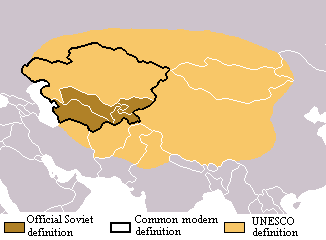
Image
Šta je Centralna Azija - 3 varijante
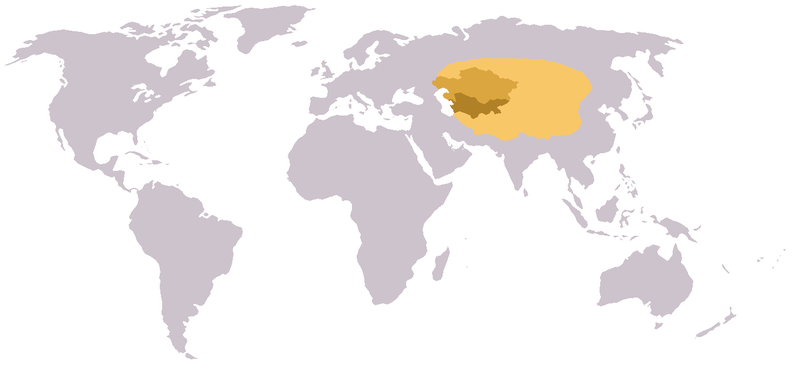
Image
Centralna Azija kao svjetski region
Image
UN-ova geošema Azije
Sjeverna-plavo
Centralna-ljubičasto
Jugozapadna-zeleno
Južna-crveno
Istočna-žuto
Jugoistočna-narandžasto


Central Asia
From Wikipedia, the free encyclopedia


Central Asia is a region of Asia from the Caspian Sea in the west, China in the east, Afghanistan in the south, and Russia in the north. It is also sometimes known as Middle Asia or Inner Asia, and is within the scope of the wider Eurasian continent.

Various definitions of its exact composition exist and no one definition is universally accepted. Despite this uncertainty in defining borders, it does have some important overall characteristics. For one, Central Asia has historically been closely tied to its nomadic peoples and the Silk Road.[3] As a result it has acted as a crossroads for the movement of people, goods, and ideas between Europe, West Asia, South Asia, and East Asia.[4]

In modern context, all definitions of Central Asia consensually include the five former Soviet republics of Kazakhstan (pop. 16.0 million), Kyrgyzstan (5.5 million), Tajikistan (7.3 million), Turkmenistan (5.1 million), and Uzbekistan (27.6 million) for a total population of 61.5 million as of 2009. Other areas are often included such as the Republic of Mongolia, Afghanistan, northern and western Pakistan, north-eastern Iran, Jammu and Kashmir, and western parts of the People's Republic of China including Xinjiang, Tibet, Qinghai, Gansu, western Sichuan, northwestern Yunnan and Inner Mongolia, as well as southern parts of Siberia (Russia), such as Tuva may also be included in Central Asia.

During pre-Islamic and early Islamic times, Central Asia was a predominantely Iranian[5][6] region that included sedentary Sogdians, Chorasmians and semi-nomadic Scythians, Alans. The ancient sedentary population played an important role in the history of Central Asia. After expansion by Turkic peoples, Central Asia became also the homeland for many Turkic peoples, including the Uzbeks, Kazakhs, Kyrgyz, and Uyghurs, and Central Asia is sometimes referred to as Turkestan.
Contents
[hide]

* 1 Definitions
* 2 Geography
* 3 Divisions
o 3.1 Climate
* 4 History
* 5 Culture
o 5.1 Religions
o 5.2 Arts
* 6 Territory and region data
o 6.1 Territories sometimes included
* 7 Demographics
o 7.1 Languages
* 8 Geostrategy
o 8.1 War on Terror
* 9 Major cultural and economic centres
* 10 See also
* 11 Citations
* 12 General references
* 13 External links

[edit] Definitions
Three sets of possible boundaries for the region
Central Asia's location as a region of the world

The idea of Central Asia as a distinct region of the world was introduced in 1843 by the geographer Alexander von Humboldt. The borders of Central Asia are subject to multiple definitions. Many text books still refer to this area as Turkestan, which was the name used prior to Stalin's rule.

The most limited definition was the official one of the Soviet Union that defined the "Middle Asia" as consisting solely of Uzbekistan, Turkmenistan, Tajikistan, and Kyrgyzstan, but did not include Kazakhstan, Afghanistan and Mongolia. This definition was also often used outside the USSR in this period.

However, the Russian language has two distinct terms: Средняя Азия (Srednyaya Aziya or "Middle Asia", the narrower definition which includes only those traditionally non-Slavic, "Central Asian" lands that were incorporated within those borders of historical Russia) and Центральная Азия (Tsentral'naya Aziya or "Central Asia", the wider definition which includes "Central Asian" lands that have never been part of historical Russia). However, there lacks a meaningful distinction between the two in the English language; and so "Central Asia" is used for both Russian usages, thus creating some confusion.

Soon after independence, the leaders of the five former Soviet Central Asian Republics met in Tashkent and declared that the definition of Central Asia should include Kazakhstan as well as the original four included by the Soviets. Since then, this has become the most common definition of Central Asia.

The UNESCO general history of Central Asia, written just before the collapse of the USSR, defines the region based on climate and uses far larger borders. According to it, Central Asia includes Mongolia, Tibet, northeast Iran (Golestan, North Khorasan, and Razavi provinces), Afghanistan, Northern Areas and the N.W.F.P. province of Pakistan, Kashmir and Ladakh, central-east Russia south of the Taiga, and the former Central Asian Soviet Republics (the five "Stans" of the former Soviet Union).

An alternative method is to define the region based on ethnicity, and in particular, areas populated by Eastern Turkic, Eastern Iranian, or Mongolian peoples. These areas include Xinjiang Uyghur Autonomous Region, the Turkic regions of southern Siberia, the five republics, and Afghan Turkestan. Afghanistan as a whole, the Northern Areas of Pakistan and the Kashmir Valley may also be included. The Tibetans and Ladakhi are also included. Insofar, the mentioned peoples are considered the "indigenous" peoples of the vast region.

There are several places that claim to be the geographic center of Asia, for example Kyzyl, the capital of the Tuvan Republic in the Russian Federation, and a village 200 miles (320 km) North of Urumqi, Xinjiang, China.[7]
[edit] Geography
United Nations geoscheme for Asia: North Asia Central Asia Southwest Asia South Asia East Asia Southeast Asia

Central Asia is an extremely large region of varied geography, including high passes and mountains (Tian Shan), vast deserts (Kara Kum, Kyzyl Kum, Taklamakan), and especially treeless, grassy steppes. The vast steppe areas of Central Asia are considered together with the steppes of Eastern Europe as a homogenous geographical zone known as the Euro-Asian Steppe.

Much of the land of Central Asia is too dry or too rugged for farming. The Gobi desert extends from the foot of the Pamirs, 77° east, to the Great Khingan (Da Hinggan) Mountains, 116°–118° east.

Central Asia has the following geographic extremes:

* The world's northernmost desert (sand dunes), at Buurug Deliin Els, Mongolia, 50°18' north.
* The Northern Hemisphere's southernmost permafrost, at Erdenetsogt sum, Mongolia, 46°17' north.
* The world's shortest distance between non-frozen desert and permafrost: 770 km (480 mi).

A majority of the people earn a living by herding livestock. Industrial activity centers in the region's cities.

Major rivers of the region include the Amu Darya, the Syr Darya and the Hari River. Major bodies of water include the Aral Sea and Lake Balkhash, both of which are part of the huge west/central Asian endorheic basin that also includes the Caspian Sea.

Both of these bodies of water have shrunk significantly in recent decades due to diversion of water from rivers that feed them for irrigation and industrial purposes. Water is an extremely valuable resource in arid Central Asia, and can lead to rather significant international disputes.
[edit] Divisions

The northern belt is part of the Eurasian Steppe. In the northwest, north of the Caspian Sea, Central Asia merges into the Russian Steppe. To the northeast, Dzungaria and the Tarim Basin may sometimes be included in Central Asia. Just west of Dzungaria, Zhetysu or Semirechye is south of Lake Balkhash and north of the Tian Shan Mountains. Khorezm is south of the Aral Sea along the Amu Darya. Southeast of the Aral Sea, Maveranahr is between the Amu Darya and Syr Darya. Transoxiana is the land north of the middle and upper Amu Darya (Oxus). Bactria included northern Afghanistan and the upper Amu Darya. Sogdiana was north of Bactria and included the trading cities of Bukhara and Samarkhand. Khorasan and Margiana approximate northeastern Iran. The Kyzyl Kum Desert is northeast of the Amu Darya and the Karakum Desert southwest of it.
[edit] Climate

Since Central Asia is not buffered by a large body of water, temperature fluctuations are more severe.

According to the WWF Ecozones system, Central Asia is part of the Palearctic ecozone. The largest biome in Central Asia is the Temperate grasslands, savannas, and shrublands biome. Central Asia also contains the Montane grasslands and shrublands, Deserts and xeric shrublands and Temperate coniferous forests biomes.
[edit] History
Main article: History of Central Asia
Geographical extent of Iranian influence in the 1st century BC. Scythia (mostly Eastern Iranian) is shown in orange.
A Scythian horseman from the general area of the Ili river, Pazyryk, c.300 BCE.

The history of Central Asia is defined by the area's climate and geography. The aridness of the region made agriculture difficult and its distance from the sea cut it off from much trade. Thus few major cities developed in the region, instead the area was for millennia dominated by the nomadic horse peoples of the steppe.

Relations between the steppe nomads and the settled people in and around Central Asia were long marked by conflict. The nomadic lifestyle was well suited to warfare and the steppe horse riders became some of the most militarily potent peoples in the world, limited only by their lack of internal unity. Any internal unity that was achieved, was most probably due to the influence of the Silk Road, which traveled along Central Asia. Periodically great leaders or changing conditions would organize several tribes into one force, and create an almost unstoppable power. These included the Hun invasion of Europe, the Wu Hu attacks on China and most notably the Mongol conquest of much of Eurasia.[8]

During pre-Islamic and early Islamic times, southern Central Asia was inhabited predominantly by speakers of Iranian languages.[5][9] Among the ancient sedentary Iranian peoples, the Sogdians and Chorasmians played an important role, while Iranian peoples such as Scythians and the later on Alans lived a nomadic or semi-nomadic lifestyle. The well-preserved Tarim mummies with Caucasoid features have been found in the Tarim Basin.[10]

The main migration of Turkic peoples occurred between the 5th and 10th centuries, when they spread across most of Central Asia. During the 13th and 14th centuries, the Mongols conquered and ruled the largest contiguous empire in recorded history.

The dominance of the nomads ended in the 16th century, as firearms allowed settled peoples to gain control of the region. Russia, China, and other powers expanded into the region and had captured the bulk of Central Asia by the end of the nineteenth century. After the Russian Revolution the Central Asian regions were incorporated into the Soviet Union. Mongolia remained independent but became a Soviet satellite state. However Afghanistan remained independent of any influence by the Russian empire.

The Soviet areas of Central Asia saw much industrialization and construction of infrastructure, but also the suppression of local cultures, hundreds of thousands of deaths from failed collectivization programs, and a lasting legacy of ethnic tensions and environmental problems. Soviet authorities deported millions of people, including entire nationalities,[11] from western areas of the USSR to Central Asia and Siberia.[12] From 1959 to 1970, about two million people from various parts of the Soviet Union migrated to Central Asia, of which about one million moved to Kazakhstan.[13]

The numbers of ethnic Han Chinese settlers in Xinjiang (East Turkestan) has risen from less than half a million in 1953 to 7.5 million by 2000.[14]

With the collapse of the Soviet Union five countries gained independence. In nearly all the new states former Communist Party officials retained power as local strongmen. None of the new republics could be considered functional democracies in the early days of independence, although it appears Kyrgyzstan, Kazakhstan and Mongolia have made great strides, unlike Uzbekistan, Tajikistan, and Turkmenistan.
[edit] Culture
Blue-eyed Central Asian and East-Asian Buddhist monks, Bezeklik, 9th-10th century.
[edit] Religions

Islam is the religion most common in the Central Asian Republics, Afghanistan, Xinjiang and the peripheral western regions, such as Bashkiria. Most Central Asian Muslims are Sunni, although there are sizable Shia minorities in Afghanistan and Tajikistan.

Buddhism was prominent in Central Asia prior to the arrival of Islam, and the transmission of Buddhism along the Silk Road eventually brought the religion to China. Tibetan Buddhism is most common in Tibet, Mongolia, Ladakh and the southern Russian regions of Siberia, where Shamanism is also popular (including forms of divination such as Kumalak). Increasing Han Chinese migration westward since the establishment of the PRC has brought Confucianism and other beliefs into the region.

Nestorianism was the form of Christianity most practiced in the region in previous centuries, but now the largest denomination is the Russian Orthodox Church, with many members in Kazakhstan. The Bukharian Jews were once a sizable community in Uzbekistan and Tajikistan, but nearly all have emigrated since the Collapse of the Soviet Union and the revival of Islam in the region.
[edit] Arts
Yama, the Lord of Death.

At the crossroads of Asia, shamanist practices live alongside Buddhism. Thus Yama, Lord of Death, was revered in Tibet as a spiritual guardian and judge. Mongolian Buddhism in particular influenced Tibetan Buddhism. The Qianlong Emperor of China in the 18th century was Tibetan Buddhist, and would sometimes travel from Beijing to other cities for personal religious worship.

Note the human skulls and severed heads that festoon Yama's crown and necklace, which give some concept of the size that Yama was expected to be when one faced him at one's death. This particular Dharmapala is painted wood, four feet high in total.

Central Asia also has an indigenous form of improvisational oral poetry which is over 1000 years old. It is principally practiced in Kyrgyzstan and Kazakhstan by akyns, lyrical improvisationists. They will engage in lyrical battles, the aitysh or the alym sabak. The tradition arose out of early bardic oral historians. They are usually accompanied by a stringed instrument—in Kyrgyzstan, a three-stringed komuz and in Kazakhstan a similar two-stringed instrument.

Some also learn to sing the Manas, Kyrgyzstan's epic poem (those who learn the Manas exclusively but do not improvise are called manaschis). During Soviet rule, akyn performance was co-opted by the authorities and subsequently declined in popularity. With the fall of the Soviet Union it has enjoyed a resurgence, although akyns still do use their art to campaign for political candidates. A 2005 Washington Post article proposed a similarity between the improvisational art of akyns and modern freestyle rap performed in the West.

Demographics
Main article: Demography of Central asia
The ethnolinguistic patchwork of Central Asia

By a broad definition including Mongolia and Afghanistan, but excluding Pakistan, then more than 90 million people live in Central Asia, about 2% of Asia's total population. Of the regions of Asia, only North Asia has fewer people. It has a population density of 9 people per km², vastly less than the 80.5 people per km² of the continent as a whole.
[edit] Languages

The languages of the majority of the inhabitants of the former Soviet Central Asian Republics come from the Turkic language group.[16] Turkmen, closely related to Turkish (they are both members of the Oghuz group of Turkic), is mainly spoken in Turkmenistan and into Afghanistan, Iran and Turkey. Kazakh, Kyrgyz and Tatar are related languages of the Kypchak group of Turkic languages, and are spoken throughout Kazakhstan, Kyrgyzstan and Tajikistan, and into Afghanistan and Xinjiang. Uzbek and Uyghur are spoken in Uzbekistan, Tajikistan, Afghanistan and Xinjiang.

Russian, as well as being spoken by around six million ethnic Russians and Ukrainians of Central Asia,[17] is a lingua franca throughout the former Soviet Central Asian Republics. Mandarin Chinese has an equally dominant presence in Inner Mongolia, Qinghai and Xinjiang.

The Turkic languages belong to the much larger, but controversial Altaic language family, which includes Mongolian. Mongolian is spoken throughout the region of Mongolia and into Buryatia, Kalmyk, Tuva, Inner Mongolia, and Xinjiang.

East Iranian languages were once spoken throughout Central Asia, but the once prominent Sogdian, Khwarezmian, Bactrian and Scythian languages are now extinct. However, the East Iranian Pashto is still spoken in Afghanistan and northwestern Pakistan, and other minor East Iranian languages, such as Shughni, Munji, Ishkashimi, Sarikoli, Wakhi, Yaghnobi and Ossetian are also spoken in various places in Central Asia. Varieties of Persian are also spoken in the region, locally known as Darī (in Afghanistan), Tojikī (by Tajiks in Tajikistan), and Bukhori (by the Bukharan Jews in Bukhara).

The Tibetan language is spoken by around six million people across the Tibetan Plateau and into Qinghai, Sichuan and Ladakh.

Dardic languages are predominant in the Northern areas of Pakistan and Kashmir Valley and spread into Ladakh and NWFP and include Shina, Kashmiri and Khowar.

Tocharian, an Indo-European language, was once spoken in Xinjiang and parts of Afghanistan, but is now extinct.

Geostrategy
Main article: Geostrategy in Central Asia

Central Asia has long been a strategic location merely because of its proximity to several great powers on the Eurasian landmass. The region itself never held a dominant stationary population, nor was able to make use of natural resources. Thus it has rarely throughout history become the seat of power for an empire or influential state. Central Asia has been divided, redivided, conquered out of existence, and fragmented time and time again. Central Asia has served more as the battleground for outside powers, than as a power in its own right.

Central Asia had both the advantage and disadvantage of a central location between four historical seats of power. From its central location, it has access to trade routes to and from all the regional powers. On the other hand, it has been continuously vulnerable to attack from all sides throughout its history, resulting in political fragmentation or outright power vacuum, as it is successively dominated.
Political cartoon from the period of the Great Game showing the Afghan Amir Sher Ali with his "friends" Imperial Russia and the United Kingdom (1878)

* To the North, the steppe allowed for rapid mobility, first for nomadic horseback warriors like the Huns and Mongols, and later for Russian traders, eventually supported by railroads. As the Russian empire expanded to the East, it would also push down into Central Asia towards the sea, in a search for warm water ports. The Soviet bloc would reinforce dominance from the North, and attempt to project power as far south as Afghanistan.
* To the East, the demographic and cultural weight of Chinese empires continually pushed outward into Central Asia. Manchu Qing dynasty would conquer Uyghurstan/East Turkistan and Tibet. As part of the Sino-Soviet bloc, China would keep Tibet. However, with the Sino-Soviet split, China would project power into Central Asia, most notably in the case of Afghanistan, to counter Russian dominance of the region.
* To the Southeast, the demographic and cultural influence of India was felt in Central Asia, notably in Tibet, the Hindu Kush, and slightly beyond. Several historical Indian dynasties, especially those seated along the Indus river would expand into Central Asia. India's ability to project power into Central Asia although has been limited due to the mountain ranges in Pakistan (and the country itself, which has somewhat advanced greater into the affairs of the overall region), as well as the cultural differences between Hindu India, and what would become a mostly Muslim Central Asia. From its base in India, the British Empire competed with the Russian Empire for influence in the region in the 19th and 20th centuries.
* To the Southwest, Western Asian powers have expanded into the Southern areas of Central Asia (usually, Uzbekistan, Afghanistan, and Pakistan). Several Persian empires would conquer and reconquer parts of Central Asia; Alexander the Great's Hellenic empire would extend into Central Asia; two Islamic empires would exert substantial influence throughout the region; and the modern state of Iran has projected influence throughout the region as well.

In the post-Cold War era, Central Asia is an ethnic cauldron, prone to instability and conflicts, without a sense of national identity, but rather a mess of historical cultural influences, tribal and clan loyalties, and religious fervor. Projecting influence into the area is no longer just Russia, but also Turkey, Iran, China, Pakistan, India and the United States:

* Russia continues to dominate political decision-making throughout the former SSRs, although as other countries move into the area Russia's influence has slowly waned, yet they are still the dominant power.
* The United States with its military involvement in the region, and oil diplomacy, is also significantly involved in the region's politics. The United States and other NATO members are the main contributors to the International Security Assistance Force in Afghanistan and also exert considerable influence in other Central Asian nations.
* China, already controlling Xinjiang and Tibet, projects significant power in the region, especially in energy/oil politics (for example, through the Shanghai Cooperation Organization).
* India has geographic proximity to the Central Asian region, and in addition, enjoys considerable influence on Afghanistan.[18][19] India maintains a military base at Farkhor, Tajikistan and also has extensive military relations with Kazakhstan and Uzbekistan.[20]
* Turkey also exerts considerable influence in the region on account of its ethnic and linguistic ties with the Turkic peoples of Central Asia and its involvement in the Baku-Tbilisi-Ceyhan oil pipeline. Political and economic relations are growing rapidly (e.g. Turkey recently eliminated visa requirements for citizens of the Central Asian Turkic republics).
* Iran, the seat of historical empires which controlled parts of Central Asia, has historical and cultural links to the region, and is vying to construct an oil pipeline from the Caspian Sea to the Persian Gulf.
* Pakistan, a nuclear-armed Islamic state helped to sustain Taliban rule in Afghanistan, and is termed capable of exercising influence. For some Central Asian nations, the shortest route to the ocean lies through Pakistan. Pakistan seeks Natural Gas from Central Asia, and supports the development of pipelines from its countries.

[edit] War on Terror

In the context of the United States' War on Terror, Central Asia has once again become the center of geostrategic calculations. Pakistan's status has been upgraded by the U.S. government to Major non-NATO ally because of its central role in serving as a staging point for the invasion of Afghanistan, providing intelligence on Al-Qaeda operations in the region, and leading the hunt on Osama bin Laden, believed to still be in the region.

Afghanistan, which had served as a haven and source of support for Al-Qaeda, under the protection of Mullah Omar and the Taliban, was the target of a U.S. invasion in 2001, and ongoing reconstruction and drug-eradication efforts. U.S. military bases have also been established in Uzbekistan and Kyrgyzstan, causing both Russia and the People's Republic of China to voice their concern over a permanent U.S. military presence in the region.

Western observers and governments have claimed that Russia, China and the former Soviet republics have taken advantage of the War on Terror to increase oppression of certain ethnic groups, including minority separatist movements, as well as some religious groups.

http://en.wikipedia.org/wiki/Central_Asia

#25 Re: Dešavanja u Kirgistanu

Posted: 04/07/2010 15:37
by seldzuk
http://upload.wikimedia.org/wikipedia/c ... nic_en.svg
etno-lingvistička karta Centralne Azije