@tornjak
A odakle ti potreba da se mjesas o necemu o cemu ocigledno blage vezes nemas.Nasa Hg je I2-CTS10228,od I2a nas dijeli preko 20 000 godina

.Nas zajednicki predak je zivio prije oko 2200 godina i nalazi na stablu M423,L621 ciji su stare kosti pronadjene u Bjelorusiji,Svedskoj,Luksemburgu.Od tridesetak starih kostiju na Balkanu koje su testirane nema nijedne M423 u zadnjih 5000 godina prije nove ere.Preko 80 % nosilaca CTS10228 zivi u Istocnoj Evropi,a 98 % nosilaca govori skupinom slovenskih jezika.
Nasa CTS10228 je najmladja na stablu,SLAVIC COUNTRIES

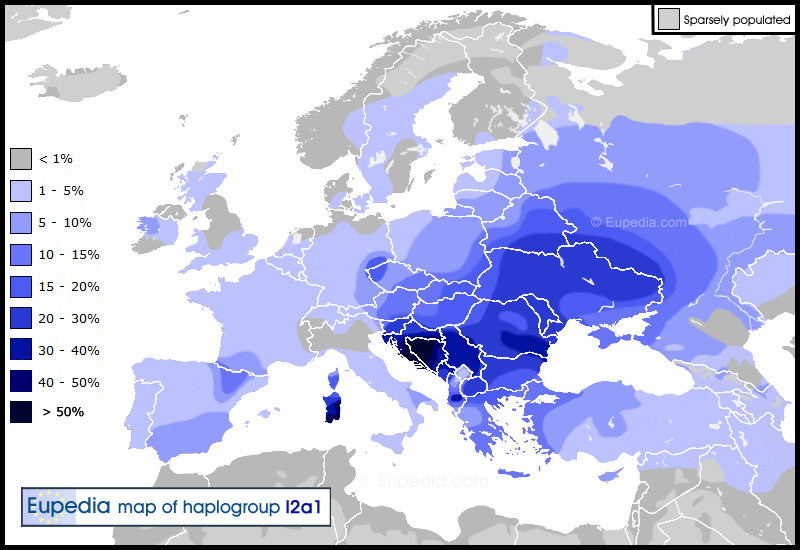
Nowadays, I2a1 is five to ten times more common than G2a in Southeast Europe, while during the Neolithic period G2a was approximately four times more common. What can explain this complete reversal? At one point in history, I2a1 lineages seem to have benefited from being on the winning side. Apart from a minor boost from (hypothetically) joining Yamna's westward expansion to Europe, the principal determining event that allowed I2a1b-L621 to become a major Eastern European lineage was probably the Slavic migrations from the 6th to the 9th century CE. Most modern Eastern Europeans belonging to I2a1b fit into the L147.2 (aka CTS10228, CTS2180 or Y3111) subclade, which is thought to have arisen 5,600 years ago (just before the Yamna period and the Trypillian expansion into the steppe), but has a TMRCA of only 2,300 years according to Yfull. The minority of I2a1b-L621 individuals negative for L147.2 are all found around eastern Poland, Belarus and western Ukraine, suggesting that this is where this lineage survived since the Chalcolithic. The I2a1b-L147.2 subclade seems to have expanded very fast from 1900 years ago, which is concordant with the timing of the Slavic ethnogenesis, considering that it takes a few centuries before one man can have enough male descendants to start having an impact at the scale of a population. This I2-L147.2 ancestor would have such an impact on the burgeoning Early Slavic population, still small 2,300 years ago, but booming.