

Kikibombona wrote:Citadela
U posljednjem komentaru pokazujes nekontrolisanu nervozu. Spustas se na licnu razinu i etiketiras u vise navrata. Bice da si emotivno vezan za nedavno svrgnute islamiste. Oprastam ako je to u pitanju.
Vojska je svakako bitan faktor, to niko ne spori. Nema sumnje da su najjaca snaga u Egiptu. Uostalom, egipatska vojska drzi skoro 40% ekonomije. Iako su daleko od idealnog, mora im se odati priznanje sto su sacuvali mir iako imaju bolje preduslove za rat od Libije i Sirije. Slazes li se sa tim? Slazes li se da bi za Libiju i Siriju bilo dobro da su imale Sisija koji bi smijenio diktatora i sacuvao drzavu od devastcije i ogromne ljudske zrtve? Slazes li se da je u ovom nezgodnom vremnenu bilo dobro sto je Egipat imao i ima snaznu i neovisnu vojsku? Vidis li ti ove pozitivnosti ili si totalno emotivno devastiran padom Mursija i njegove stranke?
Niko i nista ne moze osporiti cinjenicu da je vojska ispostovala volju NEZADOVOLJNIH gradjana, onih koji su dosli vladajucim poruciti da idu. Ko moze garantovati da i ove nove nece otjerati ako sutra milioni Egipcana izadju na ulicu? Ne moze niko, ne moze nakon sto su sklonili Mubaraka.
Sta je vojska po tebi trebala uraditi?
Jesu trebali podmetnuti svoje glave i na sebe preusmjeriti gnjev koji je proizvela Braca u narodu?
Sta su trebali uraditi, kako su se trebali postaviti i kako suzbiti najmasovnije proteste u istoriji Egipta?
I molim te odgovori na kljucna pitanja...
1. Jesu li se Muslimanska braca imala priliku obratiti milionima nezadovoljnih? Jesu li na bilo koji nacin ispostovali milione Egipcana?
2. Sta je vojska trebala i mogla uraditi nakon sto su Braca ignorisala pomenute milione?
3. Sta bi bilo koja civilizovana vlast uradila da protiv njih potestvuju milioni gradjana?
Ako ti je previse pitanja u komentaru, bice dovoljno da odgovoris na ova tri.. Nakon toga ce sve biti jasnije.
I jos nesto imaj na umu...
Masovni protesti nisu uslijedili nakon pobjede Muslimanske brace, vec nakon kratkog vremena provedenog pod njihovom vladavinom. Dobro razmisli o ovome prije nego ih nastavis braniti.
 Jest, emotivno sam vezan za islamiste.
  I da jesam to bi opet u bitnom promijenilo cinjenicu da je tvoje gledanje plitko. Ako mislis da sam subjektivan, procitaj opet sve sto sam pisao. Upravo si ti taj koji pristupa "navijacki" sto ne bi ni bio problem da malo bolje poznajes temu. Stvarno ne znam kojim eufemizmima da ti kazem da ograniceno posmatras.
 Kako da ti objasnim da egipatska vojska ne stiti niciju volju i interese do samo svoje, odnosno interese elite starog rezima? Kako da ti objasnim da se nikako ne moze porediti situacija u Libiji i Siriji sa ovom u Egiptu? Upravo tvoje povlacenje paralela sa ovim slucajevima govori koliko ti zelis uprostiti sve i svesti na princip crno-bijelo. Kako da ti objasnim da tvoja prica kako je vojska garant mira i sigurnost i da ona stiti volju naroda i radi sve u interesu naroda i drzave -- je tragikomicna?
Vojska sacuvala mir
 Vojska sprijecila proljevanje krvi i ljudske zrtve? Pitas me da li vidim te "pozitivnosti"?
 Vise nemam volje da raspravljam. Zivio!
I da, prizori egipatskog mira, sigurnosti i "pozitivnosti" (kako rece kolega) akcije vojske:

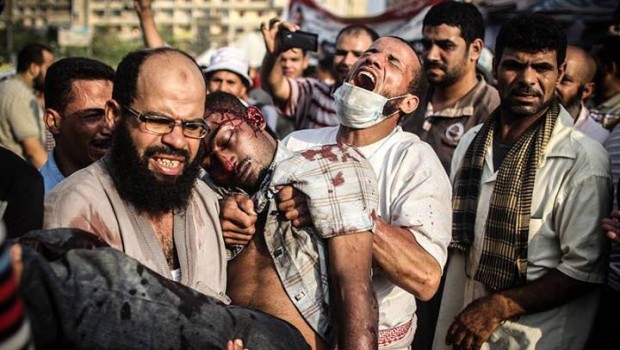
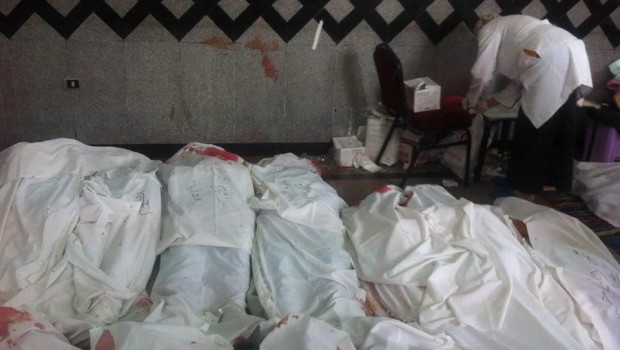

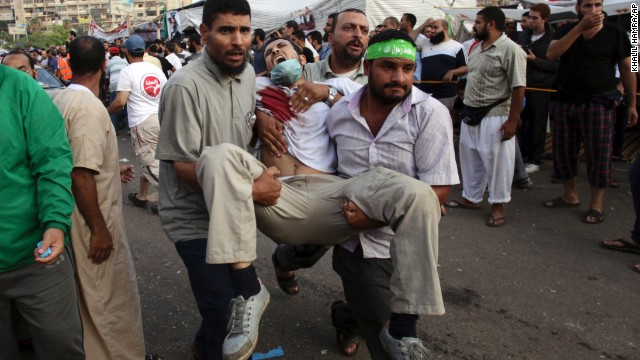
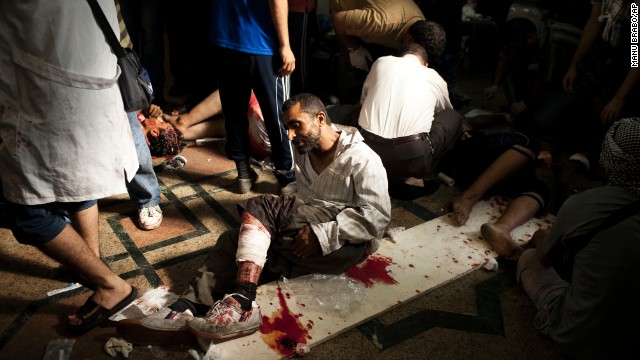
http://eaworldview.com/2013/07/egypt-1s ... civilians/Photojournalist Mosa’ab Elshamy was one of the first witnesses from Cairo to report about slain protesters, killed by police early Saturday morning in a confrontation with supporters of former President Morsi.
On his Facebook page, Elshamy posts a series of images, accompanied by his testimony. He cautions that he “couldn’t tell what had sparked the violence” and continues:
At 3.45 a.m I found my way through the mass of bodies and cameras in the hospital, it was becoming clear how the situation had worsened in just a few minutes. A doctor told me eight had been killed, and over 500 injured. They tried to clear beds for the incoming victims but soon ran out of space and had to use another room. Over the next hour I saw at least thirty cases of live-bullet injuries in the chest, leg and head. Few of them made it….
As the sun rose over Raba’a [the site of the main pro-Morsi sit-in], it felt safer to head to the front-lines. I headed there at 6 a.m, and noticed Morsi supporters had set three lines of defense with brick walls. They crouched behind these walls as the bullets flew. In the time that I spent in Raba’a, I saw that Morsi supporters were unarmed, except with rocks and fireworks, in addition to the occasional tear gas canister they would throw back at the police where it came from. I feel compelled, however, not to doubt the possibility of them being armed earlier at night when things were more vicious and chaotic, making observing things more difficult.
Injuries at the front lines were regular. Almost every couple of minutes, a man fell. Nasr Street is a very wide street, making it impossible to know where the bullets would come from. The shooting was indiscriminate and the police showed little, if any, self restraint. I saw a man get shot in the back of his head and drop dead, immediately, on the pavement he was standing on. He wasn’t even close to the frontlines. It was frightening.
The police, I noticed, were accompanied by armed civilians on their side. These civilians seemed like a mix of residents, who I saw when I was at the police cordon at the start of the night, as well as what appeared to be paid thugs. Both the civilians and police fired at Morsi supporters while I was there. Helpless, Morsi supporters mostly just took cover, threw rocks and fireworks at the police before one was shot and carried away. This image repeatedly itself countless times.
As for the military, I saw that they took no part in the assault. Their only involvement was very briefly, when the soldiers as the Sadat Memorial shot fire in the air and managed to distance the two sides, before they resumed again.




