kiligonzales wrote:salik79 wrote:kiligonzales wrote:
Te snimke koje si postavio vec sam gledao, kao sto sam gledao ovoga sto sam ti sada postavio.
Ako ti nije jasno ovo je postavljeno jer je na njemu Subhi Tufejli. Ti znas ko je on.
Nema vece istine o oba rezima od pokolja u Iraku, Siriji, Jemenu.
Ti ih brani kao da su casni, ali nisu.
Meni nisu svete krave.
Vrlo dobro znam ko je on i zasto potenciras vehabijsku propagandu.
Clanak politickog analiticara Samyja Moubayeda, za "Asia times", iz 2008. :
Saudis resurrect a rival for Hezbollah
By Sami Moubayed
DAMASCUS - Word is coming out of south Lebanon that Saudi money under United States urging is being pumped into the Shi'ite community - in vain - to create a bloc among Lebanese Shi'ites against Hezbollah leader Hassan Nasrallah.
The Saudis are strongly opposed to Hezbollah, claiming that it is an extension of Iranian influence in the Arab world. More recently, the Saudis have began coordinating with former vice president Abdul-Halim Khaddam to break Hezbollah's influence in Lebanon.
In testimony of just how influential Nasrallah is as secretary general of Hezbollah, the Saudis have stunningly failed - despite tremendous efforts and allegations of huge sums of money being spent - at creating a serious anti-Nasrallah team in places
controlled by Hezbollah and its ally, the Amal Party of speaker Nabih Berri.
This applies to places like al-Dahiya, the Hezbollah stronghold in the suburbs of Beirut, and cities like Baalbak. That is why they have shifted their attention recently to other districts with "Shi'ite pockets" where Hezbollah does not completely reign, like Nab'a, and certain villages in south Lebanon.
Coinciding with this story and probably related to it, are unconfirmed reports saying that Michael Hayden, the head of the US Central Intelligence Agency, went to Beirut for a secret mission, probably aimed at working towards crushing - or at least disarming - Hezbollah.
That coincided with another high-profile visit by US Under Secretary of Defense Eric Edelman to Beirut, where he met Prime Minister Fouad al-Siniora, signing an agreement to grant automatic grenade launchers to the Lebanese army. The visit - Edelman's fourth in one year - raised eyebrows among members of the Hezbollah-led opposition, who were welcoming Michel Aoun, Hezbollah's main Christian ally, who was returning from a five-day visit to Iran.
The Americans are trying - again - to implement United Nations Security Council resolution 1559, which calls for the disarmament of Hezbollah, through strengthening "US-Lebanon bilateral defense" relations. Since 2006, the US has committed more than $410 million in military assistance to Lebanon - hoping that these weapons can be used to counterbalance the military might of Hezbollah.
The Saudis and Subhi Tufayli
The Saudis, however, are reportedly funding a rival wing of Hezbollah itself, modeled around Sheikh Subhi Tufayli, one of the party's original founders who has been sitting in the dark since the 1990s.
Tufayli started out as a firm supporter of Grand Ayatollah Ruhollah Khomeini, having studied Islam in Najaf (Iraq) during Khomeini's long exile in the holy Iraqi city, before the Islamic revolution of 1979. He returned to Lebanon and helped co-found Hezbollah - with Iranian support - during the Israeli invasion of 1982.
The party broke from Amal, disgruntled at the party's increased secularization and its political rather than military approach, vis-a-vis the Israeli occupation. Men like Tufayli, Abbas Musawi and Nasrallah wanted action, and immediately clashed with Amal and its veteran leader (and now ally) Nabih Berri.
Under Tufayli's leadership, Hezbollah managed to drive Amal from Beirut during the height of the Lebanese civil war in the late 1980s. Under his command rose the young Nasrallah in 1989, leading a commando force against Amal in Iqlim al-Tuffah, and becoming a member of the central command of Hezbollah at the young age of 29.
Tufayli served as the party's spokesman from 1985 to 1989, then became secretary general from 1989 to 1991. Tufayli opposed taking part in national reconciliation talks in Taif, Saudi Arabia, and as a result was expelled (or asked to resign) from Hezbollah under the urging of then Iranian president Ali Akbar Hashemi Rafsanjani. Nasrallah served as Hezbollah's "ambassador" to Iran in 1989-1992. During this time, Tufayli was replaced by Abbas Musawi as secretary general, who in turn was assassinated in 1992, many suspect by Israel.
Nasrallah replaced him at the job, although the party's hierarchy showed that it should have gone to Sheikh Naim Qasim. Veterans of Hezbollah - headed by Tufayli - were surprised at the change of command, considering Nasrallah as too junior politically and religiously, and too young at 31, to become the Party of God's number-one man.
A hardliner, Tufayli once said that his supporters did not dream of eradicating Israel in the near future, but plans to lead a battle that will last "for centuries". More recently, he has distanced himself from Iran for its firm support for Nasrallah, a man whom he respects but envies tremendously. He can't challenge him, beat him, or replace him as head of Hezbollah or the Lebanese Shi'ite community.
He once said that some of the current members of Hezbollah "are taking the country towards destruction under the slogan of fighting the American policies in the region. If someone wants to change the government, does it not mean leading the whole country to chaos and civil strife?"
Tufayli vetoed the "politicization" of Hezbollah, claiming that it should neither run for parliament, nor hold government office, and remain committed to what it knows best: guerrilla war with Israel.
In July 1997, he organized a "hunger strike" of his followers in Baalbak, aimed at embarrassing the pro-Hezbollah government of then-prime minister Rafik al-Hariri. He has since called his small power base the Revolution of the Hungry, similar to the "Movement of the Dispossessed" that was created by Hezbollah's godfather, Sheikh Musa Sadr.
Although the Lebanese government tried to arrest him, it has since let him live freely, keeping close tabs on his activities and making sure that he is absent from public life. In 2000, when Nasrallah liberated south Lebanon against Israel, Tufayli was believed to be politically finished, since Hezbollah was at the apex of its career and no Shi'ite with a right mind could challenge the charisma or popularity of Nasrallah.
But on several occasions he came out and spoke against Nasrallah, objecting to the latter's alliance with Iran and claiming that he broke with Hezbollah because of the overt Iranian agenda of its secretary general. Earlier, in his final act of defiance, Tufayli clashed with the Lebanese state when his followers tried to take over a party-run religious school in Baalbak.
The Lebanese army was asked to intervene, when Iranian cover was lifted off Tufayli, back when the armed forces were under command of pro-Syrian General Emille Lahhoud, who became president of the republic from 1998-2007. The army announced that it had mobilized against Tufayli "on charges of forming armed groups, endangering national security and killing soldiers and civilians".
The Lebanese government of Siniora has tried in vain to get rid of Hezbollah, but was unable to do so due to the party's power base and the repeated victories it scored against Israel since 2000. The UN could not disarm Hezbollah, nor could the United States, or Israel in its failed 2006 war on Lebanon.
According to veteran US journalist Seymour Hersh, the Americans and Saudis even worked towards creating an armed Sunni terrorist group to combat Hezbollah - in reference to Fatah al-Islam, inspired by al-Qaeda - which also ended in vain.
Now, all parties are trying to break Nasrallah's kingdom from within, through splinter Shi'ite groups loyal to people like Tufayli and through the money of dissident Syrians. Any person who has seen how popular Nasrallah was in Lebanon in 2000 or 2006 realizes how foolish it would be to try and challenge him by resurrecting figures like Subhi Tufayli.
Nasrallah is one of the most charismatic and popular figures in the Muslim world. Tufayli is a nobody. Nasrallah achieved victory for his party in 2000 and 2006, whereas Tufayli left behind a troubled - almost forgotten - legacy. Nasrallah distributes money to the poor in order to empower the Shi'ites of Lebanon.
Saudi Arabian money is going to Tufayli's pockets, not to ordinary Shi'ites. Saudi Arabia will never be respected or seen as an honest broker in the Shi'ite community because of its ties to militant Sunni groups like al-Qaeda. That is why nobody aided or financed by the Saudis will ever be accepted by Lebanese Shi'ites.
Sami Moubayed is a Syrian political analyst.
http://www.atimes.com/atimes/Middle_East/JJ21Ak01.html
To je to

Ovdje bih samo dodatno skinuo kapu casnom Hassanu Nasrullahu i njegovom Hizbullahu, koji bi se s ovim placenikom (novac mu je, na zalost, na prvom mjestu) mogli obracunati za tili cas, ali ga, demokratski, pustaju da kaze sta "misli", odnosno sta njegovi finansijeri traze od njega da "misli".
Jesu li tebi logika i matematika losa strana?
Nema se potrebe spominjati Tufejli, ako cemo realno sagledati sliku stvari, on je rekao golemu istinu o iranskoj vanjskoj politici i ono sto je rekao o politici arapskih zemalja stoji. Cijenu te politike placaju narodi. Htio ti priznati ili ne. Hezbollah je siitski pokret u Libanu, zbog tog istog Hezbollaha, bilo je dosta destabilizacija u samome Libanu, da ne govorimo o zadnjem sukobu sa Izraelom nakon kojeg je Izrael vise rokao po strateski bitnim ciljevima po Libanu ruseci im infrastrukturu pa i ubijajuci civile, nego po jugu i Hezbollahu gdje se nisu pomakli ni par kilometara u ratu sa Hezbollahom.
Ko podrzava Iracki rezim i siije u Iraku? Kome su se te iste siije svetile po Iraku? Sta su radile lokalnim sunijama po Bagdadu? Ne moramo spominjati Mosul i neka druga mjesta. Dovoljno su zla posijali po njemu. Od sektaskog ubijanja do pljacki svojih komsija po Bagdadu. O anarhiji u Iraku svjedoci mnogo sto sta, ali opet cemo reci nema Iran nimalo prstiju u tome. Ko je platio ceh sektaskog nasilja sa obje strane rezimi ili narod? Pusti mi se rijeci koje dijela ne prate.
Sta je sa Sirijom? Ko je u Siriji podrzao Assada? Jesu li to Rusija i Iran? Ko je podrzao opoziciju? Poslje su je razbucali svojim uticajem svi. Objasni mi po kojoj se logici Irancima isplati podrzavanje tiranina i ubijanje muslimana? Kakvo cemo opravdanje smisliti za to? Barel bombe na teroriste, mogu i djeca ginuti. Jesu li to neke rezimske prepiske obracunavanja Iranaca i Saudijaca sa sopstvenom opozicijom ako se sta kaze da ne valja odmah na vjesala?
Sta je sa Jemenom? Ko srusi vladu tamo i uz ciju potporu? Ko su sukobljene strane? Ciju podrsku imaju? Kome to pase? Narodu sigurno ne. U par godina rata u Jemenu, umrlo je na stotine hiljada djece od gladi. Imaju li ti ljudi svijest, savijest? Kojem se oni bogu i kako mole? Petrol bogu ili dolar bogu.
Kolicina zla i nasilja kojeg su posijali svojim uticajem prevelik je. Evo i u BiH da nema IZ, ovo malo zajednice muslimana bi razbucali da im se moze, dovoljno je sramote citati ono sto pisu jedno drugima kada se pripucavaju ciji je veci, tako kazem jer najmanje je u tim raspravama razuma.
Zato mi nemoj te price o dobrim Irancima i Saudijcima. Rezimi su im kite obicne.
A, sada vec "nema potrebe" za njim, a tako slavodobitno si ga "izvukao", kao zeca iz sesira?! Kada ga demaskiramo, onda vise nemamo potrebe za njim, nego za "matematikom"!? Kakvo dvolicnjastvo, tamam kao i Subhi. Velis: "... ono sto je rekao o politici arapskih zemalja stoji." Daj nam citiraj sta je to on rekao o toj politici u videu koji si nam postavio!??? Zar mislis da je neko tolika budala, ili naiva, da bi povjerovao da ce prvo on, kao njihov placenik, a drugo likovi koji stoje iza "siizam otvoreno", koji su, takodjer, na njihovoj sisi, ikada ista kriticki reci, ili napisati, protiv njih?!! Ne, Iran i sije su meta i svi oni koji su kontra cio-americko-britanskog sirenja i uticaja na BI.
Dalje, nastavljas nebuloznim pitanjima i podpitanjima, a da ni na jedno moje pitanje do sada nisi pokusao dati odgovor. Pa, da ti i ja preformulisem pitanja i sublimiram u jedno, na koje ces mozda i znati odgovor - ko je srusio Gadafija i na sta ta zemlja danas lici?! Iran (a ni Rusi) se nije mijesao. Zasto nemamo priloga i vijesti odatle?! Eh, kada sebi das odgovor, onda ces znati koji se scenarij spremao i za Siriju. A, takvo sta su pokusali i u Libanu, jos puno prije, a Boga mi i kasnije. Samo, u Libani su postigli kontraefekat. Hizbullah je omiljen kako medju siitima, tako i medju sunitima i krscanima. Hizbullah, je na izborima, pojedinacno, dobio najvise glasova u Libanu. Sta mislis zasto?!
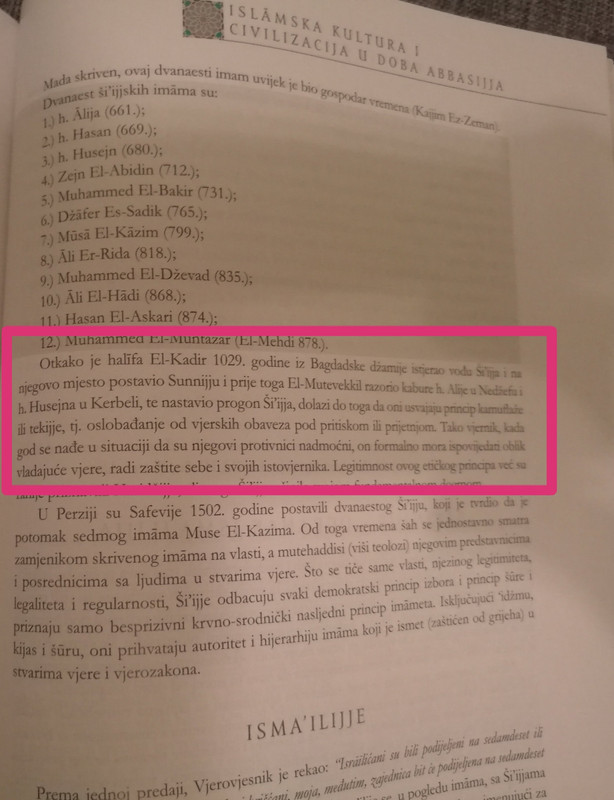
I, konacno, ako moze neki citat, ili stranica, pandam ovim koje, slucajno, volis citirati u svojim argumentacijama, sa siijske strane. Ono, ako moze, neka "sunizam otvoreno" i tako to!?

I da ponovim, da nije bilo Irana '92-'95, koji je lizao vlastite rane, netom nakon okoncane agresije, pitanje je kako bi se sunizam u Bosni ocuvao.
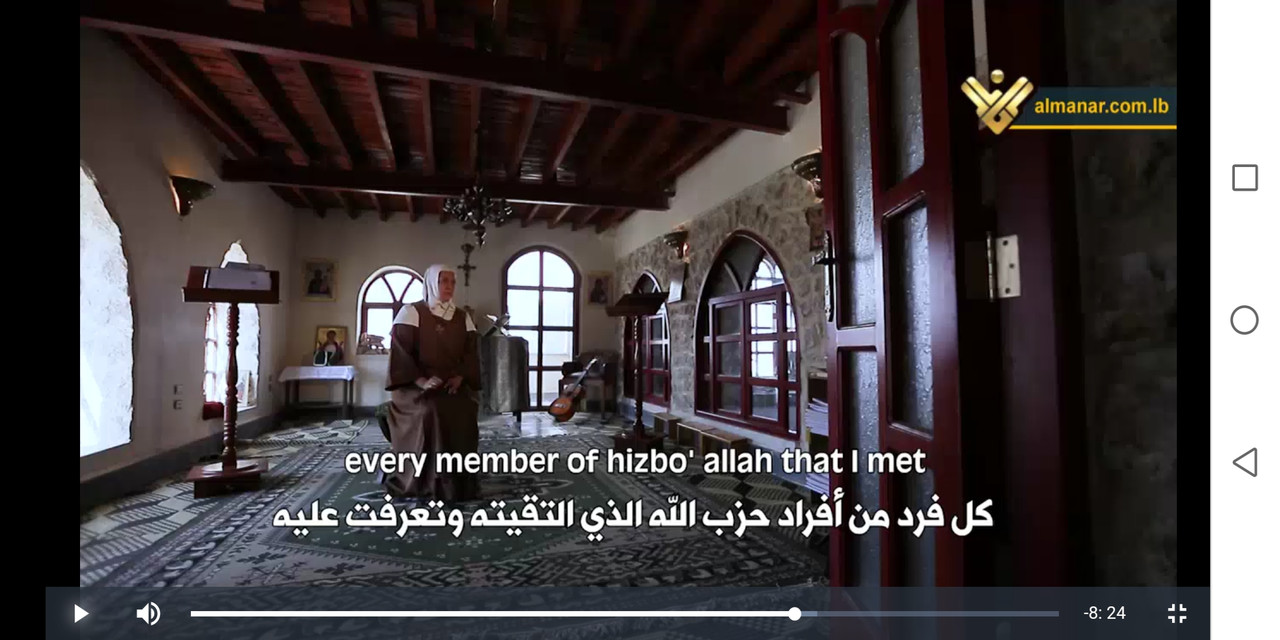
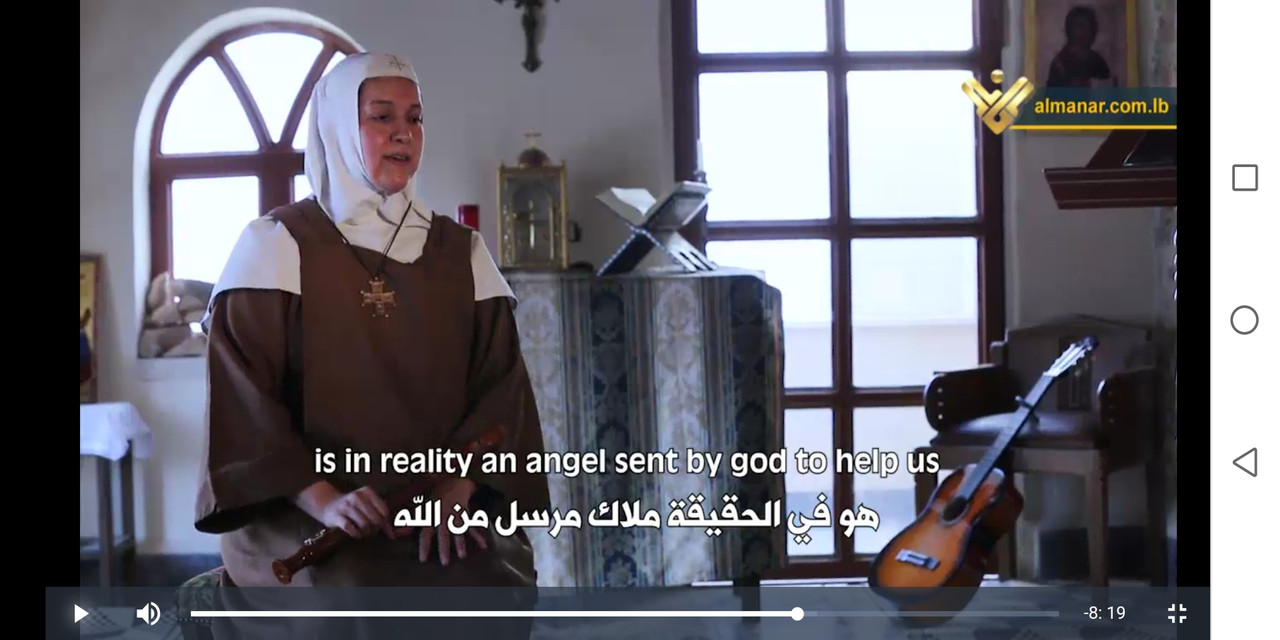
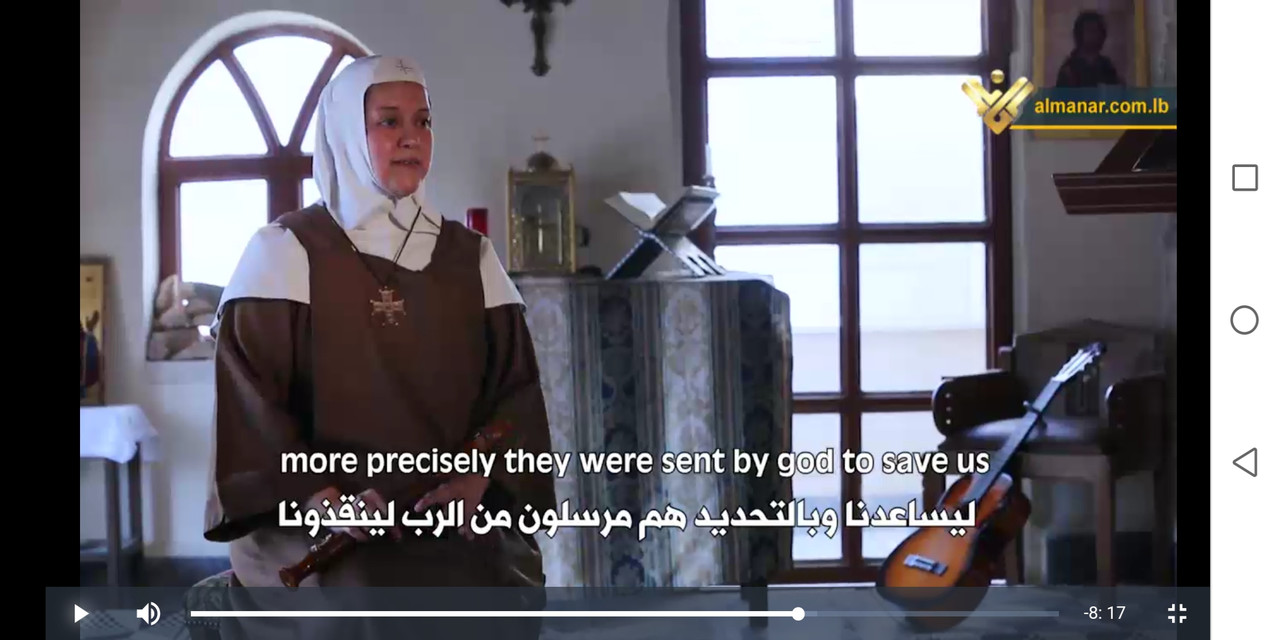
A za sve ostale, koji svoje znanje o vjeri i globalnoj politici ne crpe sa stranica i kanala na koje se pozivas, jedan dokumentarac iz jednog od najstarijih samostana u Siriji (koji je jedno vrijeme bio na popristu sukoba) - da vide i cuju sta vele redovnici i redovnice sa svih meridijana svijeta o Hizbullahu:
http://program.almanar.com.lb/episode/4 ... 8_tYm7wkHs
Ja cu slikom samo dati najavu: