In a passage that recapitulates the fable of the social contract, Diamond implies that it was explicitly to end this violence that subjects agreed to found a sovereign power that would guarantee peace and order by restraining their habits of violence and revenge.
"Maintenance of peace within a society is one of the most important services that a state can provide. That service goes a long way towards explaining the apparent paradox that, since the rise of the first state governments in the Fertile Crescent about 5400 years ago, people have more or less willingly (not just under duress) surrendered some of their individual freedoms, accepted the authority of state governments, paid taxes and supported a comfortable individual lifestyle for the state’s leaders and officials."
Two fatal objections come immediately to mind. First, it does not follow that the state, by curtailing ‘private’ violence, reduces the total amount of violence. As Norbert Elias pointed out more than half a century ago in The Civilising Process, what the state does is to centralise and monopolise violence in its own hands, a fact that Diamond, coming as he does from a nation that has initiated several wars in recent decades and a state (California) that has a prison population of roughly 120,000 – most of them non-violent offenders – should appreciate.
Second, Hobbes’s fable at least has nominally equal contractants agreeing to establish a sovereign for their mutual safety. That is hard to reconcile with the fact that all ancient states without exception were slave states. The proportion of slaves seldom dropped below 30 per cent of the population in early states, reaching 50 per cent in early South-East Asia (and in Athens and Sparta as much as 70 and 86 per cent). War captives, conquered peoples, slaves purchased from slave raiders and traders, debt bondsmen, criminals and captive artisans – all these people were held under duress, as the frequency of state collapse, revolt and flight attests. As either a theory or a historical account of state-formation, Diamond’s story makes no sense.
The straw man in his argument is that contemporary hunter-gatherer societies are oases of peace, co-operation and order. Of course they are not. The question, rather, is how violent they are compared to state-societies and what are the causes of the violence that does exist. There is, contra Diamond, a strong case that might be made for the relative non-violence and physical well-being of contemporary hunters and gatherers when compared with the early agrarian states. Non-state peoples have many techniques for avoiding bloodshed and revenge killings: the payment of compensation or Weregild, arranged truces (‘burying the hatchet’), marriage alliances, flight to the open frontier, outcasting or handing over a culprit who started the trouble. Diamond does not seem to appreciate the strong social forces mobilised by kinsmen to restrain anyone contemplating a hasty and violent act that will expose all of them to danger. These practices are examined by many of the ethnographers who have carried out intensive fieldwork in the New Guinea Highlands (for example by Edward L. Schieffelin in The Sorrow of the Lonely and the Burning of the Dancers, Marilyn Strathern in Women in Between, and Andrew Strathern and Pamela Stewart’s work on compensation), but they make no dent in Diamond’s one-dimensional view of the desire for revenge.
On the other side of the ledger, when it comes to violence in early agrarian states, one must weigh rebellion, war and systematic violence against slaves and women (as a rule of thumb, agrarian states everywhere created patriarchal property regimes which reduced the status and freedom of women) against ‘tribal conflicts’.(Zanimljivo je da se u tom periodu javlja monoteizam, karakteristican za agrarna drustva

) We also know, and Diamond notes, that hunter-gatherers even today have healthier diets and far fewer communicable diseases. Believing, against the evidence, that hunters and gatherers live in daily fear of starvation, he fails to note that they also work far less hard and thus have far more leisure. Marshall Sahlins called hunter-gatherers, even when relegated to the most undesirable environments, ‘the original affluent society’. It’s hard to imagine Diamond’s primitives giving up their physical freedom, their varied diet, their egalitarian social structure, their relative freedom from famine, large-scale state wars, taxes and systematic subordination in exchange for what Diamond imagines to be ‘the king’s peace’. Reading his account one can get the impression that the choice facing hunters and gatherers was one between their world and, say, the modern Danish welfare state. In practice, their option was to trade what they had for subjecthood in the early agrarian state.
https://www.lrb.co.uk/v35/n22/james-c-s ... government

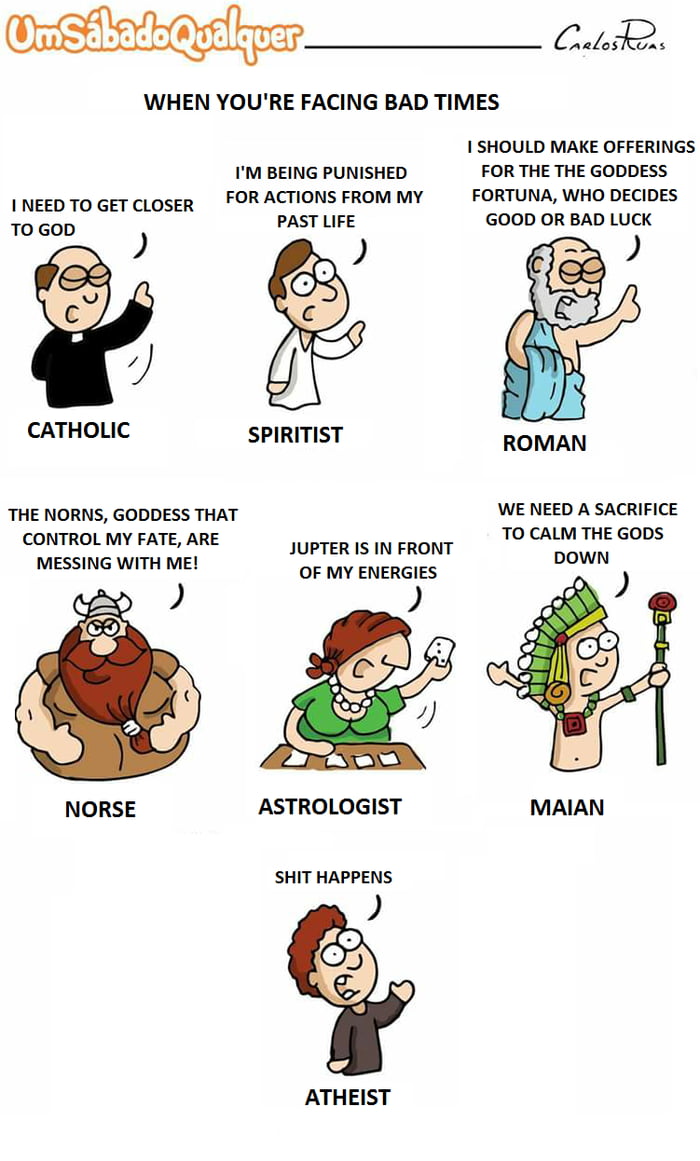
 ):
):

 Diamondova teorija geografije kao uzroka napretka svake vrste ima mnogo rupa, ali nisam siguran da on u svojim djelima tvrdi da danas, u 21. vijeku, plemena opstaju kao uzrok njihovog zakasnjelog drustvenog sazrijevanja. Barem ja nisam stekao takav utisak.
 Hu iz ju?