
Sad su mu i odijelo dali, vjerovatno izrađeno od trepavica pronađenih masonskih zlocinadječak sa šibicama wrote:Ma ja ba, fotomontaza.
KGB snajka, KGB.

Sad su mu i odijelo dali, vjerovatno izrađeno od trepavica pronađenih masonskih zlocinadječak sa šibicama wrote:Ma ja ba, fotomontaza.
KGB snajka, KGB.

Mogu levatima, kad je @cheli pis'o i upozorav'oOpetja033 wrote:Hajmo se za trenutak baviti konspirativnim teorijama. Po meni najveci cionisti, najjaci adut Izraela, Iluminata, gustera, masona, jesuita su ovi koji toliku famu i pricu o njima sire. Jer po njihovoj prici ljudi upravljaju kompletnom planetom, niko im nista ne moze. Nenadjebivi su. Takvu sliku o njima prave. Dakle sire defetizam i ravnodusnost kod ljudi jer sire dojam da se nista ne moze promjeniti, da su ovi nedodirljivi. Haarp, chemtrails. Sve kontrolisu.sumirprimus wrote:ma dje bi nam kraj bijo da niej cije...
bog te...
ko mantra...samo u krug...
cia,isil,izrael,gusteri...sirija...pa u krug...takfir!sta god znacilo

http://www.al-monitor.com/pulse/origina ... z3a7PaNPgcFor the past four years, the Islamic Republic of Iran has been involved thoroughly in the developments taking place in Syria. The Iranian role reached its peak with the decision to defend the Syrian regime with all possible means, defining the war taking place in Syria as a battle between the resistance bloc and its enemies. Iran’s close allies around the region — with the help of Iranian experts and officers — deployed to Syria, with Lebanon’s Hezbollah becoming the main group fighting on Syrian soil beside the Syrian army and helping on several occasions to retake areas that had been taken by rebel groups. This happened in Qusair and Yabrud on the Lebanese Syrian borders, Homs, areas in Aleppo where some Shiite communities live and the outskirts of Damascus, where the holy shrine of Zeinab, the granddaughter of Prophet Muhammad, is situated.
“The resistance bloc is in Syria to help the legitimate Syrian government in its battle against terrorists and at the same time to maintain its interests there,” an Iranian military source told Al-Monitor. “Hezbollah’s role in Syria was part of its resistance role on the borders with Palestine, yet this is going to change.” The Iranian military source said that as a result of change on the battlefield and developments in the region, “The resistance bloc as a whole is going to assume responsibility wherever there’s a need for help across Syria — it doesn’t matter if it’s Raqqa, Deir ez-Zor, Aleppo, Idlib — even the number of fighters on the ground will witness a surge. There are thousands of volunteers waiting to join this holy war.”
In a speech May 5, Hezbollah Secretary-General Hassan Nasrallah said that his group’s men had begun fighting in new areas. “Lately, we went to places we weren't in during the past years,” he said. “We were where we needed to be, and we will be where we must be; we believe that this is not [just] the battle of the Syrian people, it is defending ourselves: Syria, Lebanon and the entire region.”
In the meantime, Hezbollah’s forces have been fighting at Qalamoun, along the Syrian-Lebanese border, although the clashes taking place in that area have not been officially called a battle to retake the area. Also, it has been confirmed that Hezbollah forces are accompanying the Syrian army in preparations to retake the cities of Idlib and Jisr al-Shughur, while staying on full alert for any developments that might occur in Aleppo, Hama or Latakia.
In Qalamoun, Hezbollah forces alongside the Syrian army are combating Jabhat al-Nusra, the Syrian branch of al-Qaeda, which controls a 50-kilometer (31-mile) corridor inside the Lebanese border and around 600 kilometers (373 miles) inside the Syrian border. Jabhat al-Nusra is said to have between 3,000 and 5,000 fighters in the area, which is seen as a strategic zone with its interconnections with Damascus, Homs and southern Syria, mainly the Golan Heights. On May 13, the Shiite group succeeded in taking control of Moussa’s Hill, a strategic post overseeing the border between Lebanon and Syria. Footage aired on Hezbollah’s Al-Manar TV showed the group’s fighters for the first time raising their yellow flag and mounting it, another indication Hezbollah changed its visual and news tactics of crediting the Syrian army only for all the battles they fought in the past two years.
The Lebanese group is functioning today in at least two countries outside its home country in the Middle East: Syria is one and the second is Iraq. In Iraq it has been confirmed that dozens of Lebanese experts are helping the Popular Mobilization Units in the war against the Islamic State. Critics of Hezbollah warn that the group’s overstretching will lead to major gaps on the front with Israel; they also point out that Hezbollah is causing tension in Lebanon by importing crises from other parts of the region to a country already facing its own crisis. Lebanon has been without a president for almost a year, and had to extend the parliament’s term due to the security situation and the difficulty in organizing elections around the country.
“It’s obvious that the number of Hezbollah fighters in Syria has doubled since 2013,” a Lebanese military source told Al-Monitor. “The organization is becoming bigger, and therefore there are no indications that the number of forces deployed in south Lebanon is being affected. According to my observations and information, Hezbollah is witnessing one of its fastest-growing periods in its history. Each month it is mobilizing around 500 new fighters.”
The Iranian military source said, “This is one of the biggest battles in the history of the Middle East. Thousands of people are giving their lives to defend what they believe in. This is happening on both sides — we believe we are the righteous and so does the other side. It’s not an easy task for anyone to blow himself up in a battle [rebel fighters], neither is it to stay for months away from their families. In the end there will be a victorious side and we hope it’s us.”
The source said, “The enemy is trying to wage a psychological war on our bloc by saying we are deserting Syria and giving it up in a bargain for a nuclear deal. But Syria was never on the table. The whole bloc is giving blood there and our blood isn't so cheap to sell for a deal that the United States needs more than we do. In Syria we are fighting a holy war, a war to save this area from those who believe in the wrong version of Islam, from Wahhabism that’s against both Sunnis and Shiites. Should this war be one for the sake of a president and a regime, it shouldn't have even happened. In Syria we are fighting for Islam, for the region, and we believe this as we believed in the 1979 [Iranian] revolution.”


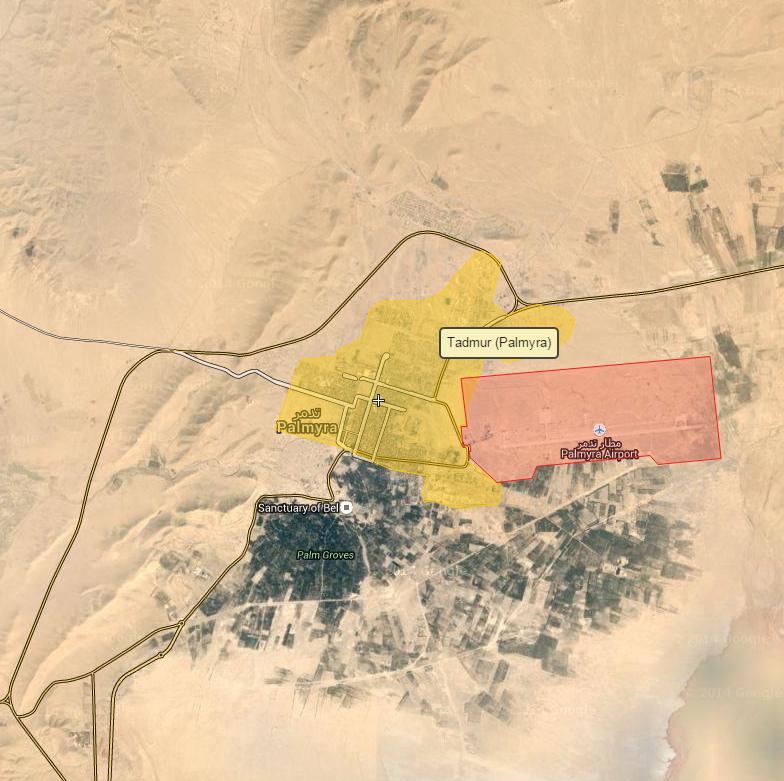
http://www.telegraph.co.uk/news/worldne ... -plot.htmlBashar al-Assad's spy chief arrested over Syria coup plot
The Assad regime has placed its intelligence chief under house arrest after suspecting he was plotting a coup, in a sign that battlefield losses are setting off increasing paranoia in Damascus.
Ali Mamlouk, the head of the country's National Security Bureau, and one of the few officials still to have access to President Bashar al-Assad, was accused of holding secret talks with countries backing rebel groups and exiled members of the Syrian regime.
Mr Assad is struggling to keep together the regime’s "inner circle", who are increasingly turning on each other, sources inside the presidential palace have told The Telegraph.
Even before Mamlouk’s arrest, the web of intelligence agencies with which the regime has enforced its authority for four decades was in turmoil, with two other leaders killed or removed.
Last month, Rustum Ghazaleh, the head of the Political Security Directorate, died in hospital after he was physically attacked by men loyal to General Rafiq Shehadeh, his opposite number in military intelligence, who was in turn sacked.
The role being played in the war by Iran, Syria's regional ally, is said to be at the heart of the arguments, with some of the “inner circle” afraid that Iranian officials now have more power than they do.
Iran’s influence has been crucial in bolstering Syria’s defences against the rebels, but even that has been crumbling in the face of recent rebel advances in the north.
It was as Syrian troops lost control of Idlib city and Jisr al-Shughour to an alliance of Islamist rebels including Jabhat al-Nusra, al-Qaeda’s local branch, that Mamlouk reportedly began to make contact with hostile governments and former regime officials.
"Mamlouk had been communicating with Turkish intelligence through an intermediary," said a senior regime source with direct knowledge of the plan.
Mamlouk had also used a businessman from Aleppo as an intermediary to contact Rifaat al-Assad, Bashar’s uncle, who has lived abroad exile since he was accused of seeking to mount a coup in Syria in the 1980s.
Rifaat al-Assad declined to comment on the reports, but one informed source, who asked not to be named, said that " there is a big interest among the Syrian officers and military for Rifaat Assad to come back to Syria”.
The late Syrian president Hafez al-Assad, right, with his youngest brother Rifaat in 1984 (AFP)
Iranian operatives in Syria are believed to have taken command of large areas of government, from the central bank to the battle strategy.
"Most of the advisers at the presidential palace are now Iranian," said a source close to the palace. "Mamlouk hated that Syria was giving her sovereignty up to Iran. He thought there needed to be a change.”
Ghazaleh is believed to have shared this view of the Iranian influence.
Like Mamlouk, Ghazaleh was born to a Sunni Muslim family, and was opposed to the power being acquired in the country by Shia Iran’s Revolutionary Guard and its Lebanese proxy Hizbollah.
Issam al-Reis, a spokesman for the Southern Front rebel groups, who are fighting close to Ghazaleh’s home village in Deraa, said intelligence picked up from captives and others suggested Ghazaleh was fiercely hostile to Iran.
“He was complaining that he and his men were being treated like scum, whilst the Iranians and their militias were lords,” he said.
"Shehadeh arrested two of Ghazaleh's nephews from his home town because they had refused to fight under Iranian command. Ghazaleh went to the military intelligence headquarters to defend them and get them released, but there Shehadeh's men beat him."
Suffering from brain damage, Ghazaleh spent several weeks in hospital before the regime formally announced his death on 24th April.
Mr Reis’s account was corroborated by two sources inside the regime, who asked to remain anonymous.
The regime in Syria is of critical importance to Iran, who uses Syria as the primary route through which to arm Hizbollah.
With the fortunes of the two regimes so inextricably linked, Iran has bankrolled and provided the expertise and the weapons for President Assad’s war.
Syria’s ailing economy would likely have collapsed were it not for the credit facility provided by Tehran – more than $15 billion to date, according to Damascus’ finance minister.
Last month, when senior officials in Syria's regime made one of their regular visits to Tehran, the meetings were tense, and at sometimes fraught, a source close to the Iranian government told the Telegraph.
"Members of the regime said that they were losing control of Syria. At one point they even suggested considering cutting a deal with the opposition," the source said.
"The Iranians were furious, after all they had done to help. They would not lose control."
Charles Lister, a Syria expert with the Brookings Institution said that recent events have left the regime facing its most critical situation in years.
“Iran appears to be calling the shots now,” said Mr Lister. “This is partly from the fear that the regime might collapse from the inside out. Tehran is trying to create a brick wall around them.”
DuckZz wrote:Da li je zabranjeno postavljanja slika od ISIL-a ? Pošto vidim da ih na twitteru nitko ne smije da stavlja zbog velikog rizika da im account ne bude suspendovan, isto vrijedi i za facebook stranice.


japin_mutapi wrote:desetine mrtvih asadovih falangista i terorista hezbolaha u kalamunu
izdajnički isil djeluje kao asadov specijalni odred i napada borce za slobodu sa leđa u koordiniranim akcijama sa fašistima
free qalamoun ... no pasaran
Pa ti si stvarno prolupao . 


Nece ljudi da se dovode pod lupu stavljajuci slike teroristaDuckZz wrote:Da li je zabranjeno postavljanja slika od ISIL-a ? Pošto vidim da ih na twitteru nitko ne smije da stavlja zbog velikog rizika da im account ne bude suspendovan, isto vrijedi i za facebook stranice.
Jel se to sukobljavaju ovi opkoljeni unutar bolnice il se SAA napokon probila?fosna2014 wrote:*#Idlib: #SAA and Jaysh Al Fateh clashing with each other at the outskirts of National Hospital. #Syria
Ja najmanje godinu dana ukazujem na jednu stranicu na našem jeziku postavljenu u cilju otvorenog afirmisanja islamske države i širenju mržnje među ljudima. http://puthilafeta.blogspot.com/DuckZz wrote:Da li je zabranjeno postavljanja slika od ISIL-a ? Pošto vidim da ih na twitteru nitko ne smije da stavlja zbog velikog rizika da im account ne bude suspendovan, isto vrijedi i za facebook stranice.


Ne postoji bosnjacki jezik, nego samo bosanski. Sad eto i znamo da si Hrvat. Sta ces koji qrac na bh. forumu? Idi bolan na index i tamo mozes trovati ljude. Haj' vozdra sad.emillio estevez wrote:
Bas mi je drago da ste me naucili nesto na bosnjackom.

DuckZz wrote:Da li je zabranjeno postavljanja slika od ISIL-a ? Pošto vidim da ih na twitteru nitko ne smije da stavlja zbog velikog rizika da im account ne bude suspendovan, isto vrijedi i za facebook stranice.
Hajahjajhape wrote:Ne postoji bosnjacki jezik, nego samo bosanski. Sad eto i znamo da si Hrvat. Sta ces koji qrac na bh. forumu? Idi bolan na index i tamo mozes trovati ljude. Haj' vozdra sad.emillio estevez wrote:
Bas mi je drago da ste me naucili nesto na bosnjackom.
Jazuk....Lik postane popularan na forumu i odmah ode u šehide. Šta je mah'o zastavicom mah'o je.DuckZz wrote:
Pošto mi rekoše da nije zabranjeno stavljat slike terorista. Ove su uslikane u istom gradu, i okolini.

