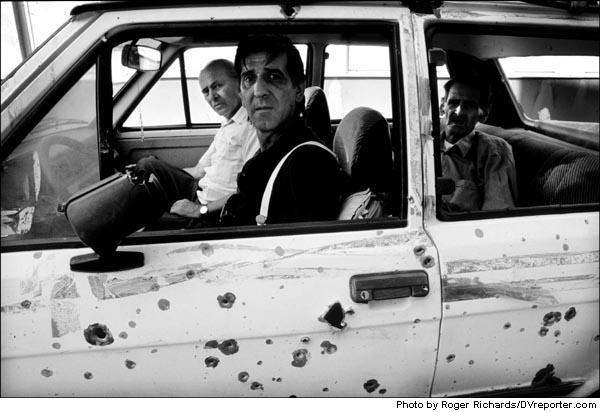
Men in a shot-up Volkswagen Golf car prepare to depart after delivering a wounded man to City Hospital during the Bosnian Serb siege of Sarajevo, August 1992.
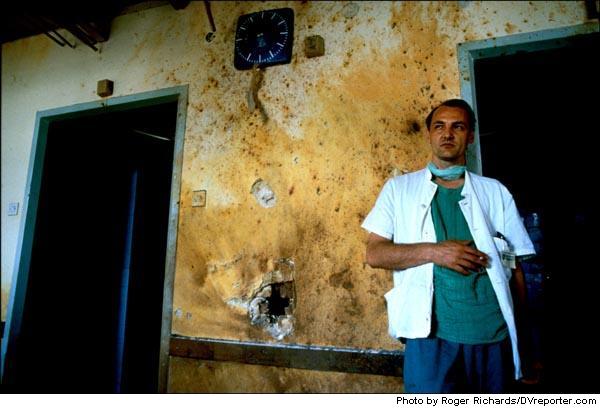
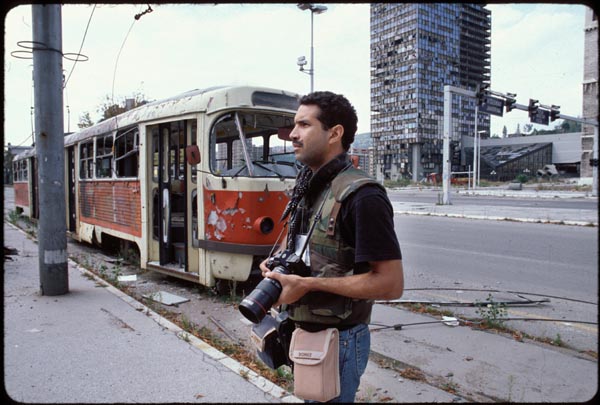
Dr Edib Jaganjac takes a smoke break outside destroyed operating rooms at Sarajevo's French Hospital during the first months of the siege of the city, Sarajevo, Bosnia and Herzegovina, August 1992.
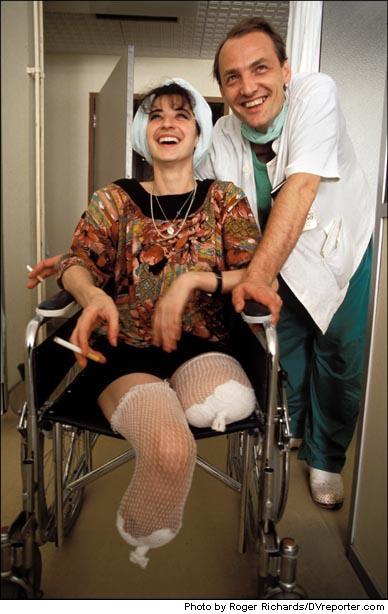
Fikreta Hadovic, 24, who lost both her legs to a Bosnian Serb shell, poses for a photograph with Dr. Edib Jaganjac at French Hospital in Sarajevo, August 1992.
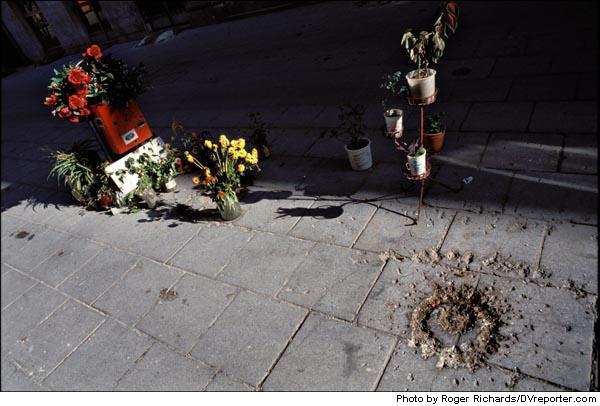
Flowers and a mortar shell impact in the pavement mark the spot where 27 Sarajevans waiting for bread on Vase Miskina Street, men, women, children and the elderly, were blown to pieces by 2 Serb shells In May 1992, during the Bosnian Serb siege of Sarajevo, Bosnia and Herzegovina. Almost 2,000 children, and over 10,000 people in total were killed in Sarajevo during the 3-1/2 year siege.
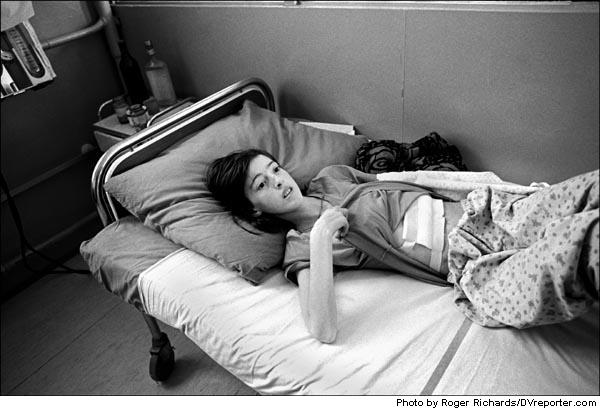
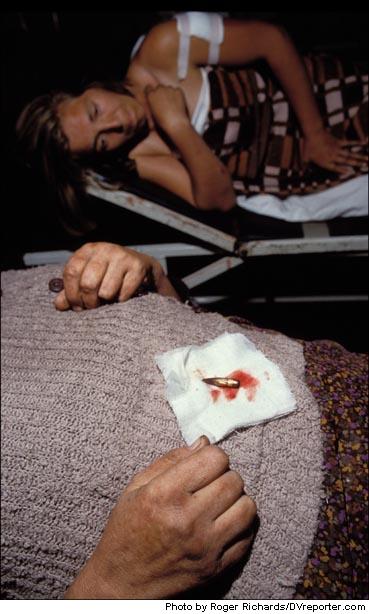
Almira Lugic, 12-years-old, lies in Kosevo Hospital with a grave stomach wound caused from a Serb shell that fell as she was collecting water, Sarajevo, Bosnia-Herzegovina, February 1993.
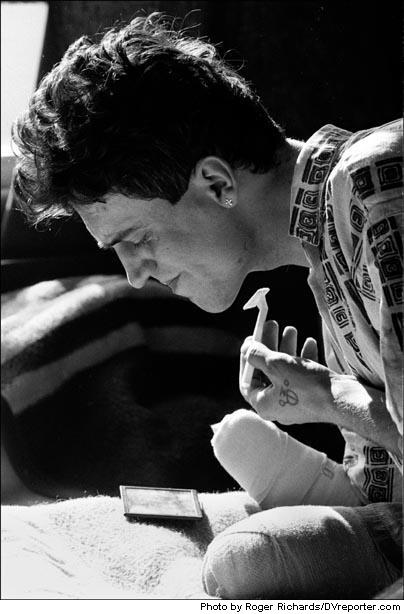
A man who lost his legs and one arm to a Serb shell shaves in Kosevo Hospital, Sarajevo, Bosnia-Herzegovina, February 1993.
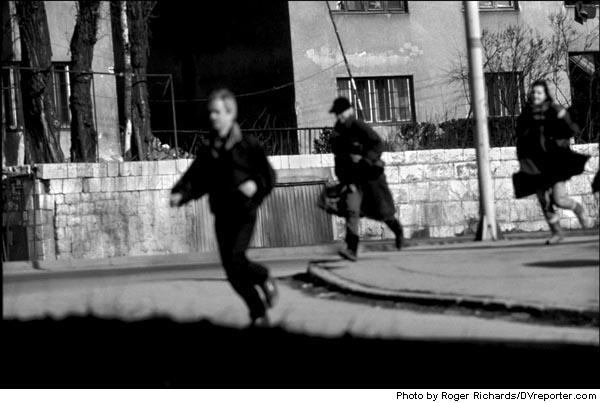
Sarajevo residents dash across an intersection under fire from a Serb sniper during the siege of the city, Sarajevo, Bosnia and Herzegovina, April 1993.
SURVIVAL IN AUSCHWITZ-SURVIVAL IN SARAJEVO
Although sometimes, living in Sarajevo during the war, we did run the streets like chased wild animals, we had some sort of dignity, and we used to keep each other's company. We felt like people. I can say that we were people with spirit, people who wanted to fight for their freedom in spite of impossible conditions.
The people in Auschwitz were walking shadows, which were moving around according to instinct, for they wanted to survive. It is very difficult to say how successful they actually were, because those were terrible conditions, which did not make possible any form of progress. We were only numbers, people with no name. Our future differed from man to man, and it depended upon our own capacities. These were the power of the body and the power of the soul. From the early morning till the late night everything there was intended to destroy, first the spirit, then the body of a man.
Greta Ferusic'
Retired Professor of Architecture/Auschwitz survivor
Excerpt From: Sarajevo survivor testimonies from OPSADA (The Siege) by FAMA International

Aldin Jogic, 10, balances on his skateboard and watches as two adults race across an intersection under Serb sniper fire in Sarajevo, Bosnia-Herzegovina, February 1993.
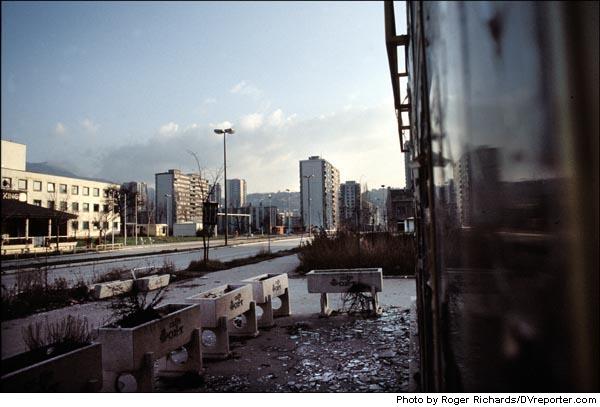
The camera looks around a corner into an empty intersection as a Serb sniper works from an unknown nest during the Bosnian Serb siege of Sarajevo, Bosnia and Herzegovina, September 1992. Almost 2,000 children, and 10,000 people in total were killed in Sarajevo during the 3-1/2 year siege.
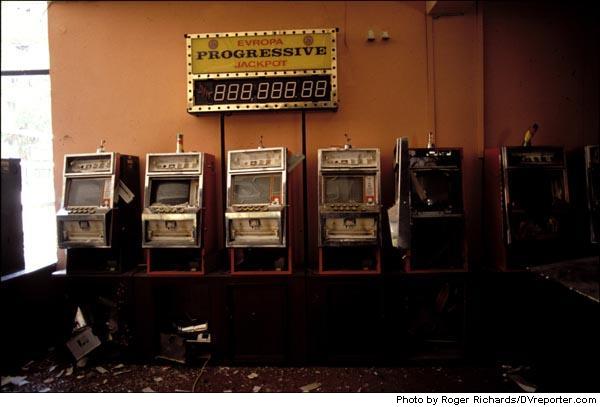
The slot machines in the casino of the destroyed Hotel Europa during the Bosnian Serb siege of Sarajevo, Bosnia and Herzegovina, 1993. Almost 2,000 children, and over 10,000 people in total were killed in Sarajevo during the 3-1/2 year siege.
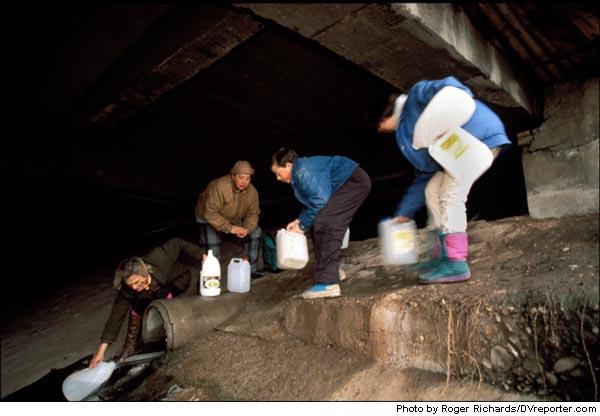
Sarajevo residents use anything they can find to collect water from a stream running under "Sniper Alley", 1992. During the siege of the city running water and electricity were scarce, subject to being cut off by the besieging Bosnian Serbs.
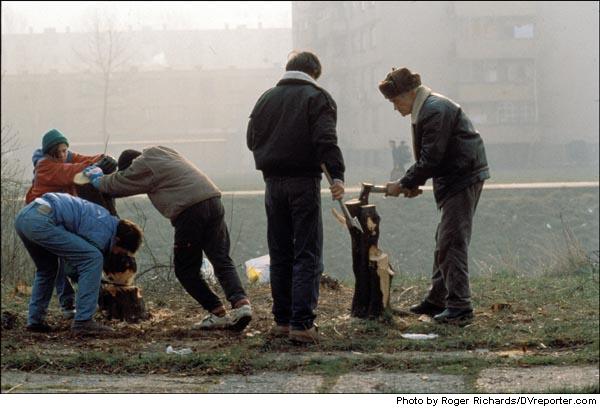
Sarajevo residents salvage the remains of trees that have been cut down for use as fuel for cooking and heating during the Serb siege of the city, December 1992. During the first winter of the siege most of Sarajevo's parks and tree-lined boulevards were cut down by desperate citizens.
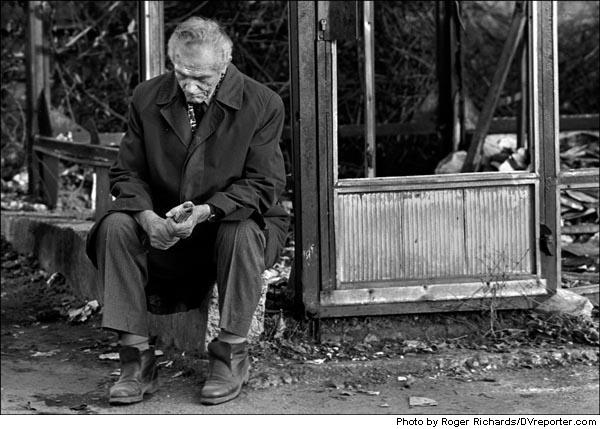
An old man sits at a destroyed bus stop in a city where buses no longer run, Sarajevo, Bosnia-Herzegovina, February 1993.
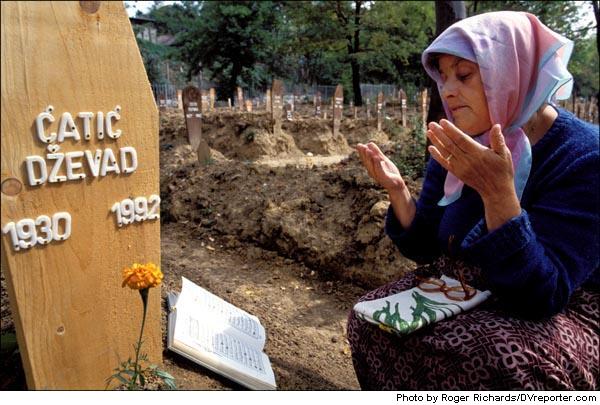
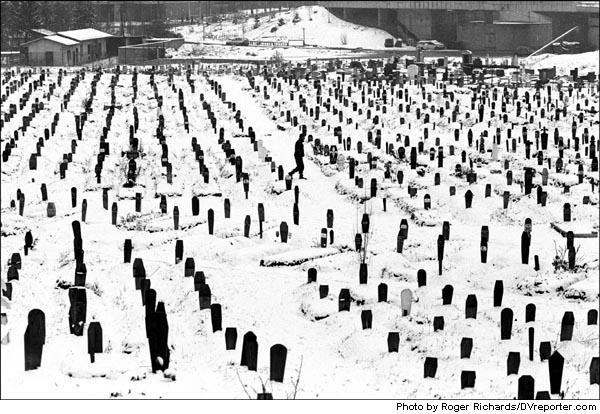
The widow of Dzevad Catic mourns at his grave at Lion Cemetery during the Bosnian Serb siege of Sarajevo, Bosnia and Herzegovina, September 1992. Almost 2,000 children, and over 10,000 people in total were killed in Sarajevo during the 3-1/2 year siege.
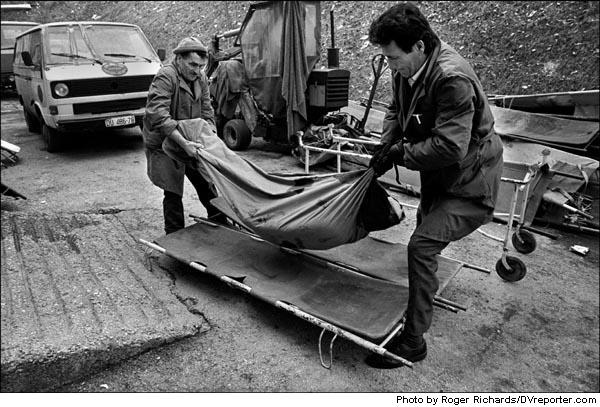
Morgue attendants lift the body of a 16-year-old girl, killed on a Sunday morning when a Serb shell hit her house and a piece of shrapnel cracked her skull open, Sarajevo, Bosnia-Herzegovina, February 1993.
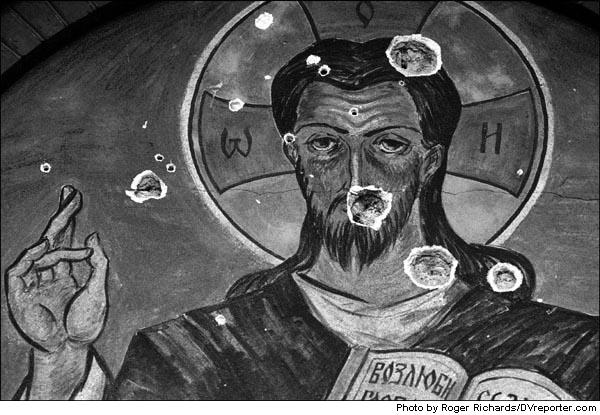
A bullet and shell-scarred portrait of Jesus at an Orthodox Christian church near the frontline, Sarajevo, Bosnia and Herzegovina, January 1996.
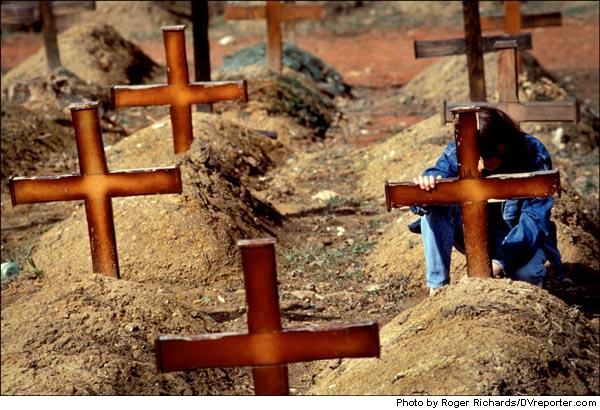
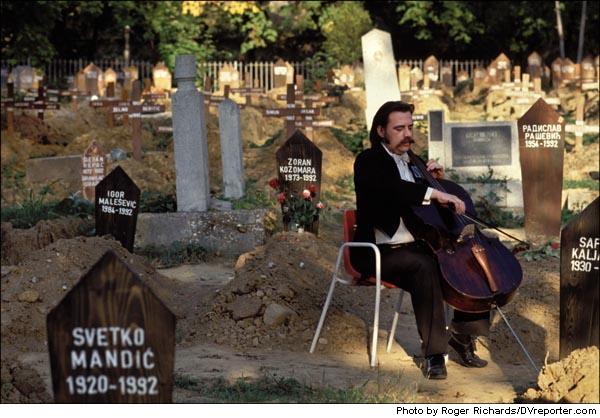
A woman mourns among the graves of Serb citizens of Sarajevo killed by shells and snipers during the Serb siege of the city, at Lion Cemetery, Sarajevo, Bosnia and Herzegovina, April 1993.
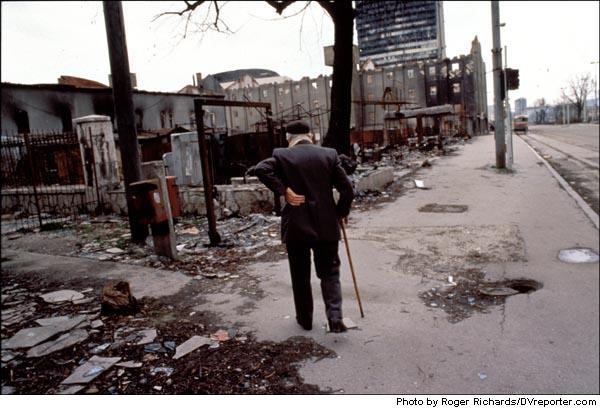
An old man walks amid the ruins of Sarajevo in April 1993, exactly one year after the Bosnian Serb siege of the city began. At right is the infamous 'Sniper Alley'.

Bosnian soldiers pray at the Begova Mosque during the final days of the division of the city, Sarajevo, Bosnia and Herzegovina, January 1996.
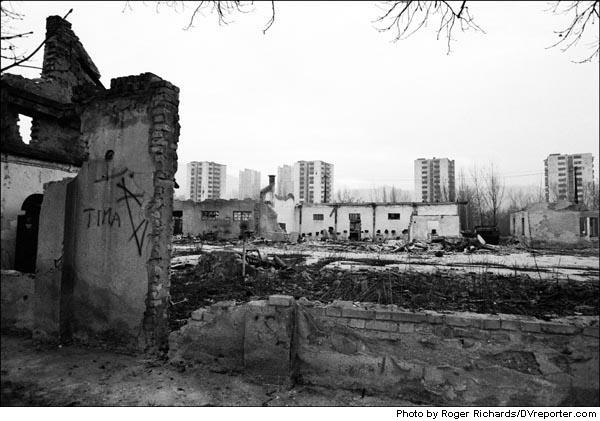
A section of the frontline looking toward the Serb-held suburb of Grbavica during the final days of the division of the city, Sarajevo, Bosnia and Herzegovina, January 1996.
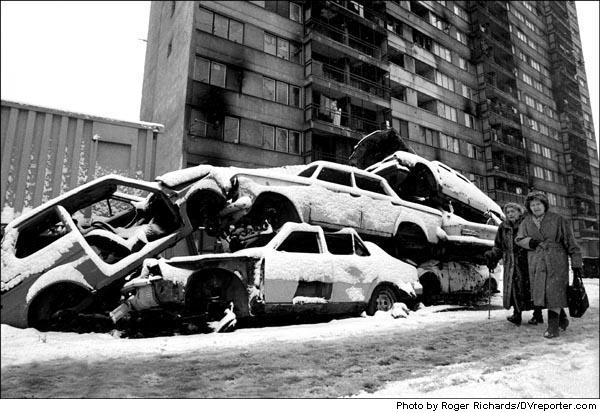
Elderly women walk past destroyed cars stacked to obscure the vision of Serb snipers during the final days of the division of the city, Sarajevo, Bosnia and Herzegovina, February 1996.

The destroyed interior of the Bosnian National Library where thousands of priceless books and documents burned after Bosnian Serb gunners fired incendiary shells at the building in 1992, photographed here during the final days of the division of the city, Sarajevo, Bosnia and Herzegovina, February 1996.
NATIONAL LIBRARY BURNS
I went out in the courtyard, which was partially paved in concrete, because there is a garage, and everything is kind of gray. Behind it is some greenery, and then on the concrete I saw big black pieces of burned paper. And then it was awful. I realized at one moment that the National Library was on fire? These papers were great big pieces of paper, and on these big burned pieces of paper you could make out some of the writing. There must have been really high temperatures. It was terrible. When I went into the house I told everyone. We all were very attached to the National Library building, because it was located on one of the main thoroughfares, and wherever you went in Sarajevo, you had to pass the National Library. By that beautiful wonderful building which was truly a symbol, a symbol of the city. I did feel sorry about that building, but I also thought we were finished. Yeah, because at that point we were afraid - we did feel sorry about our city - but we were more afraid for our lives. We were thinking, "this is it, this is the end, its coming closer, it'll be here soon."
Zlata Huseincehajic'
Boutique Owner
Excerpt From: Sarajevo survivor testimonies from OPSADA (The Siege) by FAMA International
Photos by: Roger Richards ... Remember Sarajevo
ima jos na:
http://digitaljournalist.org/issue0302/rr38.html ima jako potresnih...






 (odatle i naziv filma-"Mizaldo"="Odlazim"). Istaknutu ulogu u filmu imao je i Ismet Bajramović Ćelo.


 al neka je...