A negde sam citao da ima sanse da ima i nafte.
Nego, evo po meni najrealnije analize ko koga kako i zasto hebe u Maliju.
Znaci ima barem 3 zaracene strane a mozda i vise.
Nezamenljivi War Nerd - Gary Brecher
https://www.nsfwcorp.com/dispatch/every ... ng-up-mali
I'd bet the rent that the BP raid had nothing whatsoever to do with Mali. I'd say Libya's a much likelier suspect. The BP plant is in Amenas, just a few miles from the Libyan border but more than 500 miles from Mali. The hostage-takers are an Algerian group, a few mangy survivors of the huge Algerian Civil War of the 1990s who call themselves the “Signed in Blood Brigade”—you just can’t break these Jihadis of their addiction to melodrama—who’ve linked up by marriage with the Tuareg tribes of the deep desert.
Since their target is right up against the Libyan border, and Libya is a buyer's market for insurgents, full of out-of-work freelance fedayeen and overstocked arms dealers after NATO bombarded the place with weaponry in the Qaddafi takedown. Most likely, the raiders planned this attack way back months ago, before Mali was an issue, and relied on Libya for their supplies.
Naturally they included a "France out of Mali!" demand in their communique, but that's just last-minute improv. For both sides, Salafists and Western spokesfolk, Mali’s turned into one of those media black holes, sucking every story between Congo and Cadiz into itself.
The only real link to Mali is that the Sahara is a single, unified place, full of old trails linking up places and people who are officially divided by the borders the Europeans drew in the last quarter of the 19th century. Those borders never really counted for the few—real few—people who can stand living in it. You have to be a nomad to live in the deep desert, a smuggler or a herder or a trader--and nomads don't really believe in borders. In fact, they make their living by violating borders. If you're a Saharan, you don't have anything in common with the people of Southern Mali; they don't speak your languages, Tuareg and Arabic. They're farmers, not nomads; they speak French or one of the “African” languages of the South.
So loyalty tends to be Sahara vs the South, not to any of the countries that pretend to divide up the big desert.
The heart of what’s going on in Mali now is this division between the deep desert and the semi-livable south. Look at Mali on a map:
Mali is two triangles smashing into each other, a bigger one stabbing south and a smaller one stabbing up into it from the southwest. The fighting is happening right where those triangles mash together. The bigger triangle is the one that wedges deep into the driest, nastiest part of the Sahara, with the narrow end stabbing south to where the Niger River takes a northern turn, making a little chunk of desert semi-inhabitable.
This triangle is more than half the land area of Mali, but less than 10% of the population lives in it. And that 10% is almost all concentrated in a few towns along the river; only the Tuareg live in the desert proper. There are no towns in the true north of Mali, nothing at all but a few Tuareg clans moving around to find forage for their goats.
Now look at the other triangle, the smaller one to the South. You’ll see it stabs up from the wetter (and wetter’s better) land where the desert greens up, up into the desert, along the river. This triangle, you’ll notice, tilts to the west, toward the coast. It’s part of what they used to call
“Sub-Saharan Africa,” and its people aren’t Tuareg or Arab herders but black African farming peoples like the Songhay and various Mande groups. This is what “Mali” actually means; this is where people live. Northern Mali is a wasteland, and “Central Mali” is, at the moment, a combat zone, or more like a tectonic plate where the desert clans, who have next to nothing in common with the French-speaking black people of the south, are pushing back, with some help from the momentum of all the quasi-jihadist wars of the Maghrib, the North African coastal rim. Algeria, Tunisia, Libya, Chad, even frickin’ Mauritania; they’re all more or less at war, and that gives the desert clans, who have been on a long losing streak, a little window of opportunity. For now, the Tuareg, Moor and Arab clans up there in the big nowhere can punch above their weight, using imported wannabe-martyrs and imported guns.
The Tuareg owned the desert once; if you wanted to cross it, you paid them. Like a lot of warrior tribes, they’ve lost big in the last few decades, and they’re not happy.
There have been Tuareg revolts right across the Sahara, from Mauritania to Chad. And most of the time, they’ve lost, because in contemporary war, money, connections and numbers count more than a warrior tradition. The Tuareg just don’t have the numbers to win; you can’t breed a lot of soldiers in a wasteland like theirs. They’ve fought Qaddafi and fought for him, and fought for or against all the other movements and regimes of the Maghrib to the North and the Sahel to the south.
Now, they’re trying to deal with the Jihadis, which can’t be easy—because Taureg traditions are way different from the Arab-dominated Wahhabi/Salafist rules.
Tuareg men veiled themselves; the women went unveiled.
Tuareg klix had a license to, ah, play around when they hit puberty. From that time until they decided to marry some dude, they could do what they wanted. Needless to say, this is kinda different from the Wahhabi rule, which is that women are better not seen and not heard and just plain not.
The Tuareg are Muslim, like almost everyone in the Sahara, but they don’t have anything close to Wahhabism, which comes out of the Arabian Peninsula, or the equally hardcore Deobandis, who started in the Muslim areas of the Raj. They’re dealing with the Jihadis now, but it’s not a very happy arrangement.
______________________________________________________________________________________________
Now for the Islamists. They’re all over the map, dividing like cancer cells--which is standard for irregular war. When you get involved in this kind of war a lot of fierce egos rise to command, a lot of different clans and ethnic groups compete, and some groups specialize in one thing or another, anything from killing villagers to kidnapping rich people to smuggling cigarettes.
Take one instance just at the moment: the leader of the Signed in Blood Brigade that pulled off the BP raid in Algeria. Know what they call him in the desert? “Mister Marlboro,” because his merry men went in for cigarette smuggling in a big way. Diversity, that’s the trademark of irregular forces—the kind of diversity where you’re at each others’ throats most of the time. They split faster than a convention of caffeinated Pentecostals arguing about Revelations.
One of the bigger “Islamist” groups is Ansar ad Dine, “Defenders of the Faith.” The interesting thing about these guys is that most of them are Tuareg or Arab—nothern people who don’t consider themselves “African.” Ansar officially puts religion over regional or ethnic loyalty, but it’s not totally sure about that, so, in one of the comic sidelights of this war, Ansar has generally refused to fight against the Tuareg group MNLA.
Then there are the genuine hardcore Islamist groups, which feature lots of foreigners and have no time at all for Tuareg nationalism. There are two main factions: Al Qaeda in the Maghrib (AQIM) and the Movement for Unity and Jihad in West Africa (MUJWA). The word “unity” in this case means they have no tolerance for MNLA’s idea of making North Mali a sort of Tuareg refuge; for a true jihadi, the point is to make everyplace follow the one correct set of rules, and that doesn’t leave much room for nationalism or cultural sensitivity, etc. So these two groups, which beat MNLA in the Battle of Gao last spring and control most of the north now, have been pissing off the locals by smashing the cool-looking mud-brick tombs of Sufi saints in Timbuktoo, because elaborate tombs are one of the nine billion things forbidden by Wahhabism. (In the Saudi town where I lived, there was a big field full of rocks, with a fence around it; I asked somebody, “Why’d they fence in that rocky field at the corner?” and they told me, “Those aren’t rocks, those are graves.” Nothing but rough, unpolished rock is OK for the dead, by Wahhabi rules.
MUJWA is the fiercest of the Jihadi groups in Mali, and hates anything like Tuareg nationalism. They’ve taken the lead in attacking the MNLA, but there seems to be a lot of overlap between Ansar ad Dine, MUJWA, and AQIM. The truth is that there’s a limited supply of hardcore jihadis; most of them, like the leader of the BP raid, have been in the business since the Soviet occupation of Afghanistan, which (with lots’n’lots of CIA help) was their biggest recruiting season. Since then, most of the stars have graduated to Paradise, and the new signees aren’t up to snuff. So the few quality freelancers around tend to lend each other a hand.
MUJWA’s greatest moment so far in Mali was the Battle of Gao. Gao is a town in Central Mali, along the big bend in the Niger that makes a small piece of the desert inhabitable. This is the zone where you find all the towns in combat now, like Timbuktoo and Konna.
The campaign started when Tuareg/Arab mercenaries who’d been fighting for Qaddafi drove home after he was beaten, taking all the vehicles and heavy weapons they could stow along with them. That meant that a huge pool of trained soldiery was unleashed on The Malian Army—pause for canned laughter here. The Malian Army did what it does best (not counting coups), executing a classic foutez le camp, if you’ll pardon my French. That meant that in early 2012, there was a huge power vacuum in Northern Mali.
You can imagine how excited the hard-luck Tuareg were. For a moment, it looked like they’d finally have that independent Tuareg homeland they’d fought for just dropped into their laps. But if there’s one thing that 20th century history teaches, it’s that God hates inland, landlocked tribes like the Kurds and the Tuareg. So what started off as a victory celebration by Tuareg antionalists and freelance jihadis turned pretty fast into a showdown between the MNLA and the Wahhabists of MUJWA, with Ansar ad Dine sort of queasily cheering for MUJWA while hoping none of their kinfolk in the ranks of the MNLA got hurt too badly.
The showdown happened in Gao at the end of June, 2012, and ended with the Wahhabists in control of Northern and most of Central Mali. That’s about all you can say for sure, because a lot of the info that came out after the battle hasn’t exactly turned out too reliable.
For instance, the guy who led that BP raid? His name is Mokhtar Belmokhtar, and he was officially killed in the Battle of Gao, which will be welcome news to all the hostages he captured yesterday. Like a lot of jihadis, he’s one of these guys who has to be officially killed two or three times before he’ll lie down, and at the moment, this handsome one-eyed devil looks good for another few wars.
In other words, I don’t know what the casualties were. My impression is, they were light, like a lot of battles in what they call “primitive warfare.” These are the kind of battles where the two sides measure each other up, and if one looks bigger, better-armed, and more in the mood to tangle, the other side very sensibly climbs back into their Toyota pickups and waits for a more favorable opportunity.
That’s what seems to have happened in Gao. The MNLA—remember, they only have a pool of about 3000 men, and can’t afford to waste them—saw that the MUJWA forces had brought a big contingent of Algerian jihadis all eager to die, and abandoned Gao. Casualties were light on both sides.
The wild card here, and this is real typical of contemporary war, is the
civilian population of Gao itself. See, they aren’t Tuareg or Arab, most of them. They’re “black” Africans, French speakers from the south who’ve moved into the new towns that are popping up all over Africa. The big question was which side they’d back—and it turned out that they chose to side with the MUJWA.
Not that they’re necessarily Wahhabists, but because the Wahhabists are against any Tuareg nationalism, and the people of Gao were scared about being stuck in a new Tuareg homeland that wouldn’t offer them, as urban, commercial folks, any future. They were for keeping Mali intact, and on that issue, at least, the Jihadists were with them.
So once the MNLA had run, the townspeople of Gao were celebrating, shouting “Vive Mali!” and such. The trouble is, they’re likely to find out that they don’t agree with their temporary friends on much else.
The day after the Battle of Gao, the MUJWA/Ansar ad Dine pickup trucks zoomed into most of the other towns of the river region and started smashing up those ancient Sufi shrines. So they’re already pissing off the locals in their inimitable fashion.


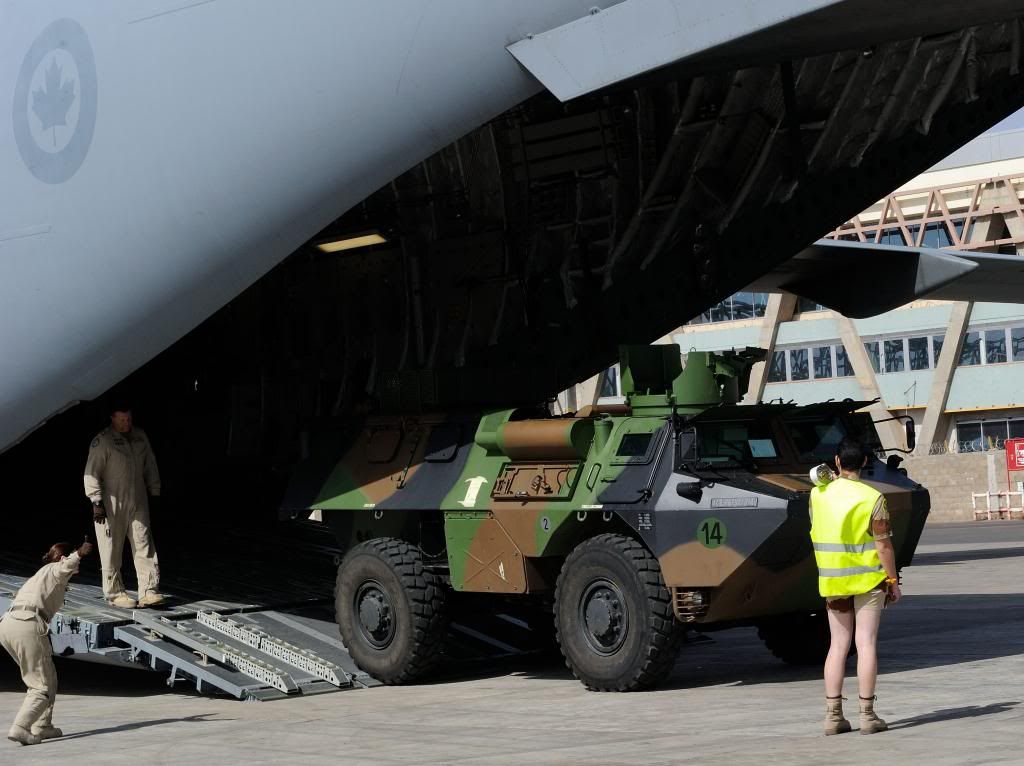


 Mrki su ih skužili, oteli vozila i onda se ušetali.


