Ad blocker detected: Our website is made possible by displaying online advertisements to our visitors. Please consider supporting us by disabling your ad blocker on our website.
medvjed23 wrote:ovo prevazilazi moja najblentavija očekivanja.. sad mi se gleda onaj film sa meril..
ha ha ha ha haaaaa
film je odlican, iz filma sam stekaodojam da je ova gospodja uradila mnogo u svijetu muzike, mada bi trebalo procitati neki historijski dokument, filmovi prema istinitom dogadjaju su mnogo pretjerani.....
Krokodajl wrote:@Karlin, da dosta neobičan, do skora nisam znao da je za ovo vezan praznik, prijetio sam u dosta Japanskih filmova i reporaža ove lutke u kućama ali nisam mislio da iza stoji neka pozadina osim čiste dekoracije (mada u Japanu je sve vezano za kulturu), podsjeti me da malo pročačkam oko ovih lutaka film koji sam pogledao skoro, Okuribito mi bi to preveli kao "Ispratioci" odličan film, iz 2008 godine, godinu poslije osvojio je oskara za najbolji strani film i postao prvi Japanski film koji je to uspio.
A što se tiče recepta za Hishumochi evo sad nađoh, crvena se dobija od ploda cvijeta Gardenia jasminoides koji je neka azijska vrsta jasmina, valjda, bijela se dobija od od "vodenog oraha" odnosno hishia riječ je o biljki sličnoj rogatom kestenu koja se uzgaja u poljima sličnim rižinim, a zelena se ne dobija od čaja iako sam i ja mislio da je čaj nego od nekog cvijeta za koji ne znam ni da li imamo naziv
hvala,kolac super izgleda
Japanci su malo cudni, a evo zasto: ima jedna zeljeznictak stanica u Japanu,posvecena macki, toliko je postala popularna , prodaju suvenire, krov zgrade zelejznicke stanice je oblikovan glavi macke,narocito ovi, unutar zgrade , ziva, specijalna macka je centar paznje, pa bih mogla zakljuciti da ima neki fazon sa tim lutkama i zivim zivotinjama kojim se daje ogromna paznja,ali sto je uzrok istoj sigurno ima neku psiholosku pozadinu ljudsko mozga,ali i nacin kako jedno drustvo "dozivljava" predmete, zivotinje
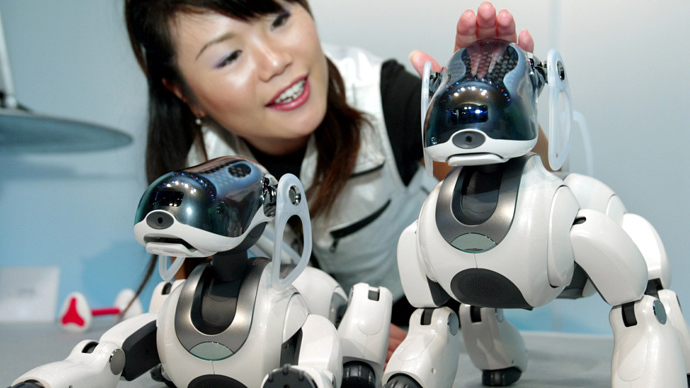
Heather Knight, founder of the world’s first (non-industrial) robot census, has made the study of robot / human interaction her life’s work. She posits that the difference between Japanese and American attitudes toward robots is rooted in something much older than even the idea of robots: religion. “In Japan… they’re culturally open to robots, on account of animism. They don’t make a distinction between inanimate objects and humans.”
Animism is a component of the Shinto faith, the religion that preceded the introduction of Buddhism to Japan and remains an influential part of the country’s culture. Animism is the notion that all objects have a spirit - even man-made objects. Here’s social scientist Naho Kitano in Animism, Rinri, Modernizationp; the Base of Japanese Robotics (pdf)
The sun, the moon, mountains and trees each have their own spirits, or gods. Each god is given a name, has characteristics, and is believed to have control over natural and human phenomena. This thought has continued to be believed and influences the Japanese relationship with nature and spiritual existence. This belief later expanded to include artificial objects, so that spirits are thought to exist in all the articles and utensils of daily use, and it is believed that these sprits of daily-use tools are in harmony with human beings.
In the West, in contrast, creating life inevitably leads to destruction of the creator – a notion that is hardly original to Mary Shelley’s Frankenstein, as author Rui Umezawa points out.
In order to understand fully religion’s influence on the West’s attitude toward robotics, we also must remember that Judeo-Christian monotheism also adheres to the doctrine that only God can give life, a popular interpretation of Genesis in which there is only God in the beginning and all living things are His creations. Exodus also decrees that idolatry is a sin. Thus, any human who breathes life into an inanimate object is assuming the role of God and thereby becoming a false idol. Such a blasphemer deserves punishment, and in the conventions of science fiction, this usually comes in the form of betrayal by the robots. From the 1920 work R.U.R. (Rossum’s Universal Robots) by Czech playwright Karel Čapek - who is credited with coining the term “robot” – through The Terminator movies to Battlestar Galactica, such human vanity is constantly met by rebellion by its creation.
In a feedback loop initiated by these preconceptions, culture influences not only the perception of robots, but also the design of robots created by Japanese and American engineers. Sally Augustin, a journalist writing for Miller-McCune, argues that Americans value emotionally expressive robots, while Japanese are content with inferred emotion conveyed by robots whose faces are obscured in the same manner as actors in Japanese Noh plays. More concretely, Americans have directed much of their research toward robots with military applications, while the Japanese “are investing billions of dollars on consumer robots aimed at altering everyday life.”
Krokodajl wrote:@Karlin, da dosta neobičan, do skora nisam znao da je za ovo vezan praznik, prijetio sam u dosta Japanskih filmova i reporaža ove lutke u kućama ali nisam mislio da iza stoji neka pozadina osim čiste dekoracije (mada u Japanu je sve vezano za kulturu), podsjeti me da malo pročačkam oko ovih lutaka film koji sam pogledao skoro, Okuribito mi bi to preveli kao "Ispratioci" odličan film, iz 2008 godine, godinu poslije osvojio je oskara za najbolji strani film i postao prvi Japanski film koji je to uspio.
A što se tiče recepta za Hishumochi evo sad nađoh, crvena se dobija od ploda cvijeta Gardenia jasminoides koji je neka azijska vrsta jasmina, valjda, bijela se dobija od od "vodenog oraha" odnosno hishia riječ je o biljki sličnoj rogatom kestenu koja se uzgaja u poljima sličnim rižinim, a zelena se ne dobija od čaja iako sam i ja mislio da je čaj nego od nekog cvijeta za koji ne znam ni da li imamo naziv
hvala,kolac super izgleda
Japanci su malo cudni, a evo zasto: ima jedna zeljeznictak stanica u Japanu,posvecena macki, toliko je postala popularna , prodaju suvenire, krov zgrade zelejznicke stanice je oblikovan glavi macke,narocito ovi, unutar zgrade , ziva, specijalna macka je centar paznje, pa bih mogla zakljuciti da ima neki fazon sa tim lutkama i zivim zivotinjama kojim se daje ogromna paznja,ali sto je uzrok istoj sigurno ima neku psiholosku pozadinu ljudsko mozga,ali i nacin kako jedno drustvo "dozivljava" predmete, zivotinje
Heather Knight, founder of the world’s first (non-industrial) robot census, has made the study of robot / human interaction her life’s work. She posits that the difference between Japanese and American attitudes toward robots is rooted in something much older than even the idea of robots: religion. “In Japan… they’re culturally open to robots, on account of animism. They don’t make a distinction between inanimate objects and humans.”
Animism is a component of the Shinto faith, the religion that preceded the introduction of Buddhism to Japan and remains an influential part of the country’s culture. Animism is the notion that all objects have a spirit - even man-made objects. Here’s social scientist Naho Kitano in Animism, Rinri, Modernizationp; the Base of Japanese Robotics (pdf)
The sun, the moon, mountains and trees each have their own spirits, or gods. Each god is given a name, has characteristics, and is believed to have control over natural and human phenomena. This thought has continued to be believed and influences the Japanese relationship with nature and spiritual existence. This belief later expanded to include artificial objects, so that spirits are thought to exist in all the articles and utensils of daily use, and it is believed that these sprits of daily-use tools are in harmony with human beings.
In the West, in contrast, creating life inevitably leads to destruction of the creator – a notion that is hardly original to Mary Shelley’s Frankenstein, as author Rui Umezawa points out.
In order to understand fully religion’s influence on the West’s attitude toward robotics, we also must remember that Judeo-Christian monotheism also adheres to the doctrine that only God can give life, a popular interpretation of Genesis in which there is only God in the beginning and all living things are His creations. Exodus also decrees that idolatry is a sin. Thus, any human who breathes life into an inanimate object is assuming the role of God and thereby becoming a false idol. Such a blasphemer deserves punishment, and in the conventions of science fiction, this usually comes in the form of betrayal by the robots. From the 1920 work R.U.R. (Rossum’s Universal Robots) by Czech playwright Karel Čapek - who is credited with coining the term “robot” – through The Terminator movies to Battlestar Galactica, such human vanity is constantly met by rebellion by its creation.
In a feedback loop initiated by these preconceptions, culture influences not only the perception of robots, but also the design of robots created by Japanese and American engineers. Sally Augustin, a journalist writing for Miller-McCune, argues that Americans value emotionally expressive robots, while Japanese are content with inferred emotion conveyed by robots whose faces are obscured in the same manner as actors in Japanese Noh plays. More concretely, Americans have directed much of their research toward robots with military applications, while the Japanese “are investing billions of dollars on consumer robots aimed at altering everyday life.”
SunceKoTepsija, hvala nisma znala da je Shinto toliko vezan za animizam inace, animizm, je jedan od najstarijih formi religijskog vjerovanja religija definitivno ima mocan uticaj na drustva,bez obzira na stoljece , ali treba dodati, Japanci su jako " duhovno i mentlano" izolirana kultura.
dvije rijeci: Iris Apfel gledala sam dokmantarac o fashionistkinji njenom suprugu Carlu , odlican je, jer najbolji dio su komentari od strane Iris, genijalna je Iris je dizajenireica interijera, par puta je radila projekte u Bijloj Kuci.
Plašim se igli.
I umorna sam od gumiranih plahti i epruveta.
Umorna od nepoznatih lica
i sad već mislim kako smrt dolazi.
Smrt koja počinje kao san
puna kojekakvih predmeta i smijeha moje sestre.
Mlade smo i šetamo
berući divlje kupine
cijelim putem do Damariscotte.
Oh Susan, vrisnula je,
uprljala si novu bluzu.
Usta su mi bila puna
tako lijepog sladora
i ljupka tamnomodra tinta cijedila se iz njih
cijelim putem do Damriscotte.
Ali što mi to radite? Pustite me!
Zar ne vidite da sanjam?
U snu ti nikad nije osamdeset godina.
piupiu wrote:Inspirisano pričom o tapetama s druge teme...
In England the wallpaper was so popular that in 1712 the wallpaper tax was introduced, like on other luxury items and the import was banned. The clerks would start to mark each sheet with a protection tag before pasting, adding another one after applying directly at the customer's homes. People tried to evade this regulation and save the money, so they had the wallpaper painted at their houses before pasting and they would also falsify the tags. The situation escalated so that in 1806 the protection mark counterfeit was punished by the death penalty!
piupiu wrote:Inspirisano pričom o tapetama s druge teme...
In England the wallpaper was so popular that in 1712 the wallpaper tax was introduced, like on other luxury items and the import was banned. The clerks would start to mark each sheet with a protection tag before pasting, adding another one after applying directly at the customer's homes. People tried to evade this regulation and save the money, so they had the wallpaper painted at their houses before pasting and they would also falsify the tags. The situation escalated so that in 1806 the protection mark counterfeit was punished by the death penalty!
Ima jedna šala iz prošlog vijeka, locirana blizu kultnog objekta Stari Sat u Logavinoj ulici. Išao iza ponoći student slikarstva pjehe prema svojoj “gajbi”,a par mangupa više u šali,zaustave ga i pitaju:” da nemaš koju kintu,fali nam za piće. Nemam ti ja drugar ništa, ja sam slikar i studiram….Dobro kažu oni da vidimo i zvuku mu ruku u džep.Šta ti je ovo tvrdo da nije neki smotak ? Ma jok bolan to mi je kuk. Pa kako si tako mršav začude se ? Moja ishrana nije redovna , prodam jednu ili dvije slike godišnje,a studenstski kredit pokriva samo osnovne potrebe.Pa jesi li gladan? Jesam uvijek sam gladan,ne pitaj me to”. Oni njega fino uhvate ispod ruke i nizbrdo. Prepao se jadničak nakratko. Vidi nisu grubi, dovedoše ga do čaršije i nahraniše dobrom porcijom pite po izboru. “E nije fer da je umjetnik gladan”, kažu. “Javi nam se kad god nas vidiš i biće još pite”.To rekoše i nastaviše put noći koja se u tom trenutku činila svjetlijom nego što jeste .Ako mislite da je ovo dobro smišljena šala….nije. Čuo sam sve iz “prve ruke”.Tako nešto “obrazli” uraditi je mogla samo manguparija moga vremena. Možda nisu išli na izložbe, ali ono UMJETNIK bilo im je kao nešto jako važno. “Ovaj crta iz glave na papir….sve što vidi utisne na platno,a i ono što mu se ukaže… kada je gladan”.
ja se opet uguro u gornju polovinu poretka, osiguravši mjesto u zbirci koja će biti štampana.. nije to neki rezultat, al opet.. bolji sam od nekih, koje ne bih imenovao, a koji se nisu stigli ni prijaviti
ja se opet uguro u gornju polovinu poretka, osiguravši mjesto u zbirci koja će biti štampana.. nije to neki rezultat, al opet.. bolji sam od nekih, koje ne bih imenovao, a koji se nisu stigli ni prijaviti
Juhuuuuuuuuuuuuu!
Medolino, prvo pero HMOKMUS-a, bravissimo...
Iduće godine ako ne budeš u prve tri, ideš u karantin.



 sigurno ima neku psiholosku pozadinu ljudsko mozga,ali i nacin kako jedno drustvo "dozivljava" predmete, zivotinje

 inace, animizm, je jedan od najstarijih formi religijskog vjerovanja