Page 2 of 4

#26

Posted: 17/05/2007 02:56
by repeater
Image
Natalie Portman - "My Blueberry Nights"

#27

Posted: 17/05/2007 03:16
by repeater
jos jedan iz glavne kategorije
Le scaphandre et le papillon - Julian Schnabel (Francuska)

Image

From artist and filmmaker Julian Schnabel ("Before Night Falls") comes this film based on the life of Jean-Dominique Bauby, a French magazine editor who suffered a stroke that paralyzed his entire body except his left eye -- which he then used to blink out his memoir.
forspan: http://www.youtube.com/watch?v=bwnOwx2zmFs&eurl=

#28

Posted: 17/05/2007 04:48
by repeater
Image
Asia Argento Une Vieille Maîtresse

forspan: http://www.flachfilm.com/files/videos/72_video_178.wmv

#29

Posted: 17/05/2007 11:18
by dinash
repeater wrote:The Cannes Film Festival's Directors' Fortnight slate is supposed to be announced on May 3rd, but Variety's Alison James is reporting now that the sidebar's opening-night pic will be Anton Corbin's Control, a biopic about the late Ian Curtis, the Joy Division singer who hanged himself at age 23. Bono, members of New Order and Depeche Mode will attend (and may perform at) the opening- night party on Friday, 5.17, following a gala screening of the black-and-white film.

Image
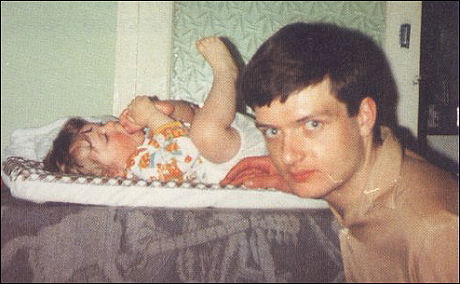
-- Curtis and child on May 13,. 1980 -- five days before he hung himself in his bedroom.

Filmed in black and white, this is based on (the widow of Ian Curtis) Deborah Curtis' Touching From a Distance, this is a biopic of Joy Division lead singer Ian Curtis. Matt Greenhalgh adapted the screenplay, which covers the last years in Curtis' life, leading up to his suicide on the eve of what was to have been Joy Division’s first US tour in 1980. Plot centers on Curtis' struggle between feeling enduring love for his wife and child and his beginning a burgeoning relationship with another woman a rock journalist, as well as his bouts with epilepsy and all-consuming performances with his band.

The Curtis suicide was dramatized in Michael Winterbottom's 24 Hour Party People, the well-received faux-doc. Control , however, is said to be a "totally different" film. Directors Fortnight honcho Olivier Pere told James that "it's a surprising love story about someone who was very ordinary and very modest...it's very close to English cinema from the 60s and 70s, with a political and social backdrop."

kadar iz filma --

navodno nije pretjerano dobar ... iako cijenim corbijna kao fotografa nisam bas siguran kako ce se snaci kkao reziser dugometraznog filma ... a i clanovi new ordera su jaaako kriticni do filma ...

#30

Posted: 17/05/2007 23:42
by repeater

#31

Posted: 18/05/2007 17:18
by repeater
Image Image Image

Recenzija
The Banishment (Izgnanie) - Andrey Zvyagintsev (Rusija)

The Banishment struggles to carry the burden of expectations surrounding the second feature from writer-director Andrey Zvyagintsev. Like his Venice Golden Lion winner The Return, it offers a tale of pride and patriarchy illuminating the dark soul of the Russian male. It confirms Zvyagintsev as a master of mood and composition but the ponderous pacing and epic running time make the film something of an endurance test.

Lacking the precision and intensity of The Return, it is further hampered by an obscurity in the storytelling that occasionally rivals the unfathomable Inland Empire. Sold as a prestige arthouse production, it may carve a modest profile but general audiences are likely to consider it too much of a challenge to suggest any mainstream potential.

The rural setting and tragic tale suggest something as earthy and epic as an Emile Zola novel or something as majestic as Greek tragedy. The klix inspiration for the film is a relatively unknown William Saroyan short story that has been considerably altered in the translation from page to screen.

The contrast between country and city remains. The urban landscapes are as empty and alienating as anything in Antonioni yet it is here that problems are resolved and difficulties made clear. The countryside is much more elemental.
...
Ravishing cinematography by Mikhail Krichman captures the countryside in blinding sunlight, misty mornings and heavy downpours that underline the more elemental nature of the events that unfold. The brooding, pulsing score by Andrey Dergachev and Arvo Part increases the likelihood of comparisons with the films of David Lynch.

All the performances are solid but the stand-out is Norwegian born, Ingmar Bergman veteran Maria Bonnevie who not only seems completely at ease acting in a foreign language but also makes Vera the most compelling and human figure in the film.

The camera scrutinises her in a way that Bergman once reserved for Liv Ullmann and she responds with a performance in which every glance and gesture reveals the plight of a woman whose life has been dominated by a society and a man who always believe they know best.

Allan Hunter/Screen Daily

#32

Posted: 18/05/2007 20:44
by repeater
Recenzija
4 Months, 3 Weeks And 2 Days (4 Luni, 3 Saptamini Si 2 Zile) - Cristian Mungiu (Rumunija)

A deceptively simple tale carrying a tremendous wallop, Cristian Mungiu's third feature 4 Months, 3 Weeks And 2 Days leads the new Romanian cinema into this year's Cannes competition with flying colours.
...
Though it takes place two years before the demise of the Ceausescu regime and bears all the grim trademarks of those times, this is far more than a historical survey of the period.

For behind a banal, rather sordid, illegal abortion story, lies a rich exploration of character, friendship, responsibility and devotion under duress. The film's uncompromisingly downbeat look offers so little in the way of respite for the audience that even the worst expectations that threaten to materialise at every turn would be a sort of relief compared to the iniquities and humiliations of real life.

The leads, Anamaria Marinca and Laura Vasiliu, never put a foot wrong, giving remarkably controlled and unaffected performances which are an enormous asset for this well-rounded, precisely attuned work.
...
The entire film consists of long sequence shots taken with a remarkably steady handheld camera. While it never leaves the main characters for long, nor crowd them, it does allow the unflattering backdrops to play as important a role as the actors themselves.
Locations, all of which are crowded, bland and uninviting, have been carefully chosen for the purpose and the dialogue has been pared down to elementary matter-of-fact realism.

Both the lead actresses are required to express a whole gamut of complex emotions, which they do with no visible histrionics whatsoever. Marinca, as the more assertive Otilia, goes way beyond duty in her devotion to her friend, and Vasiliu, as the infuriatingly passive Gabita, hides behind endless lies and shifts responsibilities to others whenever she can. Vlad Ivanov's implacable Mr Bebe, who almost never raises his voice, inspires anguish by his mere presence.

Dan Fainaru/Screen Daily

#33

Posted: 20/05/2007 08:28
by repeater
We Own the Night - James Gray (SAD)
Image
New York, 1988: A new breed of narcotics has swept the great city, bringing with it a ferocious crime wave more terrifying than any in recent memory. Outmanned and outgunned by the new criminal order, the police find themselves burying one of their own at the rate of two a month. An all-out war rages, threatening to engulf guilty and innocent alike. Bobby Green (Joaquin Phoenix) is caught in the crossfire. Manager of a Russian nightclub in Brighton Beach frequented by gangsters like Vadim Nezhinski (Alex Veadov), Bobby keeps his distance, not wanting to get involved. Despite his hedonistic, amoral lifestyle, he is committed to his girlfriend Amada (Eva Mendes) and has ambitions to open his own club and expand out of Brooklyn.
Bobby has a secret, however, which he guards closely. His brother is Police Lieutenant Joseph Grusinsky (Mark Wahlberg), who has followed in the footsteps of their father, legendary Deputy Chief Burt Grusinsky (Robert Duvall). Bobby’s already strained relationship with his father and brother is tested when Burt warns his son that this is a war, and he’s going to have to choose a side. -- forspan: http://www.lanuitnousappartient.com/video.html

#34

Posted: 20/05/2007 22:21
by repeater

#35

Posted: 20/05/2007 23:11
by repeater
No Country for Old Men
scene iz filma: http://vpod.tv/vpodfest21_cannes/204985

#36

Posted: 21/05/2007 07:13
by repeater
Image
Marija Petronijević (Zavet-Emir Kusturica)

20.05.2007
Tanjug

"Ovo je sigurno poslednji put da sam ja u takmičarskoj konkurenciji. Mislim da je to iscrpljeno i da to više nema nekog velikog smisla. Posebno zato što već osećam da zauzimam neko mesto koje bi moglo biti mesto za nekog mlađeg. Peti put, dosta je", rekao je Kusturica u intervjuu nacionalnoj agenciji, u njegovom Drvengradu na Mokroj Gori, pred odlazak u Francusku.

On kaže da je za njega, posle dvadeset i više godina, a "Zavet" mu je peti film u takmičarskom programu, bilo vreme i ranije da odustane od konkurencije.

"Nisam, zato što predstavljam takozvanu malu kulturu, koja mora da ima velika vrata da bi se videla i da bi se čula. Dakle, možda mi nije bilo mesto ni ove godine u konkurenciji, ali sam, ipak, tamo ne samo zbog ovog filma, nego zbog kulture iz koje dolazim. Mnogo je zapaženiji film kada je u konkurenciji, nego kada nije", objasnio je Kusturica, jedan među retkim filmskim stvaraocima kome je u Kanu pošlo za rukom da Zlatnu palmu osvoji dva puta.

Najveće priznanje ovog prestižnog filmskog festivala prvi put je dobio 1985. godine za film "Otac na službenom putu", a posle 10 godina i za "Podzemlje".

Govoreći o ovogodišnjoj filmskoj smotri u Kanu, Kusturica je napomenuo da je reč o festivalu koji uvek ima nekoliko uzbudljivih tačaka.

Ovoga puta, pored toga što je ovo njegova 60. godišnjica, to je pitanje usklađivanja mladih i starijih autora, rekao je on, izrazivši nadu da će festival doneti i iznenađenja.

"Nadam se, da će biti onih iznenađujućih faktora, filmova mlađih ljudi, kao što sam se i ja pojavio, da će iznenada neko nov, mlad, nas sve tamo potući do kolena".

Ako tako ne bude, uzbudljivost festivalu će, kako je rekao, obezbediti ozbiljna autorska imena u takmičarskom programu.

"Koliko vidim, ima ih dosta", dodao je "miljenik" Kanskog festivala, koji je dobrim ocenio i ovogodišnju žiri.

"Kan, otprilike, daje dva ili tri dobra filma, ne više. Ključ te tajne drži selektor, koji filmove koje odabere nudi u određenom paketu. U konceptu koji on predvidi, mislim da se i žiri određuje. Dobro u Kanskom festivalu je to što je žiri, ipak, nezavisan", napomenuo je Kusturica.

Praveći paralelu sa filmovima koji su u trci za dodelu Oskara, on kaže da je kod Amerikanaca presudno pitanje ulaganja.

"U onaj film za koga pretpostave da ideološki ili estetski vredi, oni ulažu novac i na sve adrese akademika šalju taj film i tako vrše jedan psihološki pritisak. U Kanu nema toga. Kanski žiri je ona mera koja može da pogreši, ali autentično", ocenio je Kusturica.

Na pitanje ima li u srpskoj kinematografiji tih mlađih snaga kojima bi, kako je rekao, trebalo da oslobodi mesto, Kusturica je konstatovao da ima dobrih filmova.

"Svaki put kada neko stariji lamentira, on to radi uglavnom radi sebe, ili zato što nema dovoljno informacija. Ima dobrih filmova, evo Berlin je otkrio dvojicu", rekao je on, navodeći primer "Klopke", "Romea i Julije", "Sedam ipo".

Gledao sam, ima dobrih filmova, biće tu filmova sigurno, dodao je čuveni reditelj, ocenivši da se kod nas pitanje tržišta veštački nameće.

Mala zemlja kakva je naša ne može da ima tržište i zato, smatra on, bez ozbiljne države i ozbiljnog Ministarstva kulture teško da nešto može da bude urađeno.

"Mislim da je ovaj saziv prošlog Ministarstva kulture bio jako dobar, jer je mnogo pomogao srpskom filmu. I davao novac. Samo tu novac nije sve, kao i u fudbalu. Ne može svako ko ima para da napravi šampionski tim. Treba tu i malo znanja i malo kulturne politike, odnosno stvaranje ambijenta u kome domaći film dolazi na svoje staro oprobano mesto", zaključio je Kusturica.

Podsećajući da je poseta u svim bioskopima opala, on smatra da treba naći odgovor na pitanje kako da se domaći film vrati na to kulturno tržište.
Komentarišući iskustvo Francuske koja poslednjih godina beleži rast gledanosti u bioskopima, on je rekao da je veliko pitanje hoće li tako i ostati posle pobede Nikole Sarkozija na predsedničkim izborima i njegove liberalne političke ideje.

"Liberalizam to je najveća šteta planete. On je, zapravo, ubica svega što je plemenito, što ima izvantržišnu vrednost. On meri sve psihološke probleme, estetske, istorijske, moralne preko tržišta. A kada tržište postane jedino merilo vrednosti, kuku nama. Tako da ne znam da li će francuski film uopšte opstati pod ovim uslovima, jer, koliko vidim, Sarkozi je neko ko je krajnje opredeljen u pravcu vrlo liberalnog kapitalizma", ocenjuje Kusturica, upuštajući se i u političke komentare.

On smatra da je "liberalni kapitalizam najgore što može da se desi jednoj maloj zemlji" pa dodaje da "tu sad imamo ove naše male satelite koji od Srbije hoće da naprave liberalnu zemlju, a ona jadna nije još ni sa polja i kukuruzišta izašla kako treba".

#37

Posted: 21/05/2007 20:10
by repeater
Import/Export - Ulrich Seidl (Austrija)

Seidl's unremittingly depressing view of the human condition will not be appreciated by the many who prefer their reality with the rough edges smoothed off, but others will revel in the deep truth and immense power of his images and scenes that linger in the mind long after the film is over.

The film is organised around a clear, almost mathematical, doubled structure. A young Ukrainian woman named Olga (Rak), fed up with the bleak living conditions in her own country, leaves her mother and child to seek financial salvation in Austria. Paul (Hofmann), a feckless and violent working-class Austrian, who nonetheless retains some semblance of human values, ends up with his morally challenged stepfather (Thomas) heading east, toward Ukraine, in his eternal search to avoid the beatings regularly supplied by his many creditors. The film alternates between the two stories and the two characters never meet.

As in Seidl's earlier film, cruelty, violence and humiliation are the order of the day. Though occasionally redeemed by small glimmers of hope, what results will not be very comforting to viewers looking for solace or some meaning to life. Nevertheless, the locations and the situations are so brilliantly and uncompromisingly chosen and captured on film that a kind of redemption seems possible from their very intensity, even, or especially, when the viewer is being made to feel most uncomfortable. Individual shots - as for example the long shot of the nightmarish industrial landscape Olga walks through each morning, from which a faint wintry sun barely peeps out - silently speak unforgettable volumes in the Russian manner. Similarly, all interiors are either utterly sterile, if institutional, or unbearably kitschy, if domestic. Seidl is also parsimonious with narrative transitions, making the audience work to connect the dots, but this strategy results in a sense of respect for the viewer's intelligence, rather than incoherence.

Whole scenes make viewers squirm, as for example, the horrifying one set in a gypsy colony, which is only topped by the many scenes set in the nursing home in Austria where Olga finds work. The latter will ring with truth for those, in any country, with some exposure to these institutions.

Peter Brunette/Screen Daily

#38

Posted: 21/05/2007 20:13
by repeater

#39

Posted: 21/05/2007 20:27
by Hierarchia
Novi film Abela Ferrare:

GO GO TALES

Los Angeles… (November 27, 2006)… Director/writer Abel Ferrara (Mary starring Juliette Binoche, R Xmas, Bad Lieutenant, Snake Eyes starring Madonna) today announced the November 27 start of principal photography for Go Go Tales, a screwball comedy set in a downtown Manhattan “go go” cabaret. Academy Award-nominated actor Willem Dafoe (Spiderman I and II, The Aviator) has been cast as the charismatic cabaret impresario Ray Ruby whose club “Paradise” is a factory of dreams for young dancers.

Bob Hoskins (Hollywoodland, Mrs. Henderson Presents, Who Framed Roger Rabbit) portrays Ray’s sidekick/accountant Jay, and Matthew Modine (Transporter II, Mary) stars as Ray’s younger brother Johnny who is also his financier. Italian supermodel Bianca Balti and French actress Lou Doillon have been cast as the lead dancers.

Go Go Tales recounts the tale of one fateful evening in Paradise. Ray and Jay face imminent foreclosure by the landlady when Johnny tells Ray he is no longer willing to lend him the money to keep the club open. Things have gotten so bad that even the dancers are threatening to “strip-strike”, and to make matters worse, Ray has lost their winning lottery ticket!

Asia Argento (Marie Antoinette, xXx), Burt Young (Rocky Balboa, Transamerica, Rocky I, II, III, IV, V), Riccardo Scamarcio (Texas, L’Uomo Perfetto), Sylvia Miles (Denise Calls Up, Midnight Cowboy, Good Night My Lovely), supermodel Bianca Balti and French actress Lou Doillon (Blanche by Bernie Bonvoisin, Embrassez Qui Vous Voudrez by Michel Blanc) also star in the American-Italian co-production which started rehearsals on November 20.

Go Go Tales will shoot in Cinecittà Studios, Rome, and move to New York in early January to shoot exteriors. Director Ferrara also scripted the film which is executive produced by Enrico Coletti (Caro Gorbaciov directed by Carlo Lizzani; Carol un Papa rimasto uomo directed by Giacomo Battiato) and Massimo Cortesi (Bernardo Bertolucci’s Besieged; Claire Peploe’s The Triumph of Love). Paolo Lucidi line produces.

Go Go Tales is co-produced by Go Go Tales Inc., Bellatrix Media and De Nigris Productions. Go Go Tales Inc. was founded by American financier Steven W. Lefkowitz. Bellatrix Media is controlled by “Sunrise Holding S.A.”, a company owned by Swiss entrepreneur Massimo Gatti.

“When we read the script of Go Go Tales, it reminded us of the comedies of Frank Capra, Billy Wilder and Preston Sturges, where tragic events became black comedy and reality was seen with rose colored glasses and rules were bent with a carefree irony,” commented executive producer Enrico Coletti.
“We can think of no one better than Abel Ferrara to bring this story to life,” added executive producer Massimo Cortesi.

Go Go Tales features a stellar production team including Director of Photography Fabio Cianchetti (Roberto Benigni’s The Tiger and the Snow, Bernardo Bertolucci’s Dreamers), costume designer Gemma Mascagni (Ricordati di me directed by Gabriele Muccino; Manuale d'Amore directed by Giovanni Veronesi) and production designer/associate producer Frank deCurtis (MARY, R Xmas, Donnie Brasco) who has rebuilt a three floor NY nightclub on the Cinecittà soundstage.

Most familiar to audiences for such commercial hits as Spider Man I and II, Dafoe has garnered critical praise and Academy Award nominations for his performances in Shadow of the Vampire and Platoon. Among his other varied film credits are: The Aviator, The Life Aquatic with Steve Zissou,The English Patient, Mississippi Burning and The Last Temptation of Christ.

Ferrara reunites with Modine with whom he previously worked on Mary which won the Grand Jury Prize at the 2005 Venice Film Festival. Modine’s impressive film credits include: Any GivenSunday, Short Cuts, Pacific Heights, Full Metal Jacket and Birdy. His television credits include thecritically acclaimed And the Band Played On as well as appearances in such hit series as “Law & Order: Special Victim’s Unit” and “The West Wing.”

Bob Hoskins is known to audiences worldwide for klix performances in such critically acclaimed films as Mona Lisa (for which he earned an Academy Award nomination for Best Actor and won both a BAFTA Award and Cannes Film Festival Award in the same category), The Cotton Club, Brazil and A Prayer for the Dying. Hoskins has also demonstrated his lighterside in such commercial hits as Maid in Manhattan, Super Mario Bros. and Hook.
Asia Argento was most recently seen in Sofia Coppola’s Marie Antoinette and George Romero’s Land of the Dead. The multi-talented actress also wrote and directed The Heart is Deceitful Above All Things. Her other film credits include The Keeper, Ginostra, Gus Van Sant’s Last Days, Patrice Chereau’s award-winning and critically acclaimed Queen Margot. Go Go Tales is her second film with Ferrara and Dafoe following their collaboration on New Rose Hotel. Ms. Argento made her film debut in La Chiesa under the direction of her father, Dario Argento, and appeared in several of his later films including Love Bites, The Phantom of the Opera and Trauma.

Image

#40

Posted: 21/05/2007 20:32
by Hierarchia
Mene najviše zanimaju novi filmovi braće Coen, Wong Karwaia, Bella Tarra i Soderbergha. Nadam se da će nam Howard odabrati makar neki od njih. Zanima me i sta je napravio inace nepredvidivi Sokurov, film zvuci interesantno.

#41

Posted: 21/05/2007 20:36
by Hierarchia
Nisam čula za ovog režisera, pa nađoh podatke:

Raphael Nadjari
Raphael Nadjari (born 1971 in Marseille, France) is a French born writer and director for film and television.

In 1993, Nadjari started working for French television as a writer and director. In 1997, he wrote the television screenplay Le P'tit Bleu, which was directed by Francois Vautier for Arte as part of the TV drama collection Petits Gangsters.

The same year he wrote and directed his first US feature, The Shade (released in 1999), which starred Richard Edson, Lorie Marino, and Jeff Ware). It was an adaptation of A Gentle Creature by Dostoevski that Nadjari updated, setting it in contemporary New York. This film was an Official Selection ("Un Certain Regard") at the 1999 Cannes Film Festival and also appeared at the Deauville Film Festival, the film was awarded in Bergamo Film Festival (Italy).

At the end of 1999, Raphael directed his second feature, I am Josh Polonski's Brother (2001). Starring Richard Edson and Jeff Ware, it was shot on Super 8 mm film in New York. The film opened in Paris on June 6, 2001 and was selected for the "Forum for New Cinema" at the Berlin Film Festival in 2001.

Also in 2001, Nadjari shot a film in New York, Apartment #5c (released in 2002). It starred Richard Edson and Tinkerbell an Israeli actress and was selected in Cannes' "Director's Forthnight."

In 2004, Nadjari shot Avanim in Tel Aviv, Israel with Assi Levy who has been nominated for Best Actress in the European Film Award. The film received also The Best film award in Geneva Cinema Tout Ecran and the Best director film Award in Cannes 2005 France Culture Award.

Image

#42

Posted: 21/05/2007 20:50
by Hierarchia
Winterbottomov novi film:

A MIGHTY HEART


On January 23, 2002, Mariane Pearl’s world changed forever. Her husband Daniel, South Asia bureau chief for the Wall Street Journal, was researching a story on shoe bomber Richard Reid. The story drew them to Karachi where a go-between had promised access to an elusive source. As Danny left for the meeting, he told Mariane he might be late for dinner. He never returned. In the face of death, Danny’s spirit of defiance and his unflinching belief in the power of journalism led Mariane to write about his disappearance, the intense effort to find him and his eventual murder in her memoir A Mighty Heart: The Brave Life and Death of My Husband Danny Pearl. Six months pregnant when the ordeal began, she was carrying a son that Danny hoped to name Adam. She wrote the book to introduce Adam to the father he would never meet. Transcending religion, race and nationality, Mariane’s courageous desire to rise above the bitterness and hatred that continues to plague this post 9/11 world, serves as the purest expression of the joy of life she and Danny shared.


Image

Murder in Samarkand - Interview With Michael Winterbottom

This is an extract from an interview with Michael Winterbottom published in El Pais on 23 March. It is translated from the Spanish by me, so may not be perfect.

Winterbottom always has three or four projects in hand. This day in March is no exception. A monitor in his London office is showing rushes of A Mighty Heart, about the murder in Pakistan of the Wall Street Journal correspondent Danny Pearl. The film is based on the reconstruction of the facts published by his widow, Marianne, played by Angelina Jolie. The director is also supervising details of the imminent filming of Genova, to be shot on location in Italy with Colin Firth. And meanwhile he looks toward the future, to 2008, when he expects to complete a trilogy with the actor Steve Coogan. The English humorist performs a triple role in Tristram Shandy and is the narrator of 24 Hour Party People, the frantic exploration by Winterbottom of the musical insanity of eighties Manchester.

"We want to do a comedy about torture", he states, without avoiding the boldness of his objective. He is working already on the script, based on Murder in Samarkand, the biography of Craig Murray, the British ambassador to Uzbekistan who lost his job and diplomatic career to denounce the connivance of Tony Blair's government in cases of torture of terrorist subjects.

"There is a connection among these three movies, that relates to aspects of Steve. The structure, the form and the tone of the narrative are similar. Also the feverish passion for people, the love of ideas and a sense of humor that pricks pomposity", Winterbottom explains.

As a person, Tristram Shandy has entered the English popular vocabulary to describe people of brimming imagination and absurd ideas. The book was also viewed as unfilmable. In "A Cock and Bull Story" Winterbottom resolves the problem by making a film about a film, that is to say, about a group of filmmakers who try to adapt the novel.

"The book is not based on a traditional concept of narrative. It disperses in multiple directions, with no straight line, and interspersed with passages very tangential to the central story. It is one of the aspects that most attracted me to the project. Movies, in general, are incredibly conservative as to structure and form. Here I deliberately avoid falling into a lineal structure, as I also did in 24 Hour Party People and I want to do again in Murder in Samarkand", explains the director.

Lourdes Gomez, El Pais, 23/3/07

#43

Posted: 21/05/2007 21:00
by Hierarchia
Na Arte je trenutno Karwaijev 2046, a sad ide ciklus njegovih filmova (ovih dana), pa koga zanima, neka gleda.

#44

Posted: 22/05/2007 09:11
by repeater
Paranoid Park
scene iz filma: http://vpod.tv/vpodfest21_cannes/205615

#45

Posted: 22/05/2007 09:14
by repeater
Recenzija
Paranoid Park - Gus Van Sant (SAD)

With “Paranoid Park,” an intimate character study of an accidental killer, Gus Van Sant has returned to Cannes with one of the most moving and delicately felt films of his fascinating career. (He won the Palme d’Or in 2003 for “Elephant.”) Shot by the cinematographers Christopher Doyle and Rain Kathy Li with an acute sensitivity to color as an index of feeling and mood, the film unwinds as a series of nonlinear flashbacks, some of which repeat like the refrain of a song. Though based on Blake Nelson’s young-adult novel of the same title, Mr. Van Sant’s film — he wrote the lean screenplay, as well as directed and edited — is a work of art that exploits the plasticity of his own medium to eerie, at times rapturous effect.

The angel-faced Gabe Nevins plays Alex, a high school student who spends much of his out-of-class time skateboarding with his friends and fending off a girl who is eager to lose her virginity. One evening while visiting Paranoid Park, a swooping concrete paradise for throwaways and runaways, buzzing with the sounds of grinding wheels and excited young voices, Alex inadvertently causes the gruesome death of a security guard. Mr. Van Sant tells what happened to the teenager, still more boy than man, not a hint of down on his chin, as if he were building a mosaic. Each new fragment adds another piece to the whole, which doesn’t fully come into view until late in this precisely shaped one-hour-25-minute story.

The film’s visual beauty is so striking — in one shot Alex skateboards against a midnight-blue light, framed by glossy green shrubbery — that it takes a while to appreciate that the images are doing most of the narrative work. You see Alex writing in a notebook and hear him in intermittent voice-over, but the turmoil and confusion churning in his head, as well as the film’s persuasively argued plea for this boy’s fundamental purity, are conveyed through everyday, incidental moments and gestures. Already locked inside the agonizing near-solitude that often haunts adolescence, Alex suffers and worries and exists alone, a state of being that Mr. Van Sant conveys with enormous empathy.

Manohla Dargis / NYTimes

#46

Posted: 22/05/2007 09:20
by repeater

#47

Posted: 24/05/2007 06:16
by repeater
for all you coen fans out there .. pet dodatnih scena iz filma:
http://www.commeaucinema.com/bandes-annonces=76586.html

bardema su fantasticno unakazili .. :D :D

#48

Posted: 24/05/2007 07:45
by repeater
posljednja dva dana su prosla u znaku dobrih filmova, medju kojima se isticu Auf der anderen Seite - Akin, The Man from London - Tarr i Stellet Licht - Reygadas.

Image Image

Recenzija
Auf der anderen Seite (The Edge of Heaven)- Fatih Akin (Njemacka/Turska)

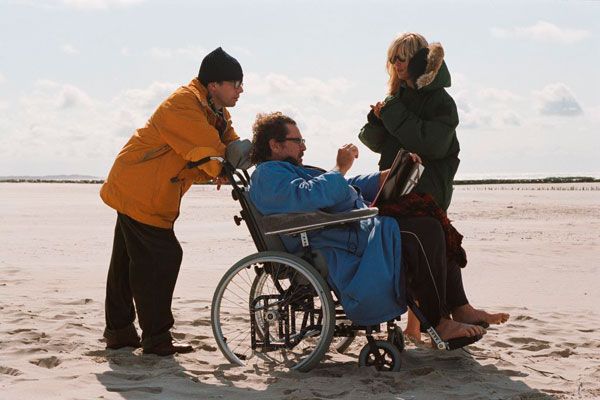
The point at which a good director crosses the career bridge to become a substantial international talent is vividly clear in "The Edge of Heaven," an utterly assured, profoundly moving fifth feature by Fatih Akin. Superbly cast drama, in which the lives and emotional arcs of six people -- four Turks and two Germans -- criss-cross through love and tragedy takes the German-born Turkish writer-director's ongoing interest in two seemingly divergent cultures to a humanist level that's way beyond the grungy romanticism of his 2003 "Head-On" or the dreamy dramedy of "In July" (2000). Robust upscale biz looks a given. Variety

tri scene iz filma: http://www.commeaucinema.com/bandes-annonces=67798.html
hanna schygulla :shock: :shock:

#49

Posted: 24/05/2007 08:09
by repeater
Fatih Akin Komentari

NOT GOING OUT IN THE FIRST ROUND
I put so much into the making of HEAD-ON (GEGEN DIE WAND), that when I finished, I had
no idea what to do next. On my previous films, I had always known what I was doing next
before finishing the current one. So there I was in this bad situation not knowing what
to do. Ironically, to make matters worse, HEAD-ON became a big success for me. I wasn’t
expecting it. As great as it was, success doesn’t make everything easier. I got even more
blocked. I felt pressured to come up with something better than HEAD-ON. I wanted to
do better artistically. I had to prove to myself that HEAD-ON wasn’t the best I could do.
I relate a lot of things to sports, so I kept thinking that I didn’t want to go out in the first
round. I was faced with the challenge of following up HEAD-ON. Being faster than
Carl Lewis. Being Ben Johnson.

MY HOMEWORK
Filmmaking is a big part of my life, but it pales next to issues like birth, love and death.
To really grow up, I felt I had to make three films. Call it a trilogy if you want to, but it’s
basically three films that belong together because of their themes of love, death and evil.
HEAD-ON was about love. THE EDGE OF HEAVEN is about death. Death in the sense of every
death is a birth. Like both death and birth open doors to other dimensions. With THE EDGE
OF HEAVEN, I feel like I’m reaching some other level, but something is still missing that
will be in the third film about evil. I just feel like I have to tell something to the end. These
three films are kind of my homework, then I can move on. Maybe move on to genre films,
film noir, western, even horror.

IN BETWEEN TWO CULTURES
I have this Turkish background and I have this German background. I was born in
Germany, but I’m in between the two cultures. Educated in Europe, but also raised in
Turkish by my parents. Turkish culture has always been a part of my life. I traveled to
Turkey with my family every summer since I was a kid. Since I’m in between these two
cultures, it’s natural that my films are in between, too.

Image

LOVE-HATE RELATIONSHIP WITH TURKEY
I have this love-hate relationship with Turkey, a very complicated relationship. I became
much more interested in Turkey after I finished school in 1995. I decided to make my first
short film there, WEED in 1996. I saw another face of Turkey and I became more and
more fascinated. I became more Turkish. With every meter of film I shoot in Turkey, I try
to understand the country more and more. But the more I understand it, the more it makes
me sad. I hate the politics, the nationalism. Look at what is happening in that country.
History repeating itself. The same mistakes again and again. I love that country, but shooting
in Turkey takes a lot of energy, tears and blood.

EDUCATION CAN SAVE THE WORLD
Literacy, education, plays a profound role in THE EDGE OF HEAVEN. A book is a key image
in the conflict between Nejat and his father. Which book to show? It was a very difficult
decision for me. I didn’t want “Siddartha” or “The Hobbit” or anything too full of some
parallel meaning. So I thought I would advertise my friend’s fantastic book. I chose “Die
Tochter des Schmieds (The Blacksmith’s Daughter)” by Selim Ozdogan. In regards to the
film, the key element is about reading. Reading stands for education. And education is
the only thing that can save the world.

HANNA AND TUNCEL
I imagined this German mother coming to Istanbul looking for her missing daughter.
I had this image early on with Hanna Schygulla in mind. I had met her in Belgrade in 2004
and she put a spell on me. I was really into the idea of working with her. Some German
journalists have compared my career to that of Fassbinder’s, but I don’t see it at all.
I come from the streets, not the theater. Yilmaz Güney is more my background, independent
against the norm. What Fassbinder was to Hanna, Güney was similar to actor Tuncel
Kurtiz, who I also imagined early on to be part of THE EDGE OF HEAVEN. But my goal wasn’t
to use them as icons from films by Fassbinder and Güney. It would have been vain of me
to try and use them like no one else before. I didn’t want my direction to be affected
like that. For me, my job is storytelling. And both Hanna and Tuncel fit the idea I had for
the parents in the story.

SAMPLING
The challenge for me as a filmmaker is not to repeat myself. I like to surprise myself and
ultimately the audience. I hope that all my films will seem different. I guess we’ll be able
to judge that five films from now. When my ideas come, they all come at the same time
and they come from a lot of different sources. I even recyle, like sampling in hip hop
music, which I love. They use known bass lines to create something new from something
old, and it’s a sort of homage at the same time. Some of the issues in THE EDGE OF HEAVEN
were sampled from CROSSING THE BRIDGE. The character of the political activist Ayten
was inspired by those Kurdish singers. Here in the West, we don’t have to fight for freedom
of speech. But the war for justice is still going on in Turkey.

#50

Posted: 24/05/2007 08:24
by repeater
ostale vijesti iz kana ...

PAVILION PROFILE: Bosnia-Herzegovina, A Country Promoted through its Film Industry

Though they have no films in competition or screenings at the market this year, Bosnia-Herzegovina nonetheless has their agenda full and laid out before them. With the fourth year of their presence in Cannes and a third year at their location in the International Village, the Bosnia Pavilion has come to the festival with a number of finished films, accompanied by about forty filmmakers, all of which are available on DVD upon request or during a screening at the pavilion.

The annual Bosnian cocktail night has been expanded to a large evening event at the Century Club, and organizers are confident they will be able to attract attendees to this year's event despite the ever-present competition from other parties. During the dinner they will announce the new curator for The Katrin Cartlidge Foundation, named after the late British actress who starred in Bosnian director Danis Tanovic's Oscar-winning "No Man's Land." The foundation "works to encourage young artists on their creative paths" by supporting the work of one selected artist with a one-year scholarship.

The Bosnian-Herzegovina Pavilion, like most, is a center for networking and deal making for its members and others attending the Cannes Film Festival and Market. The primary goal for this year's Bosnian-Herzegovina Pavilion is to increase awareness for their 13 features, 11 documentaries, and 11 shorts in their latest catalogue, all of which have been made in the past year.

The Pavilion has identified three goals for its presence here in Cannes. First and foremost of course, is promotion of the Bosnia-Herzegovina film industry, which includes use of the tent as a base for the work of the Bosnian Association of Filmmakers, a group they consider an integral part of the country's ability to maintain its footprint at the Cannes market. Outreach in the form of a daily wine happy hour from 5:30 to 6:30 p.m also augments the serious work of the country's film biz.

Also on their agenda, the Bosnian Pavilion plans to utilize the seemingly limitless attention given to Cannes as a means to build awareness about the Sarajevo Film Festival, which takes place this year August 17 - 25 in addition to the event's new "Talent Campus" program designed to nurture young filmmakers. With Sarajevo in mind, the country is also searching for films to invite to join this year's slate.

The final objective of Bosnia's presence in Cannes is to generally promote the country itself. Bosnia-Herzegovina is taking great lengths to integrate its promotion closely to its expanding film industry. Having begun a new campaign, "Enjoy Life, Enjoy Film," they hope to use their films in order to attract increased tourism to Bosnia-Herzegovina. [Ashley Adams/indieWIRE.com]