Page 95 of 541
#2351 Re: Šta trenutno čitate?
Posted: 05/05/2009 18:41
by Soul_Sista

"Sto godina samoce" ...roman u kojem je vrijeme jedno i isto - proslost, sadasnjost, buducnost, i roman u kojem samoca pobjedjuje heroje, ratove, i one najjace..
#2352 Re: Šta trenutno čitate?
Posted: 05/05/2009 18:54
by Zephyr38
The Merchant and the Alchemist's Gate by Ted Chiang
#2353 Re: Šta trenutno čitate?
Posted: 05/05/2009 19:14
by aman
Čitam po već n-ti put knjigu
'Zapisi iz Podzemlja', Dostojevski
jer...
"Ja sam bolestan čovjek ... Zao čovjek. Nesimpatičan čovjek. Mislim da me boli jetra. Istina, ja nemam pojma o svojoj bolesti, i ne znam tačno šta me boli. Ne liječim se i nikada se nisam liječio, iako poštujem medicinu i ljekare. Pored toga, ja sam još i sujevjeran do krajnosti, ili bar toliko da poštujem medicinu. (Dovoljno sam obrazovan da ne budem sujevjeran, ali sam ipak sujevjeran).
* * *
(Ovo je slaba duhovitost, ali neću da je precrtam. Napisao sam uvjeren da će ispasti vrlo duhovito, a sad pošto vidim da sam se samo gadno razmetao - za inat neću da je precrtam.)"
I tako to

#2354 Re: Šta trenutno čitate?
Posted: 05/05/2009 19:20
by anais_nin
Altuna wrote:
je li mu ovo najnovija knjiga?
napisi koju o utiscima ako ti ne bude tesko
#2355 Re: Šta trenutno čitate?
Posted: 05/05/2009 21:36
by Altuna
Nije najnovija, izasla je 2002. Tek sam dobila malu zbirku njegovih dijela na poklon, cekaju me jos Izlaz, Zagreb jug i Tetovirane price
Napisacu nesto, nece mi biti tesko
#2356 Re: Šta trenutno čitate?
Posted: 05/05/2009 21:46
by anais_nin
Altuna wrote:Nije najnovija, izasla je 2002. Tek sam dobila malu zbirku njegovih dijela na poklon, cekaju me jos Izlaz, Zagreb jug i Tetovirane price
Napisacu nesto, nece mi biti tesko
nemam ovu...zato sam pomislila da je nova
bice dodata na listu...svidja mi se naslov

#2357 Re: Šta trenutno čitate?
Posted: 05/05/2009 21:54
by Custos
aman wrote:Čitam po već n-ti put knjigu
'Zapisi iz Podzemlja', Dostojevski
jer...
"Ja sam bolestan čovjek ... Zao čovjek. Nesimpatičan čovjek. Mislim da me boli jetra. Istina, ja nemam pojma o svojoj bolesti, i ne znam tačno šta me boli. Ne liječim se i nikada se nisam liječio, iako poštujem medicinu i ljekare. Pored toga, ja sam još i sujevjeran do krajnosti, ili bar toliko da poštujem medicinu. (Dovoljno sam obrazovan da ne budem sujevjeran, ali sam ipak sujevjeran).
* * *
(Ovo je slaba duhovitost, ali neću da je precrtam. Napisao sam uvjeren da će ispasti vrlo duhovito, a sad pošto vidim da sam se samo gadno razmetao - za inat neću da je precrtam.)"
I tako to
Da možda ne misliš na "Zapisi iz mrtvog doma"?! Nije mi poznat ovaj naslov, ili se kod nas prevodi drugačije?!
#2358 Re: Šta trenutno čitate?
Posted: 06/05/2009 00:04
by 2407
Danas zavrsio Zbiga Brzezinskog - Velika sahovska tabla. Imao sjajne prporuke za knjigu mada mi knjiga nije nesto posebno. Jedva mi je plijenila paznju. Obicna suhoparna geopoliticka analiza Evroazije.
Danas poceo i procitao pola Eric S. Margolis - Rat na krovu svijeta. Sad za sada jednom rijecju: odlicna!
#2359 Re: Šta trenutno čitate?
Posted: 06/05/2009 00:17
by aman
Custos wrote:aman wrote:Čitam po već n-ti put knjigu
'Zapisi iz Podzemlja', Dostojevski
jer...
"Ja sam bolestan čovjek ... Zao čovjek. Nesimpatičan čovjek. Mislim da me boli jetra. Istina, ja nemam pojma o svojoj bolesti, i ne znam tačno šta me boli. Ne liječim se i nikada se nisam liječio, iako poštujem medicinu i ljekare. Pored toga, ja sam još i sujevjeran do krajnosti, ili bar toliko da poštujem medicinu. (Dovoljno sam obrazovan da ne budem sujevjeran, ali sam ipak sujevjeran).
* * *
(Ovo je slaba duhovitost, ali neću da je precrtam. Napisao sam uvjeren da će ispasti vrlo duhovito, a sad pošto vidim da sam se samo gadno razmetao - za inat neću da je precrtam.)"
I tako to
Da možda ne misliš na "Zapisi iz mrtvog doma"?! Nije mi poznat ovaj naslov, ili se kod nas prevodi drugačije?!
Ne, ne... Dvije različite knjige su u pitanju... "Zapisi iz mrtvog doma" su ispovijest zatvorenika sa autobiografskim elementima iz života Dostojevskog... A "Zapisi iz podzemlja" su knjiga za sebe, ispovijest jednog proturječnog čovjeka. Običnog, naoko.
Super su obje, no za Dostojevskog se već i podrazumijeva.
#2360 Re: Šta trenutno čitate?
Posted: 06/05/2009 01:50
by Eleonora
Hanif Kureishi ''Crni album''...
Inace mi se dopada stil ovog engleskog pisca.
Procitala sam i njegovo ''Tijelo'' i ''Intimu''.
#2361 Re: Šta trenutno čitate?
Posted: 06/05/2009 02:58
by corolla02
Na zasluzenom odmoru sam!
#2362 Re: Šta trenutno čitate?
Posted: 06/05/2009 19:01
by elSaik
Ejs...

... koliko te koštalo to raritetno izdanje?

PS Treći dio i ujedno posljednji (koji će se izdati na našem jeziku)...

#2363 Re: Šta trenutno čitate?
Posted: 06/05/2009 19:03
by mercur
Memoare
ali svoje a ne Čerčilove
#2364 Re: Šta trenutno čitate?
Posted: 06/05/2009 19:24
by Loulou
#2365 Re: Šta trenutno čitate?
Posted: 06/05/2009 20:49
by lala_sa

Jučer sam ovu završila. Kniga je stvarno fenomenalna, bukvalno sam trčala kući da je čitam...
#2366 Re: Šta trenutno čitate?
Posted: 07/05/2009 01:45
by maybelline
Sofija je genijalna, procitala je neki dan. Sada citam "The Cellist of Sarajevo" i dopada mi se....
#2367 Re: Šta trenutno čitate?
Posted: 07/05/2009 05:52
by anais_nin

Hormones, Genes and the Corner Office
By EMILY BAZELON
Why do klix on average lead boys for all their years in the classroom, only to fall behind in the workplace? Do klix grow up and lose their edge, while boys mature and gain theirs?
Ten years ago, no one would have thought to ask. The assumption that boys dominated at school as well as at work, while klix were silenced or ignored, seemed beyond dispute. But in her new book, “The Sexual Paradox,” a ringing salvo in the sex-difference wars, Susan Pinker stacks up the evidence of boys’ classroom woes and klix’ triumphs. “In the United States, boys are three times as likely to be placed in special education classes, twice as likely to repeat a grade and a third more likely to drop out of high school,” she writes. Tests of 15-year-olds in 30 European countries show klix far outstripping boys in reading and writing and holding their own in math. Boys are overrepresented in the top 1 percent of math achievers, but there are also more of them at the bottom. A 2006 economics study showed universities practicing affirmative action for men so that superior female applicants wouldn’t swamp them. “If you were to predict the future on the basis of school achievement alone,” Pinker writes, “the world would be a matriarchy.”
And yet, of course, it is not. Once they move from school to work, men on average earn more money and run more shows. They particularly dominate in national government, the corporate boardroom and the science laboratory. Meanwhile, women are more likely to leave the labor force and to end up with lower pay and less authority if they come back.
Pinker, a psychologist and a columnist at The Globe and Mail in Canada, is careful to remind her readers that statistics say nothing about the choices women and men make individually. Nor does she entirely discount the effect of sex discrimination or culture in shaping women’s choices. But she thinks these forces play only a bit part. To support this, Pinker quotes a female Ivy League law professor: “I am very skeptical of the notion that society discourages talented women from becoming scientists,” the professor writes. “My experience, at least from the educational phase of my life, is that the very opposite is true.” If women aren’t racing to the upper echelons of science, government and the corporate world despite decades of efforts to woo them, Pinker argues, then it must be because they are wired to resist the demands at the top of those fields.
Thus, Pinker parks herself firmly among “difference” feminists. Women’s brains aren’t inferior, she argues, but they vary considerably from men’s, and this is the primary explanation for the workplace gender divide. Women care more about intrinsic rewards, they have broader interests, they are more service-oriented and they are better at gauging the effect they have on others. They are “wired for empathy.” These aren’t learned traits; they’re the result of genes and hormones. Beginning in utero, men are generally exposed to higher levels of testosterone, driving them to be more competitive, assertive, vengeful and daring. Women, meanwhile, get a regular dose of oxytocin, which helps them read people’s emotions, “the truest social enabler.” Then there’s prolactin, which, along with oxytocin, surges during pregnancy, breast-feeding and caretaking. Together, the hormones produce such a high that mother rats choose their newborns over cocaine.
Many of the scientific claims are familiar from previous books that pump up findings on sex difference, like “The Female Brain,” by the neurologist Louann Brizendine. Pinker goes even further by drawing a straight line from those blissed-out rats to human mothers who dial back at work. Because of their biological makeup, she argues, most women want to limit the amount of time they spend at work and to find “inherent meaning” there, as opposed to domination. “Both conflict with making lots of money and rising through the ranks,” she points out.
Pinker is surely right to contest what she calls the “vanilla male model” of success — “that women should want what men want and be heartily encouraged to choose it 50 percent of the time.” Or that when employers say jump, employees should always say how high. Even as they work fewer hours for less status and less money, on average, more women report that they are satisfied with their careers. Maybe men might well think the same if more of them felt they could cut back. But Pinker’s difference feminism doesn’t really allow for that possibility. She is a believer: “The puzzle is why the idea of sex differences continues to be so controversial,” she writes.
In her zeal, Pinker veers to the onesided. She doesn’t acknowledge that some of the research cited in her footnotes is either highly questionable as social science (Louise Story’s 2005 article in The New York Times, for instance, about her survey of Ivy League women’s aspirations) or has never been replicated — like the findings from Simon Baron-Cohen’s laboratory that newborn klix showed more interest in looking at human faces, while newborn boys preferred mechanical mobiles. Pinker omits the work of scientists who have shown that sex-based brain differences pale in comparison to similarities. We shouldn’t wish the role of sex differences away because they’re at odds with feminist dogma. But that doesn’t mean we should settle for the reductionist version of the relevant science, even if the complexity doesn’t make for as neat a package between hard covers.
Pinker also doesn’t acknowledge that some scientists wouldn’t accept the premise behind her chapters about male fragility. She cites men with Asperger’s syndrome and attention deficit disorder as examples of what she calls the “extreme male brain.” These men are train wrecks in school but then get on track in adulthood, when they can focus singlemindedly on their chosen fields. Pinker argues that their experience helps explain the general male lag at school and jump ahead at work. It’s true that men are more likely than women to suffer from Asperger’s and from some forms of A.D.D. But do their particular outsize talents and deficits really shed light on the workings of the average man’s brain? That question is hardly settled, and Pinker seems a bit glib when she fails to say as much.
Pinker also skips past an answer to the book’s central question that may have more explanatory power than her other arguments, even if it’s more prosaic and familiar to many a parent. Boys lag dramatically behind klix in terms of psychological development and physical resilience and then start to catch up as teenagers, as a long-running and wellknown study Pinker cites documented. Maybe after a few years as klix’ developmental equals, boys are ready to compete in the work force — and then zoom ahead as cultural norms and discrimination push women back. After all, why would klix’ hard-wired predilection against competition stay on ice while they blithely sweep all the academic honors and then kick in only at work?
Despite such unanswered questions, Pinker deserves credit for hacking away at the vanilla male model. She is right to point out that “grueling hours do not always translate into productivity” and to seethe at employers for ratcheting up their demands “even while extolling the virtues of gender balance.” And she is also right to call on schools to give the troubles of boys a fair share of attention. Pinker may not convey all the complexity that goes into making many men’s and women’s lives different, but she has a good prescription for helping more of us be our best selves.
#2368 Re: Šta trenutno čitate?
Posted: 07/05/2009 08:42
by Truba
#2369 Re: Šta trenutno čitate?
Posted: 07/05/2009 22:48
by Altuna
Edo Popovic, Kalda

#2370 Re: Šta trenutno čitate?
Posted: 07/05/2009 22:57
by anais_nin
Altuna wrote:Edo Popovic, Kalda
@Altuna gdje si ti nabavila sve te knjige Ede Popovica?
#2371 Re: Šta trenutno čitate?
Posted: 07/05/2009 23:02
by Altuna
Par sam dobila na poklon od prijatelja iz Hrvatske, a Kalda je izdata 2008 i moze se naci u knjizarama
#2372 Re: Šta trenutno čitate?
Posted: 08/05/2009 23:44
by frla
Zna li ko gdje bih mogao naci ovaj dvd da pogledam? Procitao sam ovu knjigu davno ... extra je

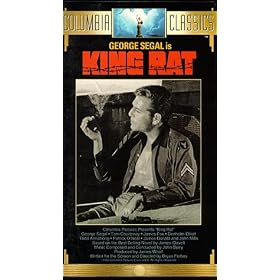
Prijevod knjige na naš jezik je samo "King" volio bih pogledati dvd ako neko zna gdje ima da se nabavi ...
#2373 Re: Šta trenutno čitate?
Posted: 09/05/2009 00:50
by Ja_Ja
Zadnja knjiga koju sam procitao a stvarno je i interesantna jeste : In Bad Company (Engleski Jezik) - America's Terrorist Underground koju je napisao Mark S. Hamm
Nisam siguran da je knjiga prevedena na Bosanski jezik ali je vrijedna citanja. Radi se o Pete Loganu jednom od prvih Americkih terorista i vodji Arijanske Republikanske Armije za kojeg se vjeruje da je bio u vezi sa bombasem iz Oklahoma sitija.
#2374 Re: Šta trenutno čitate?
Posted: 10/05/2009 22:23
by Borg-Resistence is FUTILE
U troli (tramvaj ili komercijala) - "Smrt jednog Gurua" - Istinita priča o potrazi jednog čovvjeka za istinom. - Rabindranath R. Maharaj
Na pauzama (raznim)- The New Testament: Its Background, Growth, and Content (3rd Edition) - By: Bruce M. Metzger
Pred spavanje - Presudan dokaz za krščanstvo - 1 tom - Presuda u korist Biblije - Josh McDowell
Ponekad čitam više knjiga od jednom
#2375 Re: Šta trenutno čitate?
Posted: 10/05/2009 22:33
by Bullet Tooth Tony

Biblioteka u Aleksandriji čuvala je najambiciozniju i najveću zbirku drevnih znanja na svetu. Pre hiljadu i po godina, nestala je sa lica zemlje. Tokom arheoloških iskopavanja, nije pronađen nijedan trag koji je ukazivao na to da je ova biblioteka zaista postojala. U sadašnjosti, nekadašnji vladin agent, Koton Malon, pokušava da živi povučenim životom u Kopenhagenu, radeći kao prodavac knjiga. Međutim, moraće da promeni planove: sin mu je kidnapovan, a bivša žena moli ga za pomoć. U pokušaju da spase sina, Malon će morati da odgonetne tajnu legendarne izgubljene biblioteke u Aleksandriji, stavljajući na kocku ne samo život svoje porodice, već i čitav svetski poredak.


