#187551 Re: Ukrajina
Posted: 02/11/2023 10:57

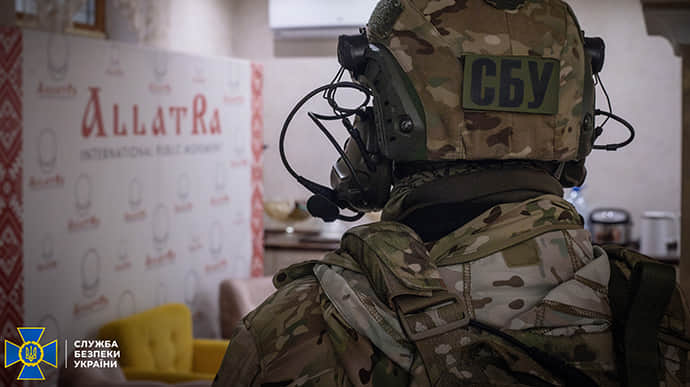
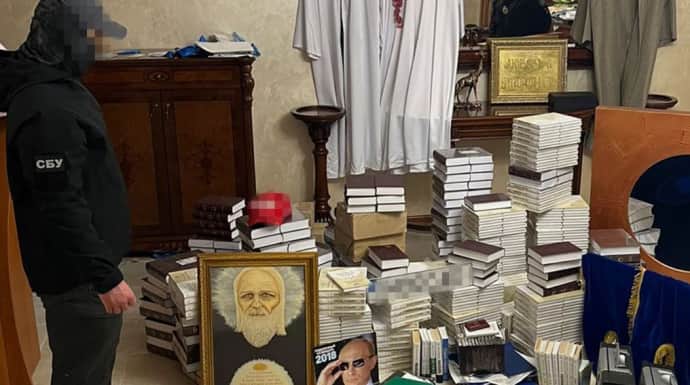
Pseudoreligijska proruska sekta Allatra djelovala je diljem Ukrajine i opravdavala rusku agresiju, kažu iz Službe sigurnosti Ukrajine i Ureda glavnog tužitelja.
“Pod krinkom ‘misionarstva’ pripadnici sekte opravdavali su oružanu agresiju Ruske Federacije i javno promovirali ideju Kremlja o stvaranju ‘unije slavenskih naroda’ pod vodstvom Moskve. Sekta je radila u korist ruskih specijalnih službi, a njene podružnice djelovale su u svakom regionalnom središtu. Te su ćelije masovno pozivale lokalno stanovništvo da se pridruži sekti i širi ideje Kremlja. Organizatori Allatre pokrenuli su i mrežu vlastitih medijskih i internetskih resursa i stranica na društvenim mrežama, na kojima su objavljivali propagandne "postove" i videa, te promovirali prokremaljske narative kroz ideje tzv. "kreativnog društva". Između ostalog, agitirali su da ruski okupatori izvedu masovne raketne udare na civilnu infrastrukturu ukrajinskih gradova.
Prema istrazi, čelnici skupine ilegalno su otišli u inozemstvo u proljeće 2022, koristeći krivotvorene dokumente o brisanju iz vojne evidencije, ali su nastavili voditi ovu kriminalnu organizaciju u Ukrajini.
To je logicno jer je doslo do sraza propagadne i realnosti. Mislim dovoljno je vidjeti nase prognoze za ofanzivu da bude jasno kakva su bila ocekivanja a u i oko UA su bila jos gora.sumirprimus wrote: ↑02/11/2023 09:43 Malo je ovo previse crnjak tekstova u vezi Ukrajine. Realno situacija je mracnija u rusiji, njima je jedina pomoc sjeverna koreja, i indirektno kina i to djelimicno.
S druge strane, obuku ukrajinaca kao i dotur svake vrste logistike,od vojne, do humanitarne i fiannsijske vrsi komplet zapad. To je jos uvijek neuporedivo, i ulazi u jednacinu da rat dobija logistika. Ovde Ukrima sta fali, dao je sam Zaluzni odgovor i otprilike to svi i ovde na temi znamo.
top vise ce atacms i kasetne municije proci do zsu bez dodatnje paznje stranih medija...sagosen wrote: ↑02/11/2023 11:46 prati li se vise ova specijalna vojna operacija? postoje li dje realni izvjestaji kakvo je stanje na terenu (a da to nije britansko minstarstvo odbrane ili rt) ? vidim ova meloni kaze da su umorni od ukrajine, jbg oteglo se. kontraofanziva samo sto nije pocela, a rusi jadni ostali sa lopatama, nestalo im i municije
ukrajincima se desilo bas ovo sto im nikako nije trebalo, sukob na bliskom istoku, vidim na cnn vise ukrajina nije ni na naslovnoj, ispali iz fokusa

Ako konačno uviđaš i ispravljaš svoje sopstvene krive navode, onda OK.madner wrote: ↑02/11/2023 08:02
Par ispravki krivih navoda, koje su vjerujem do ogranicenog RAMa a ne od malicioznosti.
Prvo Sovjetska vojna doktrina je zasnovana na ideji da ce protivnika iscrpiti. Za razliku od Njemacke ideje da sto prije vode odlucnu bitku. Zato lageri T55 i rezervne divizije, zato naglasak na sto jednostavnijoj obuci itd…
Ono sto Zaluzni kaze jeste da ovo vise nalik na 1915 nego 1942 i da od mobilnog rata nema nista. Strateski su tu Rusi ispred, oni su vec poduzeli mjere (ukopavanje, proizvodnja oruzja) koje mogu.
Zapad nije, jos, jer je vjerovao u proboj.
Druga stvar koju sam naveo jeste da se kepec bavi politikom. Njegov jedini pravi konkurent je Zaluzni. Shodno tome je ove godine istog izbacio iz prvog reda. To nije imalo efekta jer su nanizali poraze, no pokusaj nametanja drugih generala je bio ocit.
Zapadu se to ne svidja, pa shodno tome i pritisak sada da se smjene ti ljudi, sto ce biti i pokusaj da Zaluzni ima vise uticaja.
"Jednostavna činjenica je da mi vidimo sve što neprijatelj radi i oni vide sve što mi radimo. Da bismo izašli iz ove mrtve tačke potrebno nam je nešto novo, poput baruta koji su Kinezi izmislili i kojim se još uvijek međusobno ubijamo." General Valerij Zalužnikluz franjo wrote: ↑01/11/2023 21:04 [...] odličan je članak.SpoilerShowGeneral Valery Zaluzhny admits the war is at a stalemate
General Valerii Zaluzhnyi, the Commander-in-Chief of the Armed Forces of Ukraine
image: Getty Images
Nov 1st 2023
FIVE MONTHS into its counter-offensive, Ukraine has managed to advance by just 17 kilometres. Russia fought for ten months around Bakhmut in the east “to take a town six by six kilometres”. Sharing his first comprehensive assessment of the campaign with The Economist in an interview this week, Ukraine’s commander-in-chief, General Valery Zaluzhny, says the battlefield reminds him of the great conflict of a century ago. “Just like in the first world war we have reached the level of technology that puts us into a stalemate,” he says. The general concludes that it would take a massive technological leap to break the deadlock. “There will most likely be no deep and beautiful breakthrough.”
The course of the counter-offensive has undermined Western hopes that Ukraine could use it to demonstrate that the war is unwinnable–and thus change Vladimir Putin’s calculations, forcing the Russian president to negotiate. It has also undercut General Zaluzhny’s assumption that he could stop Russia by bleeding its troops. “That was my mistake. Russia has lost at least 150,000 dead. In any other country such casualties would have stopped the war.” But not in Russia, where life is cheap and where Mr Putin’s reference points are in the first and second world wars in which Russia lost tens of millions.
An army of Ukraine’s standard ought to have been able to move at a speed of 30km a day as it breached Russian defensive lines. “If you look at NATO’s text books and at the maths which we did [in planning the counter-offensive], four months should have been enough time for us to have reached Crimea, to have fought in Crimea, to return from Crimea and to have gone back in and out again,” General Zaluzhny says sardonically. Instead he watched his troops and equipment get stuck in minefields on the approaches to Bakhmut in the east, his Western-supplied equipment getting pummelled by Russian artillery and drones. The same story unfolded on the offensive’s main thrust, in the south, where newly formed and inexperienced brigades, despite being equipped with modern Western kit, immediately ran into trouble.
“First I thought there was something wrong with our commanders, so I changed some of them. Then I thought maybe our soldiers are not fit for purpose, so I moved soldiers in some brigades,” says General Zaluzhny. When those changes failed to make a difference, the commander told his staff to dig out a book he once saw as a student in a military academy in Ukraine. Its title was “Breaching Fortified Defence Lines”. It was published in 1941 by a Soviet major-general, P. S. Smirnov, who analysed the battles of the first world war. “And before I got even halfway through it, I realised that is exactly where we are because just like then, the level of our technological development today has put both us and our enemies in a stupor.”
image: The Economist
That thesis, he says, was borne out as he went to the front line in Avdiivka, also in the east, where Russia has recently advanced by a few hundred metres over several weeks by throwing in two of its armies. “On our monitor screens the day I was there we saw 140 Russian machines ablaze—destroyed within four hours of coming within firing range of our artillery.” Those fleeing were chased by “first-person-view” drones, remote-controlled and carrying explosive charges that their operators simply crash into the enemy. The same picture unfolds when Ukrainian troops try to advance. General Zaluzhny describes a battlefield in which modern sensors can identify any concentration of forces, and modern precision weapons can destroy it. “The simple fact is that we see everything the enemy is doing and they see everything we are doing. In order for us to break this deadlock we need something new, like the gunpowder which the Chinese invented and which we are still using to kill each other,” he says.
This time, however, the decisive factor will be not a single new invention, but by combining all the technical solutions that already exist, he says. In an article written for The Economist by General Zaluzhny (see here), as well as in a full-length essay shared with the newspaper, he urges innovation in drones, electronic warfare, anti-artillery capabilities and de-mining equipment, including new robotic solutions. “We need to ride the power embedded in new technologies,” says the general.
Western allies have been overly cautious in supplying Ukraine with their latest technology and more powerful weapons. Joe Biden, America’s president, set objectives at the start of Russia’s invasion: to ensure that Ukraine was not defeated and that America was not dragged into confrontation with Russia. This means that arms supplied by the West have been sufficient in sustaining Ukraine in the war, but not enough to allow it to win. General Zaluzhny is not complaining: “They are not obliged to give us anything, and we are grateful for what we have got, but I am simply stating the facts.”
But by holding back the supply of long-range missile systems and tanks, the West allowed Russia to regroup and build up its defences in the aftermath of a sudden breakthrough in Kharkiv region in the north and in Kherson in the south late in 2022. “These systems were most relevant to us last year, but they only arrived this year,” he says. Similarly, F-16 jets, due next year, are now less helpful, suggests the general, in part because Russia has improved its air defences: an experimental version of the S-400 missile system can reach beyond the city of Dnipro, he warns.
Yet the delay in arms deliveries, though frustrating, is not the main cause of Ukraine’s predicament, according to General Zaluzhny. “It is important to understand that this war cannot be won with the weapons of the past generation and outdated methods,” he insists. “They will inevitably lead to delay and, as a consequence, defeat.” It is, instead, technology that will be decisive, he argues. The general is enthused by recent conversations with Eric Schmidt, the former chief executive of Google, and stressed the decisive role of drones, and of electronic warfare which can prevent them from flying.
General Zaluzhny’s assessment is sobering: there is no sign that a revolutionary technological breakthrough, whether in drones or in electronic warfare, is around the corner. And technology has its limits. Even in the first world war, the arrival of tanks, in 1917, was not sufficient to break the deadlock on the battlefield: it took a suite of technologies, and more than a decade of tactical innovation, to produce the German blitzkrieg in May 1940. The implication is that Ukraine is stuck in a long war—one in which he acknowledges Russia has the advantage. Nevertheless, he insists that Ukraine has no choice but to keep the initiative by remaining on the offensive, even if it only moves by a few metres a day.
Crimea, he believes, remains Mr Putin’s greatest vulnerability. It is the linchpin of his imperial restoration project, and his legitimacy rests on having brought it back to Russia. Over the past few months, Ukraine has taken the war into the peninsula Mr Putin annexed in 2014 and which remains critical to the logistics of his war. “It must know that it is part of Ukraine and that this war is happening there.” On October 30th Ukraine struck Crimea with American-supplied long-range ATACMS missiles for the first time.
General Zaluzhny is desperately trying to prevent the war from settling into the trenches. “The biggest risk of an attritional trench war is that it can drag on for years and wear down the Ukrainian state,” he says. In the first world war, mutinies interfered before technology could make a difference. Four empires collapsed and a revolution broke out in Russia.
A collapse in Ukrainian morale and Western support is precisely what Mr Putin is counting on. There is no question in General Zaluzhny’s mind that a long war favours Russia, a country with a population three times and an economy ten times the size of Ukraine’s. “Let’s be honest, it’s a feudal state where the cheapest resource is human life. And for us…the most expensive thing we have is our people,” he says. For now, General Zaluzhny says, he has enough soldiers. But the longer the war goes on, the harder it will be to sustain. “We need to look for this solution, we need to find this gunpowder, quickly master it and use it for a speedy victory. Because sooner or later we are going to find that we simply don’t have enough people to fight.”■
Danas, 2. studenog, ruske su snage prešle željezničku prugu u blizini sela Stepove i započele jurišne operacije u blizini samog sela sjeverno od Avdivke. Rusko pješaštvo zauzelo je uporište iza pruge, gomilajući se kako bi proširilo mostobran i napalo koksaru Avdivka, ključni kompleks struktura koji kontrolira prilaze gradu. Zauzimanje postrojenja značit će postupan, ali neizbježan gubitak grada. Sada se pokazuje da tijekom rata u Avdivki niti jedan komandant nije izgradio pozadinu obrane i sada kada je potrebno da se ukopamo, nema gotovih položaja.
Ruski napad nastavlja se i južno od Avdivke, gdje proširuju proboj u području kamenoloma kod sela Opytne, što je drugi pravac zahvata. I ovdje se prijetnja pojačava. U samom gradu ukrajinske trupe su uspješne, 110. brigada vješto je odbila sve ruske napade i u potpunosti ovladala sa nekoliko položaja koje je neprijatelj zauzeo tijekom masovnih napada 10. i 19. listopada, a na nekim je smjerovima čak i poboljšala svoje položaje. Za sada nema opasnosti od ulaska neprijatelja u grad.
Sad će se mnogi sjetiti scenarija gubitka Severodonjecka, Lisičanska, Soledara i Bahmuta. Ali situacija u Avdivki je taktički drugačija. Prvo, 110. brigada pokazuje iznimnu borbenu sposobnost i pouzdano drži grad, sprječavajući neprijatelja da se dočepa zgrada. Neprijatelj napreduje sjeverno i južno od položaja brigade.
Ruske trupe napreduju sjeverno od Avdivke uskim koridorom u nizini širokom do 4 km. S tog koridora nam pokušavaju presjeći opskrbne puteve prema Avdivki. Rusko pješaštvo trpi značajne gubitke, a neprijatelju je mnogo teže napadati i držati položaje nego nama braniti se. Treće, ako se obrana sjeverno od Avdivke stabilizira, tada će čak i u pozicijskoj obrani ruske trupe pretrpjeti gubitke višestruko veće od naših. Situacija kod Avdivke nosi mnogo više rizika za ruske trupe nego za nas. Četvrto, ruske trupe nemaju veliku brojčanu prednost, Ukrajinci imaju značajan broj ljudi i tehnike. Peto, Rusi napreduju isključivo s pješaštvom bez oklopnih vozila, budući da naše trupe učinkovito uništavaju tehniku. Neprijatelj je ranjiv. Ali da bismo iskoristili sve prednosti naše pozicije, moramo stabilizirati obranu...
...Moram iskreno reći da kriza oko Avdivke nije rezultat iznimno velike prednosti Rusa – to je također kriza nekih naših upravljačkih odluka, onih pristupa koji nam ne daju priliku realizirati naše prednosti. Za civilno društvo: Ako želimo spasiti Avdivku, čija je važnost mnogo veća čak i od Bahmuta, trebamo pomoći vojnicima 110. brigade s maksimalnim brojem bespilotnih letjelica i moramo postaviti kamere za videonadzor na raznim objektima. U našoj je moći da krizu pretvorimo u pobjedu, potrebna nam je maksimalna koncentracija napora.
 ), impresivno sve u svemu.