
Vitez
Ahmed Begova


Ahmici, gornja dzamija


Ahmici, donja dzamija
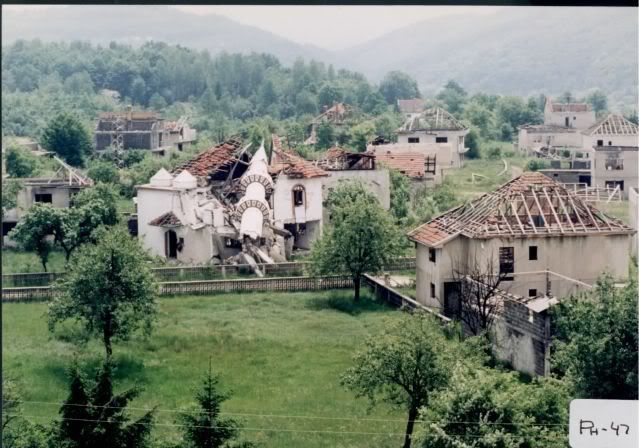


Gacice

Grbavica


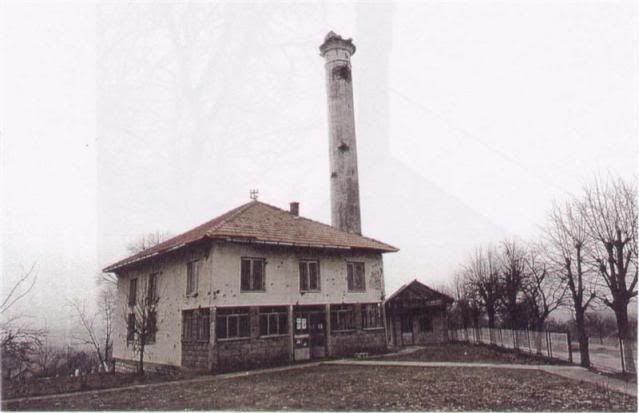


Za vrijeme posljednje oruzane agresije na BiH potpuno je poruseno 614 dzamija (534 od strane srpskog agresora, a 80 od hrvatskog agresora), dok je osteceno 307 dzamija (249 od srpskog agresora, a 58 od hrvatskog agresora), sto cini 80,5% od ukupnog broja 1144 dzamije, koliko ih je bilo prije ove dvije agresije. Pored toga je od ukupno 557 mesdzida (dzamija bez munare), potpuno poruseno njih 218 (od srpskog agresora 175, a od hrvatskog agresora 43), dok je ostecen 41 mesdzid (21 od srpskog agresora, a 20 od hrvatskog agresora), sto cini procenat od 46,40%.
Ovome treba dodati jos 14 potpuno unistenih i 18 ostecenih mekteba, 4 potpuno unistene i 5 ostecenih tekija, 37 potpuno unistenih i 7 ostecenih turbeta, te 405 unistenih i 149 ostecenih drugih vakufskih objekata, sto znaci da je je ukupno potpuno unisteno 1337, a osteceno 527 objekata.


250 Muslims Killed in the Cerska Massacre (1993) near Srebrenica
Posted on December 27, 2010 by Genocide Awareness Education
U.N. Commander Treks to Ravaged Bosnian Enclave
A Bosnian Muslim woman who lost her relatives looks at human remains found in a mass grave in the village of Cerska. In March of 1993, more than two years before the 1995 Srebrenica genocide, Serbs overrun the Muslim village and slaughtered up to 250 Bosniak women, children and the elderly men.
A Bosnian Muslim woman who lost her relatives looks at human remains found in a mass grave in the village of Cerska. In March of 1993, more than two years before the 1995 Srebrenica genocide, Serbs overrun the Muslim village and slaughtered up to 250 Bosniak women, children and the elderly men.
Times Daily
6 March 1993.
By George Jahn
TUZLA, Bosnia-Herzegovina — The commander of U.N. troops in Bosnia boldly headed for a besieged government enclave on Friday, hopping to evacuate thousands of desperate Muslim [Bosniak] refugees driven from their homes.
Gen. Philippe Morillon’s trek into the heart of the worst fighting in eastern Bosnia signaled growing international concern over the failure of peace talks and U.S. airdrops to halt the carnage.
Bosnian Muslim man Smajil Hukic, 80, who lost his relatives looks on in front of mass grave in attempt to identify his relatives in a mass grave in the village of Cerska near Srebrenica (formerly in nearby municipality of Vlasenica, now in the Serb municipality of Milici)
Bosnian Muslim man Smajil Hukic, 80, who lost his relatives looks on in front of mass grave in attempt to identify his relatives in a mass grave in the village of Cerska near Srebrenica (formerly in nearby municipality of Vlasenica, now in the Serb municipality of Milici)
President Clinton, referring to the practice of “ethnic cleansing,” said the latest Serb offensive showed that they were succeeding in their campaign to drive Bosnian Muslims from the region. He pledged to tighten sanctions against the Serbs with a further crackdown that a spokesman said would “inflict real pain” on the aggressors.
Despite Serbian denials a day earlier of allegations of slaughter and rape, new reports of savagery continued to surface on the fifth day of the Serb offensive.
Peace talks continued at the United Nations in New York, but no progress was reported. Negotiators for the warring parties agreed to stay in New York and resume the talks today.
Late Friday, Morillon was reportedly negotiating evacuation plans with Serb commanders near Cerska, a region in eastern Bosnia hard hit by the war. But no agreement was reported and the French general apparently intended to spend the night in the area.
Ham radio operators in Cerska reported intense Serb artillery attacks. They said one village in the region was surrounded and that 28 had been set ablaze.
Radio operators have cited hundreds dead and thousands wounded in this week’s assault, but the reports are impossible to confirm.
Morillon ventured into the region partly to assess the accuracy of these reports but largely to obtain a safe path out for the refugees.
“I hope tomorrow we can open a corridor to evacuate the wounded. That is my mission,” Morillon said earlier Friday upon arriving in Tuzla by helicopter from Sarajevo. He and a team of experts approached Cerska, 30 miles away, by land although Serbs turned back five of the seven armored U.N. vehicles escorting him.
Tony Land, the U.N. High Commissioner for Refugees representative in Sarajevo, said the United Nations did not want to become an accomplice to ethnic cleansing.
Morillon’s trip to the bloody region appeared aimed at countering the impression of U.N. impotence in ending the warfare and suffering in Bosnia.
Capt. David Bennett of the British battalion in Tuzla said Morillon’s mission was to “go for as much as he can get there. If that encompasses the evacuation of all refugees, so be it.”
A ham radio operator in the Cerska region reported that Konjevic Polje – where up to 10,000 refugees are reportedly cowering in the open – was under fierce artillery attack.
Senahid Babic, interviewed from Zagreb, Croatia, reported a massacre of 250 refugees trying to flee the area.
Radio operators also carried a detailed account from a man identified as Besim Topalovic who claimed he was one of three survivors when hundreds of Cerska refugees were machine-gunned.http://bosniagenocide.wordpress.com/201 ... rebrenica/
Genocide Denial Concern in Bosnia
Anxieties raised by Bosnian Serb premier’s recent refusal to acknowledge the scale of the Srebrenica atrocity.
By Dzenana Halimovic - International Justice - ICTY
TRI Issue 663,
1 Oct 10
Exhumed grave of Srebrenica victims. Photo: Adam Jones — go.iwpr.info/ajones
* 1
The decision by Republika Srpska, RS, prime minister Milorad Dodik to tell a pre-election rally in Srebrenica that genocide had never been committed there has provoked concerns over Bosnian Serb reluctance to come to terms with the past.
“Unborn Serb children cannot be held responsible for something that happened 15 years ago. They cannot and they will not be. And genocide did not take place here. We will not accept claims that what happened here was genocide, because it was not,” Dodik told a crowd of cheering supporters at the September 20 rally.
Dodik, the leader of the Union of Independent Social Democrats, SNSD, is running for president of the RS in the October 3 general elections.
He went on to allege that the fact that thousands of Bosniak women and children were expelled from Srebrenica to Bosnian government-controlled territory demonstrated that there had been no intention to destroy a whole nation.
“The number of Bosniaks who had left Srebrenica for Tuzla and Sarajevo [in July 1995] was bigger than the number of those who died here. That is not genocide,” Dodik told his supporters.
In July 1995, around 8,000 Bosniak men and boys were killed when Bosnian Serb forces overran Srebrenica. The International Criminal Court for the Former Yugoslavia, ICTY, and the International Court of Justice, ICJ, have both ruled that the crimes that took place in Srebrenica amounted to genocide.
However, many Bosnian Serbs are in denial over the atrocity. According to the president of the Helsinki Committee in RS, Branko Todorovic, people in the RS have long been manipulated by their political leaders into believing that accusations of genocide can be dismissed as merely widespread anti-Serb propaganda.
And genocide denial always occurs more often in pre-election periods, said Ivan Lovrenovic, a political analyst with Bosnia’s weekly magazine Dani. In Lovrenovic’s view, Dodik’s remarks in Srebrenica were yet another attempt to rewrite the wartime past of the RS.
“Dodik reached for the darkest of all tools – the denial of genocide – to attract more votes in the upcoming elections, and he did it at the peak of his electoral campaign. That is shameful,” Lovrenovic said.
Muhamed Mesic, a genocide researcher with the Institute for the Research of Crime against Humanity and International Law, warned that genocide denial by a public figure had an effect on the wider community.
“When the denial comes from a president of a country, or a prime minister, then it becomes a big problem because people trust these figures. As a consequence, their words are accepted by their compatriots as a truth, and not pure nonsense,” he said.
But some observers say that the denial of genocide in Srebrenica should not be given undue importance.
Miroslav Mikes, a lawyer from Banja Luka and an SNSD lawmaker in the RS national assembly, distanced himself from his party leader’s comments.
“The ICJ said in its ruling all that needed to be said about the events in Srebrenica,” Mikes said. “This court has ruled that genocide did take place, so any statements to the contrary are irrelevant, even when they are made by the political leaders in this country. The denial of genocide only serves political purposes.”
A law to make genocide denial illegal has been put on the agenda of the Bosnian state parliament several times, but never adopted because of vehement opposition from RS parties, headed by the SNSD.
Todorovic points out that those blocking the adoption of this law in the state parliament were trying to protect their own interests. If politicians admit that genocide did take place, they fear this could call into question the very existence of the Serb entity.
“We have to understand that those who continuously prevent this law on denial from being adopted are the same politicians who hope to see Republika Srpska gain full independence,” Todorovic said. “And as long as people in the RS refuse to accept facts about what happened in Srebrenica, the denial of genocide will continue.”
Dzenana Halimovic is an RFE reporter and IWPR contributor in Sarajevo. http://iwpr.net/report-news/genocide-de ... ern-bosnia


Genocid u Srebrenici
Uhapšeni zločinci Kuvelja i Cvetković
Dvojica osumnjičenih za učestvovanje u genocidu u Srebrenici uhapšeni su u ponedeljak na području BiH i Izraela. Božidar Kuvelja (40) lišen je slobode u ponedeljak uveče na području Čajniča, dok je izraelska policija uhapslia Aleksandra Cvetkovića, bivšeg pripadnika Desetog diverzantskog odreda Vojske Republike Srpske
Tužilaštvo BiH vodi istragu protiv Kuvelje zbog sumnje da je u julu 1995. godine učestvovao u likvidaciji nekoliko desetina muškaraca bošnjačke nacionalnosti.
„On je uhapšen sinoć. Nakon što ga sasluša tužitelj, vjerovatno će biti upućen prijedlog za određivanje pritvora osumnjičenom“, rekao je Boris Grubešić, portparol Tužilaštva BiH.
Kuvelja je, prema podacima Tužilaštva BiH, bio pripadnik Centra za obuku "Jahorina" pri Specijalnoj brigadi policije Ministarstva unutrašnjih poslova Republike Srpske (MUP RS).
U Sudu BiH u toku je suđenje komandantu Centra za obuku Dušku Jeviću, komandirima četa ove jedinice Mendeljevu Đuriću i Neđi Ikoniću, te komandiru jednog od vodova Goranu Markoviću.
Za zločine u Srebrenici optuženi su i pripadnici ovog centra Dragan Nešković, Zoran Ilić i Dragan Crnogorac, dok je Milivoje Ćirković, takođe nekadašnji pripadnik jedinice sa Jahorine, osuđen na pet godina zatvora nakon priznanja krivice za ubistvo jednog zarobljenika.
U ponedeljak je u Izraelu uhapšen još jedan osumnjičeni za genocid u Srebrenici. Reč je o Aleksandru Cvetkoviću, nekadašnjem pripadniku Desetog diverzantskog odreda Glavnog štaba Vojske Republike Srpske, koji je, prema pisanju izraelskih medija, u ovu zemlju emigrirao 2006. godine.
Cvetkovića Tužilaštvo Bosne i Hercegovine sumnjiči da je u julu 1995. godine učestvovao u ubistvima više od 800 muškaraca i dječaka na Vojnoj ekonomiji Branjevo u Pilici, u općini Zvornik.
Cvetković se trenutno nalazi u pritvoru, a kako izvještavaju mediji u toj zemlji, Ministarstvo pravde Izraela pokrenulo je ekstradicijski postupak nakon kojeg bi Cvetković mogao biti izručen BiH. U Tužilaštvu BiH su potvrdili da je od Izraelskih vlasti zatraženo izručenje Cvetkovića.
„Radeći na istrazi protiv bivših pripadnika 10. diverzantskog odreda VRS, Tužiteljstvo BiH došlo je do saznanja da se osumnjičeni Cvetković krije u Izraelu, nakon čega je od izraelaskih vlasti zatraženo njegovo uhićenje i izručenje BiH. Nadležnim pravosudnim i policijskim organima Izraela, proslijeđen je zahtjev za izručenje, kao i propratna dokumentacija“, navode u Državnom tužilaštvu.


