Heliocentrizam
Za ovo se kaže da predstavlja objašnjenje heliocentrizma u kuranu, mada je toliko nepovezano i možeš naći tonu grešaka uzet ćemo za primjer:
" I Sunce se kreće do svoje određene granice, to je odredba Silnoga i Sveznajućeg. I Mjesecu smo odredili položaje; i on se uvijek ponovo vraća kao stari savijeni palmin prut. Nit' Sunce može Mjesec dostići nit' noć dan prestići, svi oni u svemiru plove. " (36:38-40)
A pazi sada na koji način je to uradio Aristarh prije kurana, ne samo u vezi heliocentrizma nego i solarnog sistema:
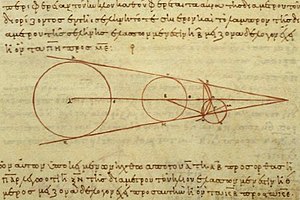
" Aristarchus (Ἀρίσταρχος, Aristarkhos, 310 BCE – ca. 230 BCE) of Samos was an ancient Greek astronomer and mathematician who presented the first known model that placed the Sun at the center of the known universe with the Earth revolving around it (see Solar system). He was influenced by Philolaus of Croton, but he identified the "central fire" with the Sun, and put the other planets in their correct order of distance around the Sun. "
- I jel to kuransko čudo? Ajmo dalje...
Mjesečev sjaj
Za ova također neozbiljna objašnjenja (sunce - lampa

) se kaže da objašnjavanju da je izvor mjesečevog sjaja sunce:
"i na njima Mjesec svijetlim dao, a Sunce svjetiljkom učinio?" (71:16)
"Neka je uzvišen Onaj koji je na nebu sazviježđa stvorio i u njima dao svjetiljku i Mjesec koji sja." (25:61)
Ponovo prije kurana i to precizno, Anaksagora prvi objašnjava:
" Anaxagoras (Ancient Greek: Ἀναξαγόρας, Anaxagoras, "lord of the assembly"; c. 500 – 428 BC) was a Pre-Socratic Greek philosopher... He was the first to explain that the moon shines due to reflected light from the sun."
- Jel i ovo kuransko čudo ?
Embriologija
Ovo je zasigurno najbolji dokaz plagijata od grka. Galen je u svojoj knjizi "On the Formation of the Foetus" opisao ono što će se u kuranu kasnije plagirati:

" Aelius Galenus or Claudius Galenus (AD 129–c. 200/c. 216), better known as Galen of Pergamon (modern-day Bergama, Turkey), was a prominent Roman (of Greek ethnicity) physician, surgeon and philosopher. Arguably the most accomplished of all medical researchers of antiquity, Galen contributed greatly to the understanding of numerous scientific disciplines, including anatomy, physiology, pathology, pharmacology, and neurology, as well as philosophy and logic. "
 ,jer mi znamo bolje.
 ), pa iako se ne smatram zrelom za diskusiju, evo moje malo misljenje, ili ideja...

 Ne znam sta ho's vise od mene,cak sam ti i prevela!