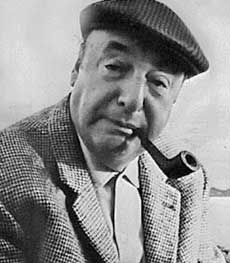
Treba mi jos ovogapiupiu wrote:Pablo Neruda ... dok smo se ljubili u oči ...
Neftali Rikardo Rejes bio je čileanski književnik i dobitnik Nobelove nagrade za književnost. Svoj literarni pseudonim Neruda, koji je kasnije prihvatio kao lično ime, inspirisan je imenom češkog pjesnika i pisca Jana Nerude. Sin željezničara i učiteljice, koja je samo mjesec dana nakon rođenja sina preminula od turbekuloze; počeo je pisati veoma rano. U gimnazijskim danima objavio je svoje prve radove u regionalnom časopisu „Sutra“ (šp. La Mañana) i sklopio je prijateljstvo sa direktoricom ženske gimnazije, i već poznatom književnicom, Gabrijelom Mistral, koja je na njega prenijela ljubav prema ruskim autorima. Studirao je francuski jezik i pedagogiju. Španski građanski rat i smrt svoga prijatelja Federika Garsije Lorke na njega ostavlja neizbrisiv trag ... veliki pjesnik o ljubavi ...
Igraš se svakoga dana
Igraš se svakoga dana svjetlošću svemira.
Profinjena uzvanice, stižeš u cvijetu i vodi.
Više si no ova bijela glavica koju stežem
svakoga dana poput grozda.
Ne sličiš nikome otkako ja te volim.
Dopusti da te položim među žute vijence.
Tko ti zapisuje ime dimnim slovima među južnim
zvijezdama?
Ah, daj da se sjetim kakva si nekoć bila, kad još nisi
postojala.
Iznenada, vjetar zavija i udara u moj prozor zatvoreni.
Nebo je mreža ispunjena mračnim ribama.
Ovamo svi vjetrovi neba stižu, svi.
Kiša halju odbacuje.
Prolijeću ptice.
Vjetar. Vjetar.
Ja se mogu boriti protiv ljudske sile.
Oluja tamo lišće kovitla
i odvezuje sve barke što su ih sinoć vezali za nebo.
Ti si ovdje. Ali ti ne bježiš.
Do posljednjeg krika ti ćeš mi odgovoriti.
Kao da te strah, sklupčaj se uz mene.
Pa ipak, ponekad ti je neka čudna sjena očima prohujala.
Sada, također sada, malena, cvijetak mi kozje krvi pružaš,
i čak ti grudi njima odišu.
Dok žalobni vjetar huji ubijajući leptire,
ja te ljubim, i radost moja grize ti šljivu usta.
Nije ti bilo lako priviknuti se na mene,
na dušu moju usamljenu i divlju, na ime moje koje svi
izbjegavaju.
Toliko puta vidjesmo kako zornjača plamti dok smo se
ljubili u oči
i dok su se nad našim glavama sumraci rasplitali u
razigrane lepeze.
Moje su te riječi zasipale, milovale.
Odavna sam volio tvoje tijelo od blistavog sedefa.
Za mene ti si vladarka svemira.
Cvijeće ću radosno, naš copihue, s planine donijeti,
lješnjake zagasite i košare šumskih poljubaca.
Želio bih učiniti s tobom
ono što proljeće s trešnjama čini.
Haj'mo malo o kulturi ... ma, uuuđite slobodno ... :-)))
Moderator: Chloe
- berenice
- Posts: 3173
- Joined: 17/06/2010 14:32
#1026 Re: Haj'mo malo o kulturi ...
- Connaisseur Karlin
- Posts: 20577
- Joined: 31/01/2016 16:16
#1027 Re: Haj'mo malo o kulturi ... ma, uuuđite slobodno ... :-)))
Volim Nerudinu jednostavnu originalnost,bez stilskih figura,samo rijeci,tako jednostavne rijeci
Jedini pjesnik kojeg mogu citati. 
- Saian
- Posts: 16107
- Joined: 08/04/2004 21:50
#1028 Re: Haj'mo malo o kulturi ... ma, uuuđite slobodno ... :-)))
evo i ovdje
http://www.laphamsquarterly.org/disaster/katastrofa
Aleksandar Hemon
My father likes to talk to people, ask them questions, tell them stories. More than once, if I found myself reading, or watching TV, or just silently staring into space, he’d sit next to me and order: “Talk!” I’d bristle, but then I’d talk, of course. It’s not just that he cannot stand silence, or endure the thought that people have nothing to say to each other. It’s also his voracious curiosity—everyone, he assumes, has some story to tell, not least his professionally storytelling son. He expects other people to reveal themselves to him by way of stories. Silence is the death of narration, and thus of love.
Once, we were visiting my wife Teri’s parents in Pensacola Beach, Florida, and my parents came from Canada (where they have lived for the past twenty-three years) to join us for Christmas. Teri and I had married earlier that year, which was when my parents had encountered her parents and got splendidly along. Now, in Pensacola Beach, my parents spent time with her extended family, which, like my family, frequently gets together and features untold numbers of cousins and friends who have been absorbed into the kinship. My parents saw that the essential structure and practices of an African American family are very much like those of our Bosnian one. But one thing was somewhat lacking, however—Teri’s family didn’t do much of what my family did (and does still): they didn’t tell stories the way we did. Their history, for whatever reason, was not entirely available by way of public narration.Thus, as we walked one balmy day along the splendid white-sand beach, seabirds coasting over our heads, clouds scarce and meringue, my father said to my wife: “Teri, tell me about your family. What bad happened?”
Teri was gracious but could not satisfy his curiosity. Apart from the general calamity of being black in America—applicable to an entire population, even if not necessarily equally—there were few family disasters to talk about. My father found that perplexing, even a bit disappointing—for if nothing bad had happened, it was hard to imagine how any stories could be forthcoming. If nothing bad happened, what do we have to talk about?
Teri knew, of course, that my parents had ended up as refugees in Canada, escaping the siege of Sarajevo. She knew that bad things had happened in our family, the baddest one being the war in Bosnia. But this was one of those moments when I felt compelled to interfere and explain my parents to my wife, to establish and introduce the theoretical foundations of their thought system, to instruct her—and anyone willing to submit and listen—on the ways in which trauma alters the very structure of the world and reality. For I understood instantly why my father would ask a question like that. I recognized his compulsion. The “what bad happened” was a shorthand (or longhand) for catastrophe. He asked her to lead him into the history of her family by way of outlining the catastrophes that defined it—for that’s how he would tell the story of our family: the wars, displacements, losses, struggles. There is no history without catastrophe; to outline a history one had to narrate its catastrophes. And what could not be narrated could not be understood. A family—or a world, or a life—without a catastrophe was incomprehensible, because it was an impossible proposition. If catastrophe (according to the theory of tragedy) is the dramatic event that initiates the resolution of the plot, then its absence suggests a possibility that the tragic plot will never be resolved. A catastrophe, in other words, might be a trap, but it also allows for a narrative escape. If you were lucky enough to have survived the catastrophic plot twist, you get to tell the story—you must tell the story.
I’m of a staunch belief that anything that can be said and thought in one language can be thought and said in another. The words might have a different value or interpretative aura, but there is always more than enough overlapping not to dismiss the project of translation, which is essential not only to the project of literature, but to the project of humanity as well.
But then there is the Bosnian word katastrofa, which, most obviously, comes from the same Greek word (katastrophe [καταστροφή], meaning overturning) as its English counterpart catastrophe. But in Bosnian—or at least in the language my family uses—katastrofa has a substantially different value and applicability than catastrophe has in English. We use it all the time, deploying it in the contexts that would be less appropriate in English. My mother would thus reprimand my father by saying, “Ti si, ćale, katastrofa!” (translatable as: You, Pop, are a catastrophe!) because he left a trail of dirty socks all the way to the bedroom. Or my father, in his report on a pipe bursting in their house wall, would use katastrofa to refer to the necessity of digging through said wall to find the source of the leak. My sister, who lives in London, would describe the leaden January skies depressingly looming over England and her head as katastrofa. And I could apply katastrofa to, say, the inability of Liverpool FC to defend corner kicks, or to the realization that I’m in the bathroom without toilet paper and the nearest roll is a hallway away. One of the few Bosnian words Teri understands is katastrofa, mainly by way of hearing me bemoan various unfortunate turns of events.
None of this suggests that we don’t take the possibility of catastrophe seriously. On the contrary, the ease with which the word katastrofa is applied is related to its very ubiquity. Rather than existing exclusively in magnanimous, tragic dimensions, katastrofa is everywhere, its particles always shimmering like shrapnel on a sunny day.Against their will, despite their desires, my parents are experts on katastrofa. I called them not so long ago to discuss their theoretical positions on the idea.
Without a doubt the most recent war was the greatest catastrophe in their lifetimes. (World War II was part of their childhood, but they were less traumatized by it, because their youth turned out to be pretty good.) My mother hadn’t expected the war to come, so it crashed into her life like a meteorite, and she still remembers the shock: the shelling, the curfew, the dissolution of her routines, her inability to fit the fact of war into the structure of reality within which she operated, saying to me, who called her from Chicago in the spring of 1992: “It’s going to stop soon, they’re already shooting less than yesterday.” And she remembers how everything they had worked for was erased overnight, not only being rendered meaningless, but also irreversibly destabilizing the very possibility of any structural permanence in their subsequent life. After the experience of war, she couldn’t sustain her belief in the inertia of reality—in the force that makes things continue as they are. She claims that her mind now rejects the possibility of another war, but the unnatural rupture made any kind of stability suspect. Back before the war, she, like many, was protected by the unimaginability of the unimaginable—a comfortable, if false, assumption that what cannot be imagined cannot happen, or even be happening. Now, she would hide behind the unimaginable, but what has already happened is always necessarily imaginable, and thus has that screen been shredded. To her, being old or sick is not a katastrofa—for that is, she says, natural—so she’s not afraid of it. It’s not that she fears war either—what she fears is that something will rupture her newly acquired (very Canadian) stability, that something might undo that particular reality.
My father was also traumatized by the war, but what he experienced as a katastrofa—a very personal one, he says—was primarily the rupture in the continuity of human nature. Before the war, he could believe in the stable goodness (or not-goodness) of people—they were who they were and you knew who they were; you avoided the bad ones, liked the good ones. What catastrophically shocked him was the abrupt shift he saw among some of his friends and acquaintances from neighbors into haters, from good to bad, from decent people into killers—that was the unimaginable for him, that overturning of human nature. When I ask him if he spends time expecting another katastrofa, as yet unimaginable, he says, “We’re old. There might be a katastrofa, but we won’t be around, so we don’t care.”
As for my sister, who has switched career paths in her forties to become a psychotherapist, she appears clear-eyed about the whole thing. “Katastrofa is the imaginary (and sometimes real) actualization of the worst possible outcome of a given situation,” she wrote to me. “The situation could vary from a missed bus or burned lunch to death and war.” She went on: “Katastrofa is the state of expectation of the worst, as well as preparation for avoidance, for the struggle against or the managing of the outcome. That state is sometimes conscious, but it is permanently subconscious.” She also thinks—and I agree—that there is some cultural determination to this perpetual expectation. We both remember the slogan, attributed to Comrade Tito himself and repeated to all the children and citizens of Yugoslavia for decades before the war: “We must live as though peace will last for a hundred years, and be ready as though war will start tomorrow.” (And the war did start tomorrow.) My father recalls his father (Ivan) firmly believing that it was impossible to live for fifty years without experiencing war—Grandpa Ivan himself had experienced two world wars. And if scientists are right in claiming that trauma can alter the genetic code, which can then be passed to ancestors, then katastrofa is inscribed in my genes.
I also asked my parents what the opposite of katastrofa would be. “Normal life,” they said, in unison. To them, normal life is a self-evident category—it’s a life that is normal. After I pressed them, they expounded: normal life requires stability, always dependent on the stability of the state, which allows for raising, educating, and empowering children, as well as for an overall sense of progress. Normal life, my father clarified, also has nuances, and it’s improved (though the exact translation of the word he used would be beautified) with things like skiing, sports, singing, children, beekeeping, etc. At which point I realized that normal life was in fact the life they had before the war, what they had lost. Normal life is therefore simultaneously a nostalgic and utopian project, both irretrievable and unachievable.Which is to say that normal life is delimited and defined by catastrophe—it’s the life ruptured, the life made both unavailable and visible by katastrofa. And, inversely, katastrofa is whatever ruptures life, what makes its stability, its necessary biological and emotional inertia, impossible. Much as catastrophe in tragedy necessitates the resolution of the plot, katastrofa necessitates a narrative of normal life, which we can perceive only through the catastrophic screen dividing our life into before and after.
As for me, I have a confession to make: my mind is linguistically obsessive, ever relentlessly and involuntarily generating wordplay and verbal distortions. There has to be a diagnosis related to that kind of constant chatter, or to the fact that, every day of my normal life, I talk to myself in Bosnian, usually in a voice of a Sarajevo street thug—cursing, threatening, insulting, mainly myself (or rather the part that is not a Sarajevo thug). Well, that language-obsessed mind has spontaneously come up with the name of Sergei Katastrofenko—an imaginary Slav, probably Ukrainian—who flickers as a possibility of a character, or a joke, or a catastrophe. The name Sergei Katastrofenko often bounces around my head as I scan the world for the ripples of disaster, even as he hasn’t quite acquired a full voice, let alone a body. But when he does acquire it—and when that happens, I’ll be losing my mind—he’ll become a perfect embodiment of katastrofa, of the idea that no reality—or the narrative of it—is possible without catastrophe.
Aleksandar Hemon was born in Sarajevo in 1964. In 1992, while Hemon was in a journalist exchange program in Chicago, war broke out in Bosnia. He became a political refugee, living for the past twenty-four years in Chicago. Hemon is the author of six books, most recently the novel The Making of Zombie Wars.
nisam trazio prijevod ovoga, tako da ne znam postoji li, onima koji se osjecaju uskracenim cinjenicom da je tekst na engleskom, a ne vladaju njim dovoljno dobro da bi cijenili napisano se u domenu odgovornosti koja pada na glasnika ispricavam
http://www.laphamsquarterly.org/disaster/katastrofa
Aleksandar Hemon
My father likes to talk to people, ask them questions, tell them stories. More than once, if I found myself reading, or watching TV, or just silently staring into space, he’d sit next to me and order: “Talk!” I’d bristle, but then I’d talk, of course. It’s not just that he cannot stand silence, or endure the thought that people have nothing to say to each other. It’s also his voracious curiosity—everyone, he assumes, has some story to tell, not least his professionally storytelling son. He expects other people to reveal themselves to him by way of stories. Silence is the death of narration, and thus of love.
Once, we were visiting my wife Teri’s parents in Pensacola Beach, Florida, and my parents came from Canada (where they have lived for the past twenty-three years) to join us for Christmas. Teri and I had married earlier that year, which was when my parents had encountered her parents and got splendidly along. Now, in Pensacola Beach, my parents spent time with her extended family, which, like my family, frequently gets together and features untold numbers of cousins and friends who have been absorbed into the kinship. My parents saw that the essential structure and practices of an African American family are very much like those of our Bosnian one. But one thing was somewhat lacking, however—Teri’s family didn’t do much of what my family did (and does still): they didn’t tell stories the way we did. Their history, for whatever reason, was not entirely available by way of public narration.Thus, as we walked one balmy day along the splendid white-sand beach, seabirds coasting over our heads, clouds scarce and meringue, my father said to my wife: “Teri, tell me about your family. What bad happened?”
Teri was gracious but could not satisfy his curiosity. Apart from the general calamity of being black in America—applicable to an entire population, even if not necessarily equally—there were few family disasters to talk about. My father found that perplexing, even a bit disappointing—for if nothing bad had happened, it was hard to imagine how any stories could be forthcoming. If nothing bad happened, what do we have to talk about?
Teri knew, of course, that my parents had ended up as refugees in Canada, escaping the siege of Sarajevo. She knew that bad things had happened in our family, the baddest one being the war in Bosnia. But this was one of those moments when I felt compelled to interfere and explain my parents to my wife, to establish and introduce the theoretical foundations of their thought system, to instruct her—and anyone willing to submit and listen—on the ways in which trauma alters the very structure of the world and reality. For I understood instantly why my father would ask a question like that. I recognized his compulsion. The “what bad happened” was a shorthand (or longhand) for catastrophe. He asked her to lead him into the history of her family by way of outlining the catastrophes that defined it—for that’s how he would tell the story of our family: the wars, displacements, losses, struggles. There is no history without catastrophe; to outline a history one had to narrate its catastrophes. And what could not be narrated could not be understood. A family—or a world, or a life—without a catastrophe was incomprehensible, because it was an impossible proposition. If catastrophe (according to the theory of tragedy) is the dramatic event that initiates the resolution of the plot, then its absence suggests a possibility that the tragic plot will never be resolved. A catastrophe, in other words, might be a trap, but it also allows for a narrative escape. If you were lucky enough to have survived the catastrophic plot twist, you get to tell the story—you must tell the story.
I’m of a staunch belief that anything that can be said and thought in one language can be thought and said in another. The words might have a different value or interpretative aura, but there is always more than enough overlapping not to dismiss the project of translation, which is essential not only to the project of literature, but to the project of humanity as well.
But then there is the Bosnian word katastrofa, which, most obviously, comes from the same Greek word (katastrophe [καταστροφή], meaning overturning) as its English counterpart catastrophe. But in Bosnian—or at least in the language my family uses—katastrofa has a substantially different value and applicability than catastrophe has in English. We use it all the time, deploying it in the contexts that would be less appropriate in English. My mother would thus reprimand my father by saying, “Ti si, ćale, katastrofa!” (translatable as: You, Pop, are a catastrophe!) because he left a trail of dirty socks all the way to the bedroom. Or my father, in his report on a pipe bursting in their house wall, would use katastrofa to refer to the necessity of digging through said wall to find the source of the leak. My sister, who lives in London, would describe the leaden January skies depressingly looming over England and her head as katastrofa. And I could apply katastrofa to, say, the inability of Liverpool FC to defend corner kicks, or to the realization that I’m in the bathroom without toilet paper and the nearest roll is a hallway away. One of the few Bosnian words Teri understands is katastrofa, mainly by way of hearing me bemoan various unfortunate turns of events.
None of this suggests that we don’t take the possibility of catastrophe seriously. On the contrary, the ease with which the word katastrofa is applied is related to its very ubiquity. Rather than existing exclusively in magnanimous, tragic dimensions, katastrofa is everywhere, its particles always shimmering like shrapnel on a sunny day.Against their will, despite their desires, my parents are experts on katastrofa. I called them not so long ago to discuss their theoretical positions on the idea.
Without a doubt the most recent war was the greatest catastrophe in their lifetimes. (World War II was part of their childhood, but they were less traumatized by it, because their youth turned out to be pretty good.) My mother hadn’t expected the war to come, so it crashed into her life like a meteorite, and she still remembers the shock: the shelling, the curfew, the dissolution of her routines, her inability to fit the fact of war into the structure of reality within which she operated, saying to me, who called her from Chicago in the spring of 1992: “It’s going to stop soon, they’re already shooting less than yesterday.” And she remembers how everything they had worked for was erased overnight, not only being rendered meaningless, but also irreversibly destabilizing the very possibility of any structural permanence in their subsequent life. After the experience of war, she couldn’t sustain her belief in the inertia of reality—in the force that makes things continue as they are. She claims that her mind now rejects the possibility of another war, but the unnatural rupture made any kind of stability suspect. Back before the war, she, like many, was protected by the unimaginability of the unimaginable—a comfortable, if false, assumption that what cannot be imagined cannot happen, or even be happening. Now, she would hide behind the unimaginable, but what has already happened is always necessarily imaginable, and thus has that screen been shredded. To her, being old or sick is not a katastrofa—for that is, she says, natural—so she’s not afraid of it. It’s not that she fears war either—what she fears is that something will rupture her newly acquired (very Canadian) stability, that something might undo that particular reality.
My father was also traumatized by the war, but what he experienced as a katastrofa—a very personal one, he says—was primarily the rupture in the continuity of human nature. Before the war, he could believe in the stable goodness (or not-goodness) of people—they were who they were and you knew who they were; you avoided the bad ones, liked the good ones. What catastrophically shocked him was the abrupt shift he saw among some of his friends and acquaintances from neighbors into haters, from good to bad, from decent people into killers—that was the unimaginable for him, that overturning of human nature. When I ask him if he spends time expecting another katastrofa, as yet unimaginable, he says, “We’re old. There might be a katastrofa, but we won’t be around, so we don’t care.”
As for my sister, who has switched career paths in her forties to become a psychotherapist, she appears clear-eyed about the whole thing. “Katastrofa is the imaginary (and sometimes real) actualization of the worst possible outcome of a given situation,” she wrote to me. “The situation could vary from a missed bus or burned lunch to death and war.” She went on: “Katastrofa is the state of expectation of the worst, as well as preparation for avoidance, for the struggle against or the managing of the outcome. That state is sometimes conscious, but it is permanently subconscious.” She also thinks—and I agree—that there is some cultural determination to this perpetual expectation. We both remember the slogan, attributed to Comrade Tito himself and repeated to all the children and citizens of Yugoslavia for decades before the war: “We must live as though peace will last for a hundred years, and be ready as though war will start tomorrow.” (And the war did start tomorrow.) My father recalls his father (Ivan) firmly believing that it was impossible to live for fifty years without experiencing war—Grandpa Ivan himself had experienced two world wars. And if scientists are right in claiming that trauma can alter the genetic code, which can then be passed to ancestors, then katastrofa is inscribed in my genes.
I also asked my parents what the opposite of katastrofa would be. “Normal life,” they said, in unison. To them, normal life is a self-evident category—it’s a life that is normal. After I pressed them, they expounded: normal life requires stability, always dependent on the stability of the state, which allows for raising, educating, and empowering children, as well as for an overall sense of progress. Normal life, my father clarified, also has nuances, and it’s improved (though the exact translation of the word he used would be beautified) with things like skiing, sports, singing, children, beekeeping, etc. At which point I realized that normal life was in fact the life they had before the war, what they had lost. Normal life is therefore simultaneously a nostalgic and utopian project, both irretrievable and unachievable.Which is to say that normal life is delimited and defined by catastrophe—it’s the life ruptured, the life made both unavailable and visible by katastrofa. And, inversely, katastrofa is whatever ruptures life, what makes its stability, its necessary biological and emotional inertia, impossible. Much as catastrophe in tragedy necessitates the resolution of the plot, katastrofa necessitates a narrative of normal life, which we can perceive only through the catastrophic screen dividing our life into before and after.
As for me, I have a confession to make: my mind is linguistically obsessive, ever relentlessly and involuntarily generating wordplay and verbal distortions. There has to be a diagnosis related to that kind of constant chatter, or to the fact that, every day of my normal life, I talk to myself in Bosnian, usually in a voice of a Sarajevo street thug—cursing, threatening, insulting, mainly myself (or rather the part that is not a Sarajevo thug). Well, that language-obsessed mind has spontaneously come up with the name of Sergei Katastrofenko—an imaginary Slav, probably Ukrainian—who flickers as a possibility of a character, or a joke, or a catastrophe. The name Sergei Katastrofenko often bounces around my head as I scan the world for the ripples of disaster, even as he hasn’t quite acquired a full voice, let alone a body. But when he does acquire it—and when that happens, I’ll be losing my mind—he’ll become a perfect embodiment of katastrofa, of the idea that no reality—or the narrative of it—is possible without catastrophe.
Aleksandar Hemon was born in Sarajevo in 1964. In 1992, while Hemon was in a journalist exchange program in Chicago, war broke out in Bosnia. He became a political refugee, living for the past twenty-four years in Chicago. Hemon is the author of six books, most recently the novel The Making of Zombie Wars.
nisam trazio prijevod ovoga, tako da ne znam postoji li, onima koji se osjecaju uskracenim cinjenicom da je tekst na engleskom, a ne vladaju njim dovoljno dobro da bi cijenili napisano se u domenu odgovornosti koja pada na glasnika ispricavam

- berenice
- Posts: 3173
- Joined: 17/06/2010 14:32
#1029 Re: Haj'mo malo o kulturi ... ma, uuuđite slobodno ... :-)))
Davno jos sam primijetila kod svih svojih prijatelja i porodice da, kada god bi se pricalo o 'Bogu, zivotu i ljudima', neminovno dolazi do fraza prije rata i poslije rata u odnosu na normalan zivot u kontekstu u kojem je isti gore opisan.
Jako dobar tekst.
Jako dobar tekst.
-
John Cleese
- Posts: 42938
- Joined: 25/05/2010 18:30
-
John Cleese
- Posts: 42938
- Joined: 25/05/2010 18:30
-
John Cleese
- Posts: 42938
- Joined: 25/05/2010 18:30
-
John Cleese
- Posts: 42938
- Joined: 25/05/2010 18:30
-
John Cleese
- Posts: 42938
- Joined: 25/05/2010 18:30
- medvjed23
- Posts: 30194
- Joined: 16/07/2010 13:49
- Location: https://poezijaisve.blog/
- Contact:
#1035 Re: Haj'mo malo o kulturi ... ma, uuuđite slobodno ... :-)))
sa žaljenjem konstatujem da je poezija, oslonjena na principe socijalističkog samoupravljanja, prevaziđena.. fokus savremene poetike nužno je gurnuti od komunističke ka informatičkoj revoluciji..
kolaboracija je mrtva, živjela diska defragmentacija16-bitni Intel 8088 čip
Apple Macintosh računar
ne može da pušta programe
kompanije RadioShack direktno sa diska.
Niti Commodore 64 može da pristupa podacima
napravljenim na IBM personalnom računaru.
Kaypro i Osborne računari koriste
CP/M operativne sisteme,
ali ne mogu međusobno da menjaju datoteke
zato što formatiraju (upisuju podatke)
disk na različite načine.
Tandy 2000 koristi MS-DOS
ali ne može da koristi većinu programa
proizvedenih za IBM računare
ukoliko se ne izvrši promena
određenih bitova i bajtova na njemu.
A vetar i dalje duva Savanom,
a u proleće ćurkoliki lešinar
šepuri se i paradira
pred svojim ženkama.
- hadzinicasa
- Posts: 13620
- Joined: 08/11/2005 16:08
- Location: u tranziciji
#1036 Re: Haj'mo malo o kulturi ... ma, uuuđite slobodno ... :-)))
Ne može se rastati od mene
Ruke, ni ptice se ne rastaju.
Ne rastaju se ni vode.
Na granici, ni izvan granica.
Ni u granicama.
Svijet je izvan svih
granica, izvan svih okvira;
unutar jednog prostora, unutar jedne tišine -
u čovjeku (koji je grad), u gradu (koji je zemlja).
A zemlja se ne može rastati
od sebe, ni od grada, ni od čovjeka.
Zato nemojte pokušati da iselite ovaj grad;
jer ga ne možete rastaviti od njega.
Nemojte pokušati da iselite ovu zemlju,
jer je ne možete rastaviti od nje;
ona je nepreseljiva.
Ona je zemlja - narod,
koji se ne rastaje od sebe.
I ja sam ova zemlja, ovaj narod, ovaj grad.
Nemojte pokušati da me rastavite od mene.
Nemojte pokušati ovu zemlju - žive i mrtve, i zemlju.
(Bilo bi kao da se i nisam rodio, kad bi je mogli
izvesti iz mene.)
Ali, čovjek je neiseljiv, kao i zemlja.
I ne može se rastati od sebe.
Josip Pupačić
Ruke, ni ptice se ne rastaju.
Ne rastaju se ni vode.
Na granici, ni izvan granica.
Ni u granicama.
Svijet je izvan svih
granica, izvan svih okvira;
unutar jednog prostora, unutar jedne tišine -
u čovjeku (koji je grad), u gradu (koji je zemlja).
A zemlja se ne može rastati
od sebe, ni od grada, ni od čovjeka.
Zato nemojte pokušati da iselite ovaj grad;
jer ga ne možete rastaviti od njega.
Nemojte pokušati da iselite ovu zemlju,
jer je ne možete rastaviti od nje;
ona je nepreseljiva.
Ona je zemlja - narod,
koji se ne rastaje od sebe.
I ja sam ova zemlja, ovaj narod, ovaj grad.
Nemojte pokušati da me rastavite od mene.
Nemojte pokušati ovu zemlju - žive i mrtve, i zemlju.
(Bilo bi kao da se i nisam rodio, kad bi je mogli
izvesti iz mene.)
Ali, čovjek je neiseljiv, kao i zemlja.
I ne može se rastati od sebe.
Josip Pupačić
- hadzinicasa
- Posts: 13620
- Joined: 08/11/2005 16:08
- Location: u tranziciji
#1037 Re: Haj'mo malo o kulturi ... ma, uuuđite slobodno ... :-)))
odlican tekst. pa kako on to izveze... a kaze sve sto ja mislim.... samo eto ne umijem...Saian wrote:evo i ovdje
http://www.laphamsquarterly.org/disaster/katastrofa
nisam trazio prijevod ovoga, tako da ne znam postoji li, onima koji se osjecaju uskracenim cinjenicom da je tekst na engleskom, a ne vladaju njim dovoljno dobro da bi cijenili napisano se u domenu odgovornosti koja pada na glasnika ispricavam
- Saian
- Posts: 16107
- Joined: 08/04/2004 21:50
#1038 Re: Haj'mo malo o kulturi ... ma, uuuđite slobodno ... :-)))
Hemon je majstor svog zanata
evo i ovo, somewhat related
http://www.newyorker.com/news/news-desk ... n-the-dark
Last Thursday, I flew from Switzerland to Sarajevo just as the International Criminal Tribunal for the former Yugoslavia, in The Hague, was delivering the verdict in the seven-year trial of Radovan Karadžić, the Bosnian Serb war leader charged with two counts of genocide, five counts of crimes against humanity, and four counts of violations of laws or customs of war. I knew that every Sarajevan was waiting to hear the judgment upon Karadžić, the man who had orchestrated the brutal siege of the city, which had lasted longer than any other in modern history.
As the prosecutor’s statement before the verdict was broadcast live in Sarajevo, the taxi driver taking me to my childhood home turned up the radio to listen. I asked what he thought about it all. Sarajevan taxi drivers are well informed and opinionated, and eager to ramble about whatever is on their minds, so my driver needed little prompting to raft on the stream of his consciousness, vociferating over the broadcast. He didn’t think Karadžić would get the sentence he deserved, because “the West” doesn’t care (or, in the exact translation of the Bosnian idiom, “their dick hurts”). Then he went on to recall the horrors inflicted upon the city, getting particularly riled about Karadžić’s spurious claim that the Serb mortar shell that fell in 1994 on the Markale, the city market, killing sixty-eight people and wounding over a hundred, was in fact fired by the Bosnian forces. “He dropped four million shells on our heads, and we had to shell ourselves!” the driver said. He abandoned the steering wheel at a street light in order to fully turn to me, grouped his fingers so as to represent a multitude, and cried, “Four million shells! He should be shot four million times!”
Karadžić will not be shot four million times, or even once. He was sentenced to forty years in prison, having been found guilty on ten of eleven counts, including the acts of genocide in Srebrenica, where more than seven thousand Bosnian Muslim men were killed by his forces. He’s likely to die in prison, yet the fact that he was found not guilty on the count of genocide in seven Bosnian municipalities, and avoided the sentence of life in prison, pleased few Bosnians. Most people see it not as a legal victory but as a continued moral failure of the West in its dealings with the war and its aftermath.
The following day, I visited Senad Pećanin, who published the magazine BH Dani during and after the siege (I wrote for it), until he abandoned his journalistic career to work as a lawyer. Pećanin was disgusted with the verdict and, because he was recovering from gout, his passionate disappointment was underscored by his frequent wheezing and panting. “The verdict reduced the scope of genocide to one municipality, Srebrenica,” Pećanin said, which makes genocide an exception, rather than the main and deliberate mode in which the Serb forces operated in Bosnia. In Pećanin’s view, Karadžić’s policy was essentially genocidal. A direct consequence of that policy is the existence of Republika Srpska, an entity that is formally part of Bosnia and Herzegovina, but is, de facto, an ethnically pure independent Serb statelet. “Had the verdict acknowledged what happened in the seven municipalities, it would’ve been clear that Republika Srpska was born of genocide,” Pećanin said. In his opinion, the international community, which once upon a time seemed interested in undoing the effects of ethnic cleansing (a term that Karadžić was fond of), no longer wishes to confront that reality. “Nuremberg provided guidance for building the future German state, while The Hague was created to alleviate the West’s feeling of guilt,” Pećanin said.
To watch the live broadcast from The Hague, my friend Jasmila Žbanić, a film director who is currently developing a project about Srebrenica, got some cakes and cookies and invited her “best war friends.” The three of them were teen-agers at the time of the siege, and wanted to watch the man who deprived them of their adolescence and altered their lives receive his verdict. When Karadžić was found not guilty on the count of genocide in the seven municipalities, Jasmila froze and thought that Western politicians had made a deal with Karadžić. “But when the part of the verdict about Sarajevo was read and he was found guilty, we felt we survived and were not defeated,” she later told me. She still finds the sentence disappointing, however, and, when it was all over, she “felt beaten to a pulp, and terribly sad, because the existence of that man and Republika Srpska is a total defeat.” Still, she found some value in the outcome. “When the pendulum reaches its farthest point, it looks static, but then it starts moving the other way,” she said. The verdict is important for “the future generations, for humankind.”
But there is a small, sad part of humankind for whom not even the verdict of guilty for genocide in Srebrenica can be satisfying. The daily newspaper Oslobođenje quoted Amir Kulaglić, a survivor who lost twenty family members in the massacre, as saying, “What [Karadžić] received was a reward for all that he did, not a punishment. The sentence is not even close to enough for one person killed in Srebrenica, let alone all of the killed.” Karadžić transformed the very fabric of life in Bosnia, and no human court, least of all the one in The Hague, can reach a verdict so comprehensive as to restore the reality torn asunder by genocide. In some ways, no verdict could have ever been just, for what was done can never be undone. The same paper quoted Ramiza Gurdić, who lost a husband and two sons in the massacre, saying, “It’s painful, shameful and sad . . . [Karadžić] is alive, he’ll talk to and see his family. Ours are gone. It hurts. Our bosoms collect it all.”
The day after the verdict, I walked along Ferhadija, the main pedestrian street in downtown Sarajevo. Nothing seemed different: the best and brightest of Sarajevans, dressed up for a stroll, enjoyed their day; an occasional pack of stray dogs trotted by; stores with globally common junk merchandise looked busy, unlike a stand with a fine selection of pirated DVDs; some drunks and beggars asked me for money; a plaque marked the place where a Serbian shell massacred people in a bread line, in 1992. And there was the dancer, a man who has been dancing in Ferhadija for years. His moves are always the same: twitchily spinning while extending his arms in a kind of tense wave. He used to play loud techno music from a speaker, but then he started dancing with earphones, so no one can hear what makes him move.
He’s not a Sarajevan, and spent the war as a refugee in Germany, but every time I stop to watch his performance, I realize that genocide has been absorbed into the very bodies of Bosnians. He dances ceaselessly, but never seems to reach the point of pleasure or release, stuck inside the same set of moves, like a whirligig. If it is true that trauma can change a person’s DNA makeup, Karadžić and his crimes have entered our genes, changing the way in which Bosnian bodies move, live, and breathe in the world. No human sentence could ever restore a reality, nor bring back the bodies, that would be free of him. Karadžić will die in prison, but his evil is going to live on inside us for many generations.
evo i ovo, somewhat related
http://www.newyorker.com/news/news-desk ... n-the-dark
Last Thursday, I flew from Switzerland to Sarajevo just as the International Criminal Tribunal for the former Yugoslavia, in The Hague, was delivering the verdict in the seven-year trial of Radovan Karadžić, the Bosnian Serb war leader charged with two counts of genocide, five counts of crimes against humanity, and four counts of violations of laws or customs of war. I knew that every Sarajevan was waiting to hear the judgment upon Karadžić, the man who had orchestrated the brutal siege of the city, which had lasted longer than any other in modern history.
As the prosecutor’s statement before the verdict was broadcast live in Sarajevo, the taxi driver taking me to my childhood home turned up the radio to listen. I asked what he thought about it all. Sarajevan taxi drivers are well informed and opinionated, and eager to ramble about whatever is on their minds, so my driver needed little prompting to raft on the stream of his consciousness, vociferating over the broadcast. He didn’t think Karadžić would get the sentence he deserved, because “the West” doesn’t care (or, in the exact translation of the Bosnian idiom, “their dick hurts”). Then he went on to recall the horrors inflicted upon the city, getting particularly riled about Karadžić’s spurious claim that the Serb mortar shell that fell in 1994 on the Markale, the city market, killing sixty-eight people and wounding over a hundred, was in fact fired by the Bosnian forces. “He dropped four million shells on our heads, and we had to shell ourselves!” the driver said. He abandoned the steering wheel at a street light in order to fully turn to me, grouped his fingers so as to represent a multitude, and cried, “Four million shells! He should be shot four million times!”
Karadžić will not be shot four million times, or even once. He was sentenced to forty years in prison, having been found guilty on ten of eleven counts, including the acts of genocide in Srebrenica, where more than seven thousand Bosnian Muslim men were killed by his forces. He’s likely to die in prison, yet the fact that he was found not guilty on the count of genocide in seven Bosnian municipalities, and avoided the sentence of life in prison, pleased few Bosnians. Most people see it not as a legal victory but as a continued moral failure of the West in its dealings with the war and its aftermath.
The following day, I visited Senad Pećanin, who published the magazine BH Dani during and after the siege (I wrote for it), until he abandoned his journalistic career to work as a lawyer. Pećanin was disgusted with the verdict and, because he was recovering from gout, his passionate disappointment was underscored by his frequent wheezing and panting. “The verdict reduced the scope of genocide to one municipality, Srebrenica,” Pećanin said, which makes genocide an exception, rather than the main and deliberate mode in which the Serb forces operated in Bosnia. In Pećanin’s view, Karadžić’s policy was essentially genocidal. A direct consequence of that policy is the existence of Republika Srpska, an entity that is formally part of Bosnia and Herzegovina, but is, de facto, an ethnically pure independent Serb statelet. “Had the verdict acknowledged what happened in the seven municipalities, it would’ve been clear that Republika Srpska was born of genocide,” Pećanin said. In his opinion, the international community, which once upon a time seemed interested in undoing the effects of ethnic cleansing (a term that Karadžić was fond of), no longer wishes to confront that reality. “Nuremberg provided guidance for building the future German state, while The Hague was created to alleviate the West’s feeling of guilt,” Pećanin said.
To watch the live broadcast from The Hague, my friend Jasmila Žbanić, a film director who is currently developing a project about Srebrenica, got some cakes and cookies and invited her “best war friends.” The three of them were teen-agers at the time of the siege, and wanted to watch the man who deprived them of their adolescence and altered their lives receive his verdict. When Karadžić was found not guilty on the count of genocide in the seven municipalities, Jasmila froze and thought that Western politicians had made a deal with Karadžić. “But when the part of the verdict about Sarajevo was read and he was found guilty, we felt we survived and were not defeated,” she later told me. She still finds the sentence disappointing, however, and, when it was all over, she “felt beaten to a pulp, and terribly sad, because the existence of that man and Republika Srpska is a total defeat.” Still, she found some value in the outcome. “When the pendulum reaches its farthest point, it looks static, but then it starts moving the other way,” she said. The verdict is important for “the future generations, for humankind.”
But there is a small, sad part of humankind for whom not even the verdict of guilty for genocide in Srebrenica can be satisfying. The daily newspaper Oslobođenje quoted Amir Kulaglić, a survivor who lost twenty family members in the massacre, as saying, “What [Karadžić] received was a reward for all that he did, not a punishment. The sentence is not even close to enough for one person killed in Srebrenica, let alone all of the killed.” Karadžić transformed the very fabric of life in Bosnia, and no human court, least of all the one in The Hague, can reach a verdict so comprehensive as to restore the reality torn asunder by genocide. In some ways, no verdict could have ever been just, for what was done can never be undone. The same paper quoted Ramiza Gurdić, who lost a husband and two sons in the massacre, saying, “It’s painful, shameful and sad . . . [Karadžić] is alive, he’ll talk to and see his family. Ours are gone. It hurts. Our bosoms collect it all.”
The day after the verdict, I walked along Ferhadija, the main pedestrian street in downtown Sarajevo. Nothing seemed different: the best and brightest of Sarajevans, dressed up for a stroll, enjoyed their day; an occasional pack of stray dogs trotted by; stores with globally common junk merchandise looked busy, unlike a stand with a fine selection of pirated DVDs; some drunks and beggars asked me for money; a plaque marked the place where a Serbian shell massacred people in a bread line, in 1992. And there was the dancer, a man who has been dancing in Ferhadija for years. His moves are always the same: twitchily spinning while extending his arms in a kind of tense wave. He used to play loud techno music from a speaker, but then he started dancing with earphones, so no one can hear what makes him move.
He’s not a Sarajevan, and spent the war as a refugee in Germany, but every time I stop to watch his performance, I realize that genocide has been absorbed into the very bodies of Bosnians. He dances ceaselessly, but never seems to reach the point of pleasure or release, stuck inside the same set of moves, like a whirligig. If it is true that trauma can change a person’s DNA makeup, Karadžić and his crimes have entered our genes, changing the way in which Bosnian bodies move, live, and breathe in the world. No human sentence could ever restore a reality, nor bring back the bodies, that would be free of him. Karadžić will die in prison, but his evil is going to live on inside us for many generations.
- petunija
- Posts: 4115
- Joined: 07/05/2009 09:22
- Location: United States of Balcan
#1039 Re: Haj'mo malo o kulturi ... ma, uuuđite slobodno ... :-)))
Najgenijalnije Mocartovo djeloJohn Cleese wrote:
Inače, nema osvježenja bez Džonija
Dok čitam ove tekstove i pjesme, naprosto se osjećam glupom, a onda se pojavi muzika i kao da oživim
- hadzinicasa
- Posts: 13620
- Joined: 08/11/2005 16:08
- Location: u tranziciji
#1040 Re: Haj'mo malo o kulturi ... ma, uuuđite slobodno ... :-)))
brrrrrr.... to je sve sto mogu reci.Saian wrote:Hemon je majstor svog zanata![]()
evo i ovo, somewhat related
http://www.newyorker.com/news/news-desk ... n-the-dark
Last Thursday, I flew from Switzerland to Sarajevo just as the International Criminal Tribunal for the former Yugoslavia, in The Hague, was delivering the verdict in the seven-year trial of Radovan Karadžić, the Bosnian Serb war leader charged with two counts of genocide, five counts of crimes against humanity, and four counts of violations of laws or customs of war. I knew that every Sarajevan was waiting to hear the judgment upon Karadžić, the man who had orchestrated the brutal siege of the city, which had lasted longer than any other in modern history.
As the prosecutor’s statement before the verdict was broadcast live in Sarajevo, the taxi driver taking me to my childhood home turned up the radio to listen. I asked what he thought about it all. Sarajevan taxi drivers are well informed and opinionated, and eager to ramble about whatever is on their minds, so my driver needed little prompting to raft on the stream of his consciousness, vociferating over the broadcast. He didn’t think Karadžić would get the sentence he deserved, because “the West” doesn’t care (or, in the exact translation of the Bosnian idiom, “their dick hurts”). Then he went on to recall the horrors inflicted upon the city, getting particularly riled about Karadžić’s spurious claim that the Serb mortar shell that fell in 1994 on the Markale, the city market, killing sixty-eight people and wounding over a hundred, was in fact fired by the Bosnian forces. “He dropped four million shells on our heads, and we had to shell ourselves!” the driver said. He abandoned the steering wheel at a street light in order to fully turn to me, grouped his fingers so as to represent a multitude, and cried, “Four million shells! He should be shot four million times!”
Karadžić will not be shot four million times, or even once. He was sentenced to forty years in prison, having been found guilty on ten of eleven counts, including the acts of genocide in Srebrenica, where more than seven thousand Bosnian Muslim men were killed by his forces. He’s likely to die in prison, yet the fact that he was found not guilty on the count of genocide in seven Bosnian municipalities, and avoided the sentence of life in prison, pleased few Bosnians. Most people see it not as a legal victory but as a continued moral failure of the West in its dealings with the war and its aftermath.
The following day, I visited Senad Pećanin, who published the magazine BH Dani during and after the siege (I wrote for it), until he abandoned his journalistic career to work as a lawyer. Pećanin was disgusted with the verdict and, because he was recovering from gout, his passionate disappointment was underscored by his frequent wheezing and panting. “The verdict reduced the scope of genocide to one municipality, Srebrenica,” Pećanin said, which makes genocide an exception, rather than the main and deliberate mode in which the Serb forces operated in Bosnia. In Pećanin’s view, Karadžić’s policy was essentially genocidal. A direct consequence of that policy is the existence of Republika Srpska, an entity that is formally part of Bosnia and Herzegovina, but is, de facto, an ethnically pure independent Serb statelet. “Had the verdict acknowledged what happened in the seven municipalities, it would’ve been clear that Republika Srpska was born of genocide,” Pećanin said. In his opinion, the international community, which once upon a time seemed interested in undoing the effects of ethnic cleansing (a term that Karadžić was fond of), no longer wishes to confront that reality. “Nuremberg provided guidance for building the future German state, while The Hague was created to alleviate the West’s feeling of guilt,” Pećanin said.
To watch the live broadcast from The Hague, my friend Jasmila Žbanić, a film director who is currently developing a project about Srebrenica, got some cakes and cookies and invited her “best war friends.” The three of them were teen-agers at the time of the siege, and wanted to watch the man who deprived them of their adolescence and altered their lives receive his verdict. When Karadžić was found not guilty on the count of genocide in the seven municipalities, Jasmila froze and thought that Western politicians had made a deal with Karadžić. “But when the part of the verdict about Sarajevo was read and he was found guilty, we felt we survived and were not defeated,” she later told me. She still finds the sentence disappointing, however, and, when it was all over, she “felt beaten to a pulp, and terribly sad, because the existence of that man and Republika Srpska is a total defeat.” Still, she found some value in the outcome. “When the pendulum reaches its farthest point, it looks static, but then it starts moving the other way,” she said. The verdict is important for “the future generations, for humankind.”
But there is a small, sad part of humankind for whom not even the verdict of guilty for genocide in Srebrenica can be satisfying. The daily newspaper Oslobođenje quoted Amir Kulaglić, a survivor who lost twenty family members in the massacre, as saying, “What [Karadžić] received was a reward for all that he did, not a punishment. The sentence is not even close to enough for one person killed in Srebrenica, let alone all of the killed.” Karadžić transformed the very fabric of life in Bosnia, and no human court, least of all the one in The Hague, can reach a verdict so comprehensive as to restore the reality torn asunder by genocide. In some ways, no verdict could have ever been just, for what was done can never be undone. The same paper quoted Ramiza Gurdić, who lost a husband and two sons in the massacre, saying, “It’s painful, shameful and sad . . . [Karadžić] is alive, he’ll talk to and see his family. Ours are gone. It hurts. Our bosoms collect it all.”
The day after the verdict, I walked along Ferhadija, the main pedestrian street in downtown Sarajevo. Nothing seemed different: the best and brightest of Sarajevans, dressed up for a stroll, enjoyed their day; an occasional pack of stray dogs trotted by; stores with globally common junk merchandise looked busy, unlike a stand with a fine selection of pirated DVDs; some drunks and beggars asked me for money; a plaque marked the place where a Serbian shell massacred people in a bread line, in 1992. And there was the dancer, a man who has been dancing in Ferhadija for years. His moves are always the same: twitchily spinning while extending his arms in a kind of tense wave. He used to play loud techno music from a speaker, but then he started dancing with earphones, so no one can hear what makes him move.
He’s not a Sarajevan, and spent the war as a refugee in Germany, but every time I stop to watch his performance, I realize that genocide has been absorbed into the very bodies of Bosnians. He dances ceaselessly, but never seems to reach the point of pleasure or release, stuck inside the same set of moves, like a whirligig. If it is true that trauma can change a person’s DNA makeup, Karadžić and his crimes have entered our genes, changing the way in which Bosnian bodies move, live, and breathe in the world. No human sentence could ever restore a reality, nor bring back the bodies, that would be free of him. Karadžić will die in prison, but his evil is going to live on inside us for many generations.
ovaj (moj) podebljani dio je ono sto je meni strasno, jer kad pomislim na one ljude kojima je zanijekano pravo, kako on to ovdje kaze, "na osjecaj da su prezivjeli", u drugim opcinama u kojima da parafraziram presudu genocida nije ni bilo.... ne mogu se ni ja osjecati "prezivjelom". sto je potpuno u skladu sa zadnjim pasosom koji si oznacio... i nije vazno gdje si kad to sve, sav taj jad nosimo sa sobom, utkan kako on veli, u DNA. a celije pamte, kazu.... pa je sasvim izvjesno da ce se prenositi generacijama, mozda cak mutirati u nesto... ne usudjujem se ni pomisliti sta.
biz' ba odoh radit'... zadrzacu se na samom dnu Maslovljeve piramide. ic sejfr.
- medvjed23
- Posts: 30194
- Joined: 16/07/2010 13:49
- Location: https://poezijaisve.blog/
- Contact:
- Connaisseur Karlin
- Posts: 20577
- Joined: 31/01/2016 16:16
#1042 Re: Haj'mo malo o kulturi ... ma, uuuđite slobodno ... :-)))
A gjde nam je piupiu
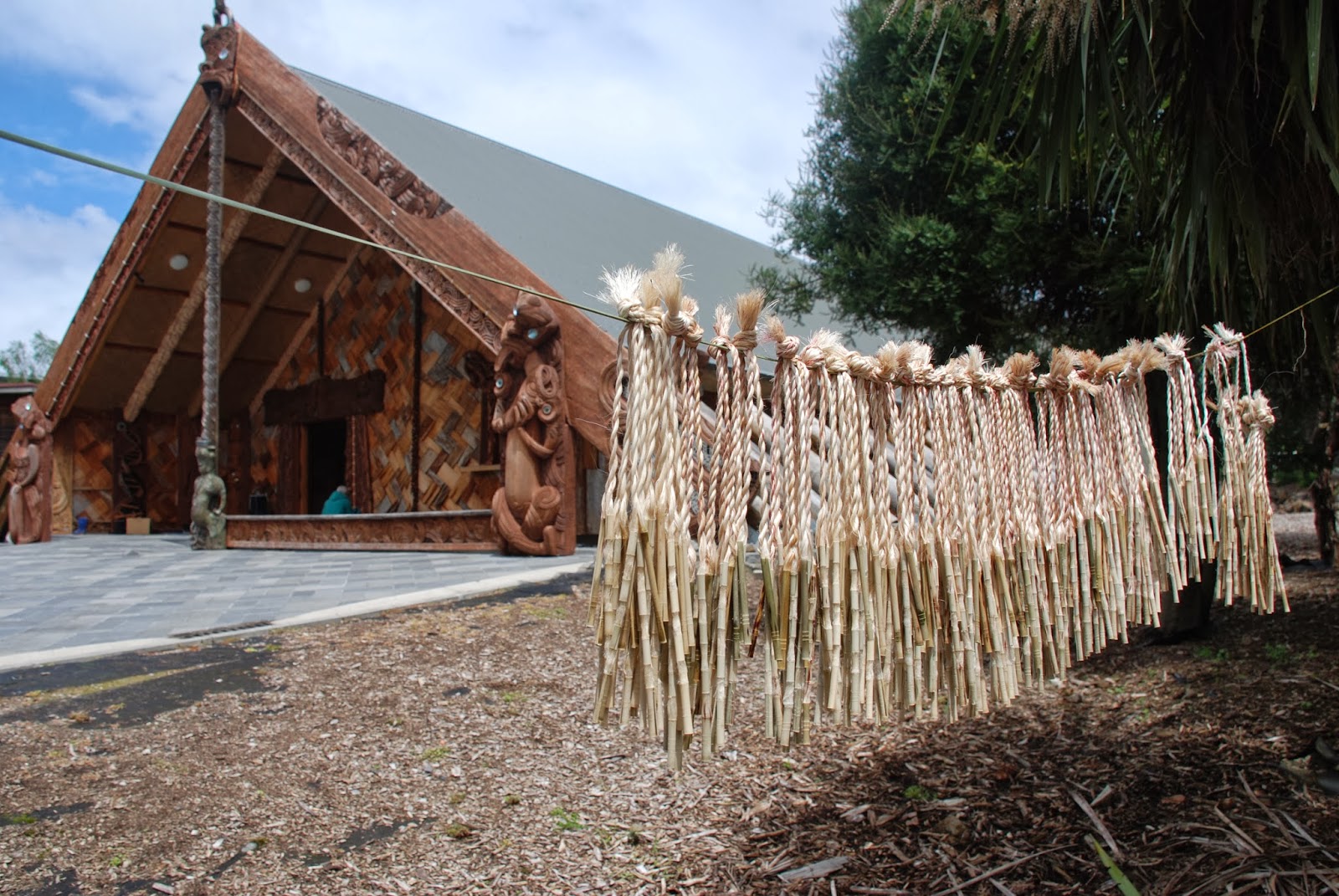
piupiu samo za tebe : http://michellemayn.blogspot.com/p/phot ... urces.html

https://www.youtube.com/watch?v=BlbO1KJqvgs
piupiu samo za tebe : http://michellemayn.blogspot.com/p/phot ... urces.html
https://www.youtube.com/watch?v=BlbO1KJqvgs
- hadzinicasa
- Posts: 13620
- Joined: 08/11/2005 16:08
- Location: u tranziciji
#1043 Re: Haj'mo malo o kulturi ... ma, uuuđite slobodno ... :-)))
naumpalo mi.... ah Rilke...
Ja živim u krugovima koji se šire,
i njima sve više obuhvatiti žudim.
Ja možda i neću iskusiti poslednji,
konačni krug, ali se trudim.
Ja kružim i kružim oko Boga,
tog prastarog tornja, već hiljadu leta,
i ne znam još, jesam li sokol ili vihor,
ili velika pesma ovoga sveta.
i da... pismo njoj (Lu) kad su bili sretni (1897):
Išunjao sam se iz tvog stana
I dok hodam kišnim ulicama čini mi se
Da svaki prolaznik koga sretnem
U mom blistavom pogledu vidi
Moju presrećnu, spasenu dušu.
Pošto - poto hoću da usput
Sakrijem od sveta svoju radost;
Odnosim je žurno kući
I zatvaram u dubini noći
Kao zlatni kovčeg.
A onda iznosim na svetlost dana
Komad po komad sakrivenog blaga
I ne znam kuda pre da gledam;
Jer je svaki kutak moje sobe
Pretrpan zlatom.
To je bezgranično bogatstvo
Kakvo noć nikada nije videla
Niti rosa okupala;
Više ga ima nego što je ikada
Ijedna mlada dobila ljubavi.
To su bogate dijademe
Sa zvezdama umesto dragog kamenja.
Niko to ne zna. Ja sam, o draga moja,
Kao kralj među tim bogatstvom
I znam ko je moja kraljica.
I kad vise nisu... (1901)
Ostao sam u mraku kao da sam oslepeo
Jer te moje oči više ne pronalaze.
Nejasna užurbanost dana
Za mene je sad samo zavesa koja te skriva.
Gledam u nju nadajući da će se dići
Jer je iza nje ostao moj život,
Srž i suština zakonitost moga života
A ipak i moja smrt.
Ja živim u krugovima koji se šire,
i njima sve više obuhvatiti žudim.
Ja možda i neću iskusiti poslednji,
konačni krug, ali se trudim.
Ja kružim i kružim oko Boga,
tog prastarog tornja, već hiljadu leta,
i ne znam još, jesam li sokol ili vihor,
ili velika pesma ovoga sveta.
i da... pismo njoj (Lu) kad su bili sretni (1897):
Išunjao sam se iz tvog stana
I dok hodam kišnim ulicama čini mi se
Da svaki prolaznik koga sretnem
U mom blistavom pogledu vidi
Moju presrećnu, spasenu dušu.
Pošto - poto hoću da usput
Sakrijem od sveta svoju radost;
Odnosim je žurno kući
I zatvaram u dubini noći
Kao zlatni kovčeg.
A onda iznosim na svetlost dana
Komad po komad sakrivenog blaga
I ne znam kuda pre da gledam;
Jer je svaki kutak moje sobe
Pretrpan zlatom.
To je bezgranično bogatstvo
Kakvo noć nikada nije videla
Niti rosa okupala;
Više ga ima nego što je ikada
Ijedna mlada dobila ljubavi.
To su bogate dijademe
Sa zvezdama umesto dragog kamenja.
Niko to ne zna. Ja sam, o draga moja,
Kao kralj među tim bogatstvom
I znam ko je moja kraljica.
I kad vise nisu... (1901)
Ostao sam u mraku kao da sam oslepeo
Jer te moje oči više ne pronalaze.
Nejasna užurbanost dana
Za mene je sad samo zavesa koja te skriva.
Gledam u nju nadajući da će se dići
Jer je iza nje ostao moj život,
Srž i suština zakonitost moga života
A ipak i moja smrt.
-
John Cleese
- Posts: 42938
- Joined: 25/05/2010 18:30
#1044 Re: Haj'mo malo o kulturi ... ma, uuuđite slobodno ... :-)))
Hvalapetunija wrote:Najgenijalnije Mocartovo djeloJohn Cleese wrote:
Inače, nema osvježenja bez Džonija![]()
Dok čitam ove tekstove i pjesme, naprosto se osjećam glupom, a onda se pojavi muzika i kao da oživim![]()
![]()
Pokojni Serdju Celibidake bio je sjajan dirigent.
Citirao sam vec prije, ali moram (barem) jos jednom - kraj Bruknerove 8. simfonije:
http://www.youtube.com/watch?v=elVHvTrEM34
Koji osjecaj za tempo i dinamiku... Genije.
-
John Cleese
- Posts: 42938
- Joined: 25/05/2010 18:30
-
John Cleese
- Posts: 42938
- Joined: 25/05/2010 18:30
- Banksy
- Posts: 28557
- Joined: 18/07/2008 09:33
#1047 Re: Haj'mo malo o kulturi ... ma, uuuđite slobodno ... :-)))
Najveća žena, najveće djelo. Duboki naklon i poštovanje.


Dame Zaha Mohammad Hadid, DBE (Arabic: زها حديد Zahā Ḥadīd; 31 October 1950 – 31 March 2016) was an Iraqi-born British architect. She became the first woman to receive the Pritzker Architecture Prize (2004). She received the Stirling Prize in 2010 and 2011. In 2012, she was created a Dame Commander of the Order of the British Empire and in 2015 she became the first woman to be awarded the RIBA Gold Medal in her own right.
"Visionary and highly experimental, her legacy despite her young age, is formidable. She leaves behind a body of work from buildings to furniture, footwear and cars, that delight and astound people all around the world. The world of architecture has lost a star today."


- Connaisseur Karlin
- Posts: 20577
- Joined: 31/01/2016 16:16
#1048 Re: Haj'mo malo o kulturi ... ma, uuuđite slobodno ... :-)))
Ode tako iznenada,a tek' '50to godiste.Banksy wrote:Najveća žena, najveće djelo. Duboki naklon i poštovanje.
Dame Zaha Mohammad Hadid, DBE (Arabic: زها حديد Zahā Ḥadīd; 31 October 1950 – 31 March 2016) was an Iraqi-born British architect. She became the first woman to receive the Pritzker Architecture Prize (2004). She received the Stirling Prize in 2010 and 2011. In 2012, she was created a Dame Commander of the Order of the British Empire and in 2015 she became the first woman to be awarded the RIBA Gold Medal in her own right.
"Visionary and highly experimental, her legacy despite her young age, is formidable. She leaves behind a body of work from buildings to furniture, footwear and cars, that delight and astound people all around the world. The world of architecture has lost a star today."
-
John Cleese
- Posts: 42938
- Joined: 25/05/2010 18:30
-
John Cleese
- Posts: 42938
- Joined: 25/05/2010 18:30