#10026 Re: Šta trenutno čitate?
Posted: 15/07/2017 07:56
Tvrtko Kulenović, Istorija bolesti

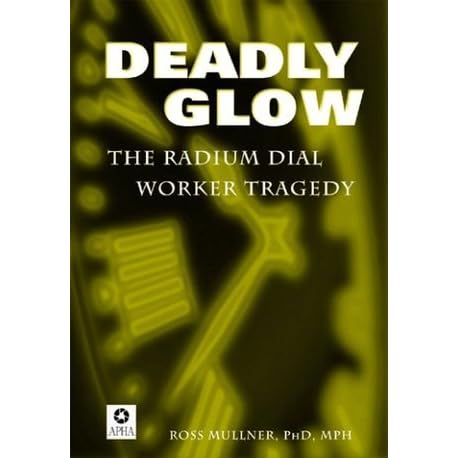
Ja ovako naletim na neke naslove kojima se kosa dize na glavi kad procitaju, ali meni je bas zanimljivo stivo.Deadly Glow is an important story of a public health tragedy. It chronicles the lives of numerous young women who worked in radium application plants in the early 1900s painting numerals on instrument and watch dials. From their experience, the harmful effects of radium deposited in the body became known. The victims suffered from skin ulcerations, tumors, and other severe medical symptoms. Physicians were baffled and misdiagnosed their conditions as heart disease and even syphilis. Solving the intriguing mystery of the workers' disabling, yet unknown, disease would be a complex and difficult task requiring brilliant detective work of several investigators. In time, this tragedy would be recognized as the worlds' first mass experience with injury and death caused by exposure to atomic radiation. This is a compelling story for occupational medicine, health physics, radiation safety, and public health workers. But for all people, Deadly Glow will tell the dreadful tale and heroic conclusion of a public health disaster.

On Thursday, July 13, 1995, Chicagoans awoke to a blistering day in which the temperature would reach 106 degrees. The heat index, which measures how the temperature actually feels on the body, would hit 126 degrees by the time the day was over. Meteorologists had been warning residents about a two-day heat wave, but these temperatures did not end that soon. When the heat wave broke a week later, city streets had buckled; the records for electrical use were shattered; and power grids had failed, leaving residents without electricity for up to two days. And by July 20, over seven hundred people had perished-more than twice the number that died in the Chicago Fire of 1871, twenty times the number of those struck by Hurricane Andrew in 1992--in the great Chicago heat wave, one of the deadliest in American history.
Heat waves in the United States kill more people during a typical year than all other natural disasters combined. Until now, no one could explain either the overwhelming number or the heartbreaking manner of the deaths resulting from the 1995 Chicago heat wave. Meteorologists and medical scientists have been unable to account for the scale of the trauma, and political officials have puzzled over the sources of the city's vulnerability. In Heat Wave, Eric Klinenberg takes us inside the anatomy of the metropolis to conduct what he calls a "social autopsy," examining the social, political, and institutional organs of the city that made this urban disaster so much worse than it ought to have been.
Starting with the question of why so many people died at home alone, Klinenberg investigates why some neighborhoods experienced greater mortality than others, how the city government responded to the crisis, and how journalists, scientists, and public officials reported on and explained these events. Through a combination of years of fieldwork, extensive interviews, and archival research, Klinenberg uncovers how a number of surprising and unsettling forms of social breakdown--including the literal and social isolation of seniors, the institutional abandonment of poor neighborhoods, and the retrenchment of public assistance programs--contributed to the high fatality rates. The human catastrophe, he argues, cannot simply be blamed on the failures of any particular individuals or organizations. For when hundreds of people die behind locked doors and sealed windows, out of contact with friends, family, community groups, and public agencies, everyone is implicated in their demise.
As Klinenberg demonstrates in this incisive and gripping account of the contemporary urban condition, the widening cracks in the social foundations of American cities that the 1995 Chicago heat wave made visible have by no means subsided as the temperatures returned to normal. The forces that affected Chicago so disastrously remain in play in America's cities, and we ignore them at our peril.


Gojeni H wrote:




Original.King_Eric wrote:Gojeni H wrote:
u originalu ili hrvatski prijevod?
 knjiga za odmor
Ima li preklapanja sa pisanjima forumskog druga O'zone?karanana wrote:Kad sam bio hodza.
Ako predjete preko prvih par stranica sa veoma kratkim i pomalo nejasnim recenicama, vrlo brzo cete skontati ko je ko. I onda vas pisac uvodi u njegov dozivljaj s grbavice. Slikovito opisujuci mjesto i lokaciju. Ako poznajete ulice, zgrade, radnje, ulaze.....kao da ste tu tada u trenutku radnje.
Ovaj roman dusu dao za film. Podsjeca na remake.
Ps: je li ko citao? Interesuje me da li pisac opisuje sexanje u njegovom stanu u kovacicima u prvom dijelu romana? Mozda nisam skonto. Meni se ucinilo da jeste. Ali ja sam slucaj za frojda pa ne vjerujem sam sebi. Meni se od dva vrha igmana ili bjelasnice iznad pazarica cini da su u pitanju zenske sise.
Tek sam na 60 i nekoj stranici od oko 600. Tek drugi maj i zakuhavanje. Moglo bi biti preklapanja. Spominje vec kafanu koja im je bila stab a mislim da ju je i chika ozone spominjao. Mada nisam siguran da li je ozone spominjao romu ili neku drugu.ExNihilo wrote:Ima li preklapanja sa pisanjima forumskog druga O'zone?karanana wrote:Kad sam bio hodza.
Ako predjete preko prvih par stranica sa veoma kratkim i pomalo nejasnim recenicama, vrlo brzo cete skontati ko je ko. I onda vas pisac uvodi u njegov dozivljaj s grbavice. Slikovito opisujuci mjesto i lokaciju. Ako poznajete ulice, zgrade, radnje, ulaze.....kao da ste tu tada u trenutku radnje.
Ovaj roman dusu dao za film. Podsjeca na remake.
Ps: je li ko citao? Interesuje me da li pisac opisuje sexanje u njegovom stanu u kovacicima u prvom dijelu romana? Mozda nisam skonto. Meni se ucinilo da jeste. Ali ja sam slucaj za frojda pa ne vjerujem sam sebi. Meni se od dva vrha igmana ili bjelasnice iznad pazarica cini da su u pitanju zenske sise.
Dakaranana wrote:
Interesuje me da li pisac opisuje sexanje u njegovom stanu u kovacicima u prvom dijelu romana? Mozda nisam skonto. Meni se ucinilo da jeste.
Opa. Evo citam dalje. Jel ovo karno i svoju pomagacicu i humanitarku iz ulaza? Nekom rat nekom brat.doktor78 wrote:Dakaranana wrote:
Interesuje me da li pisac opisuje sexanje u njegovom stanu u kovacicima u prvom dijelu romana? Mozda nisam skonto. Meni se ucinilo da jeste.

 civilizacije negdje daleko u svemiru ali su u razvoju negdje kao mi 1875. znači odlaze osmanlije